


By Rakesh Dubey, Bhopal
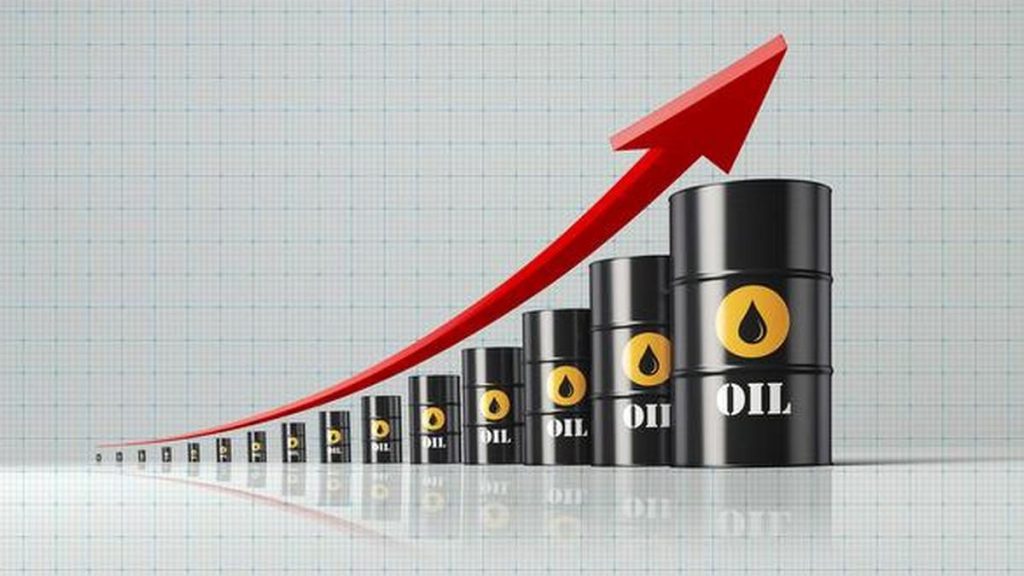
Even the American public is presently ensnared in a grim cycle of inflation, unemployment and recession. Across Europe, streets burn amid ferocious protests, while the greater part of the world gasps under the rupture of supply chains. Should a renewed phase of conflict with Iran erupt, it will prove vastly more catastrophic and annihilating than before. Seasoned economists and defence strategists caution that crude oil prices could then surge to $150–200 a barrel.
In the Bharat basket, crude already commands roughly $120 a barrel, with market prices having breached $115. For Bharat, this is an epoch of compounded crises. War may be the primary catalyst, yet nature itself appears incensed. The rupee continues its relentless slide. Foreign capital is in retreat. Investors who had committed funds to Bharat’s markets extracted ₹48,056 crore in October alone; since January, approximately ₹3.08 lakh crore has been withdrawn.
Soaring crude prices threaten to inflate the import bill from ₹11.25 lakh crore to nearly ₹20 lakh crore. These outflows must be settled in dollars, thereby eroding foreign exchange reserves. Economists reckon that the oil-price shock induced by the Iran conflict has already inflicted losses of around ₹6 lakh crore on Bharat. Interest on the government’s existing debt alone stands at ₹14 lakh crore. Whence shall this colossal sum be mobilised? In such a climate, what rational foreign investor would hazard substantial capital?
Whether the architects of the Central Government acknowledge it or not, Telangana Chief Minister Revanth Reddy has laid bare an unvarnished fragment of reality. He has entreated farmers to forgo sowing the rabi crop this season, for the state cannot furnish water. The scarcity is acute.
Under the weight of this severe water crisis, Telangana’s farmers have already abandoned cultivation across 13 lakh hectares of the total 55 lakh hectares. Many have forsaken farming altogether, swelling the ranks of urban labour. The government has now proclaimed the advent of E-100 vehicles—powered entirely by ethanol—yet neither economists nor the opposition have raised their voices against the prodigious volumes of water being consumed by ethanol production and data centres.
Bharat confronts drought of alarming ferocity. In Maharashtra, 305 of 358 talukas stand declared drought-affected; in Karnataka, 226 of 240. Farmers are driven to suicide. Karnataka endures its most devastating drought in 150 years. This is no ordinary tableau. Maharashtra constitutes the nation’s foremost economy, Karnataka its third. How shall governments shield the populace from an impending food crisis? The blow will fall directly upon agriculture, upon which 42 per cent of the workforce still depends.
Bharat, once reliant on Gulf suppliers for crude oil and gas, now leans upon the United States, Angola and kindred sources. Over the past year, LNG imports from the US have leapt from 10 per cent to 67 per cent. Procuring oil and gas from America exacts a 20 per cent premium. SBI Research warns that inflation may climb to 6.45 per cent. Food inflation already exceeds 8 per cent. The repo rate in December may rise from 5.5 to 6 per cent. The burden will be borne by the ordinary citizen already living from instalment to instalment. Economists anticipate that costlier oil could widen the current account deficit to 2 per cent.
This is no moment for governmental silence. The portents are unmistakable: should the government fail to undertake resolute measures, conditions akin to those convulsing Europe may take root here. Across the world, spiralling crude prices have unleashed chaos, and Bharat has not been spared. The nation is compelled to expend vast sums in dollars merely to secure oil.