


By Geetha V P
As Kerala approaches the 2026 Assembly elections, the Bharatiya Janata Party (BJP) stands on an insecure terrain, dented not by external foes but by its own errors. Despite widespread voter fatigue with the Left Democratic Front (LDF) and United Democratic Front (UDF)—beset by corruption allegations, policy flip-flops, and internal squabbles—the BJP has failed to convert this discontent into electoral gains. The party’s performance in recent polls illustrates this stagnation: in the 2024 Lok Sabha elections, it secured a 16.8% vote share, a modest rise from 13% in 2019, culminating in Suresh Gopi’s historic win in Thrissur as the state’s first BJP MP. However, the 2025 local body elections saw this dip to 14.76%, despite capturing the Thiruvananthapuram Corporation for the first time—a clear sign of regression amid self-inflicted damage. Central to this predicament is the state leadership’s inability to foster unity, bridge communities, and temper its aggressive Hindutva agenda, which alienates Kerala’s pluralistic electorate.
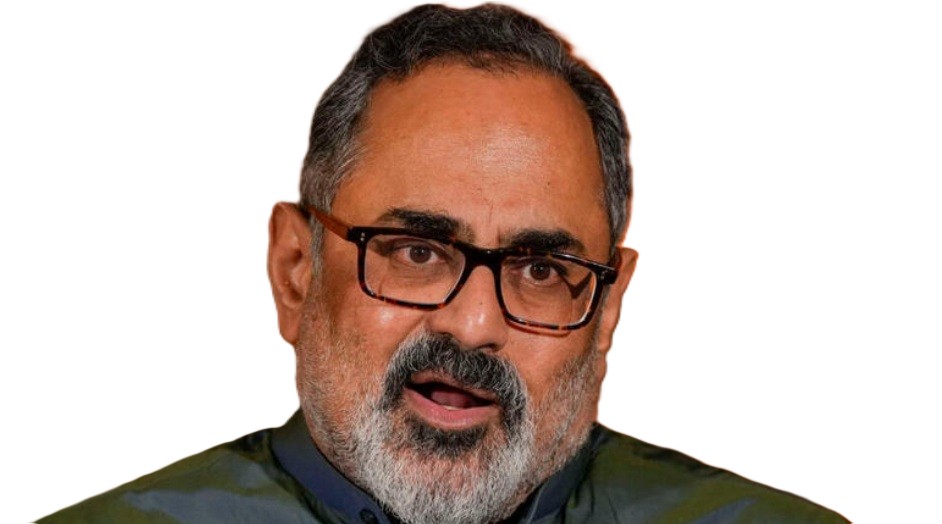
The appointment of Rajeev Chandrasekhar as state president in 2025 exemplifies these leadership woes. A former Union Minister and entrepreneur, Chandrasekhar entered Kerala politics as an outsider, losing the 2024 Thiruvananthapuram Lok Sabha contest to Congress’s Shashi Tharoor. His perceived inexperience in local dynamics and arrogant demeanour has exacerbated internal divisions, pitting the old guard against newcomers. Reports highlight how veterans like former state presidents C.K. Padmanabhan and P.K. Krishnadas, along with former Union Minister V. Muraleedharan, have been side-lined. Padmanabhan, a long-time RSS affiliate who led the party through its nascent stages, has been vocal about the neglect of grassroots workers, with sources indicating his exclusion from key decision-making forums. Muraleedharan, despite his national stature, finds his influence diminished in state affairs, often bypassed in favour of Chandrasekhar’s circle. Krishnadas, a national council member with decades of organizational experience, has reportedly expressed frustration over the leadership’s top-down approach, ignoring the insights of those who built the party’s base in a hostile terrain. These rifts manifested in the 2025 Palakkad municipality disputes, where factional fights over candidate selections exposed favouritism and disarray. Chandrasekhar’s failure to integrate these old guards has not only weakened party cohesion but also signalled to voters a lack of stability, deterring those seeking a reliable alternative.
Equally damaging are the party’s high-profile figures, whose controversies repel moderate voters. Union Minister Suresh Gopi, now handling Tourism and Petroleum portfolios, embodies this liability. While his 2024 victory brought star power, his string of gaffes has eroded goodwill. In 2025, Gopi faced allegations of electoral fraud, including voting both in Thrissur, and Thiruvananthapuram during local polls, prompting a court-ordered police probe and complaints from Congress and CPI for false affidavits. He dismissed critics as “vanaras” (monkeys), further inflaming public outrage and portraying him as dismissive. Earlier, in an interview, Gopi expressed a desire to be reborn as a Brahmin, a remark that reinforced perceptions of elitism and caste bias in a state sensitive to social equality. His suggestion that tribal affairs should be managed by “upper castes” like Brahmins or Naidus alienated indigenous communities and progressive Hindus. Constituents in Thrissur have labelled him “absent” and “rude,” citing his infrequent visits and brusque interactions, which have fostered a trust deficit. In November 2025, controversy erupted when media were excluded from a Thrissur event he attended, with Gopi denying involvement but drawing accusations of opacity. Even his hints at quitting the ministry to return to acting underscore a lack of commitment, worrying party cadre about his reliability. These incidents, far from galvanizing support, have irritated neutral voters who initially sympathized with the BJP’s anti-corruption stance.
Newly elected figures like Thiruvananthapuram Corporation ward member R. Sreelekha, a former DGP, have added to the chaos. Her 2025 demands for a rival MLA to vacate office and her public discontent over not securing the mayor’s post highlighted internal promises gone awry. Former DGP T.P. Senkumar’s past anti-Muslim rhetoric, warning of demographic shifts, continues to tarnish the party’s image among minorities.
The BJP’s backing of contentious individuals extends to its support for Sabarimala chief priest Kandararu Rajeevaru, arrested in early 2026 for gold theft complicity. Framing the case as political persecution, the party alienated neutral Hindus and Ayyappa devotees who prioritize temple integrity over partisan defence.
Community backlash has intensified these errors. NSS General Secretary G. Sukumaran Nair’s 2025 equidistance policy subtly critiqued the BJP’s divisiveness. SNDP Yogam leader Vellappally Natesan’s accusations against the Muslim League, including branding a journalist a “terrorist,” have linked the BJP to communalism.
Minority alienation is profound, with Christians (18%) and Muslims (27%) distancing themselves due to national attacks on minorities and local vitriol. Christian leaders decry the BJP’s silence on northern violence. Sangh Parivar leaders like R.V. Babu and K.P. Sasikala amplifies this. Sasikala, a Hindu Aikya Vedi figure aligned with the BJP, has a history of hate speech. In 2017, she warned secular writers to “watch out,” implying threats of violence, leading to police cases for promoting enmity. Her 2016 speeches, circulated online, inflamed communal tensions by targeting Muslims and secularists, resulting in bookings under riot provocation laws. In Chalakkudi, her remarks were deemed provocative, with on-going legal proceedings stayed by the Kerala High Court in 2025. Such rhetoric, unchecked by the state leadership, solidifies the party’s image as intolerant.
Alleged association to controversial NGOs like HRDS, accused of snatching tribal land, further erode trust among marginalized groups.
The BJP’s excessive Hindutva push—through polarizing narratives and communal overtones—clashes with Kerala’s secular ethos, turning potential allies into adversaries. While sympathy existed for a fresh option, the leadership’s arrogance, rifts, and failure to engage across communities have proven self-destructive. Without course correction, the party risks remaining peripheral in 2026, squandering Kerala’s evolving political landscape.