


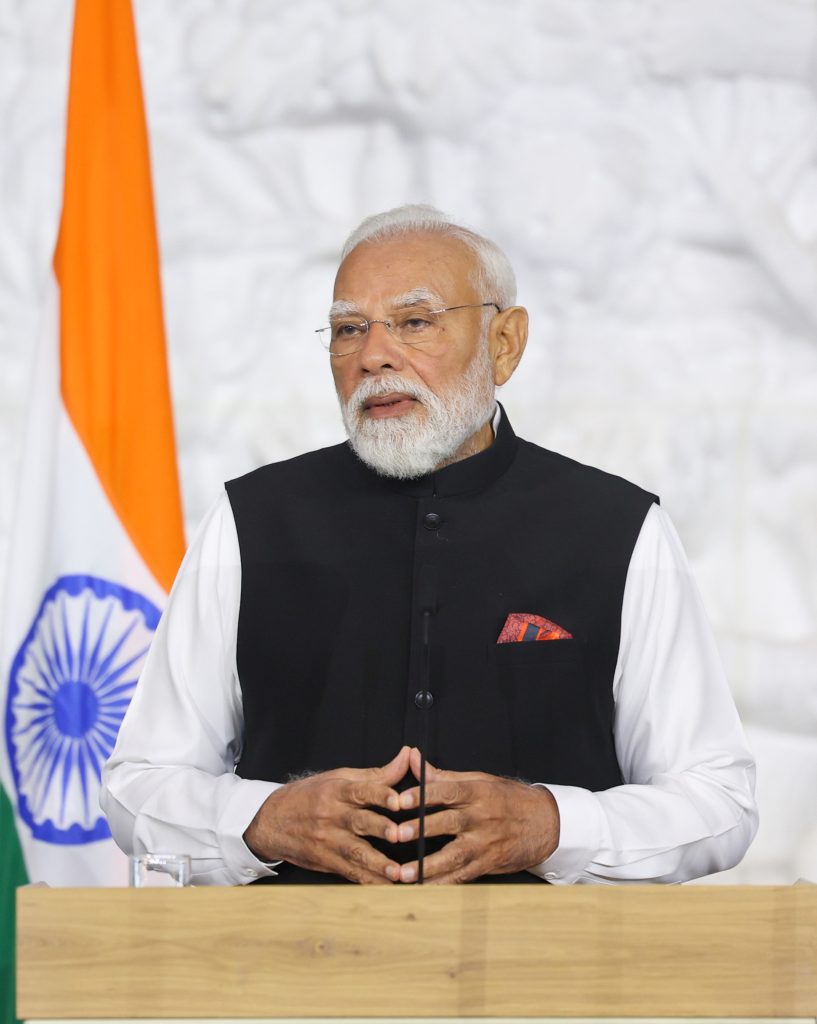
New Delhi: Congress on Tuesday accused Prime Minister Narendra Modi of celebrating a “distorted” 7.8 per cent quarterly GDP print while households borrow to spend, rural wages stagnate and youth joblessness stays high.
Addressing reporters at Indira Bhawan, AICC national media panelist Salman Soz said the Prime Minister’s Instagram post on the latest estimates showed a leader “out of touch with ground reality.” Growth, he argued, had been inflated by using a 2.3 per cent deflator even as retail inflation stood near 3.9 per cent and wholesale inflation near 10 per cent. “People do not eat GDP,” he said. “They believe their lived reality.”
Soz listed slogans he said had not delivered. Make in India, launched a decade ago, had not lifted manufacturing above 13 per cent of GDP against a 25 per cent target. Vocal for Local sat uneasily, he said, with a $112 billion goods trade deficit with China in FY 2025-26—$132 billion of imports against $19.5 billion of exports. Atmanirbhar Bharat, he added, was hollow on energy security because strategic petroleum reserve capacity had not risen “by a drop” since 2018 and still rested on UPA-era tanks.
If the economy were healthy, he asked, why was private consumption of 7.1 per cent being financed by NBFC household credit? Why were rural real wages barely above inflation for a decade when about 44 per cent of the labour force is in agriculture? Why were corporate profits at a record 6 per cent of GDP after the 2019 tax cut while private investment stayed flat and net FDI as a share of GDP was “almost zero”? Why was unemployment among those aged 15–29 at 16 per cent in the April–June PLFS, and why did NITI Aayog data show eight crore young people neither in education nor in work?
He called the GST cut, income-tax relief and RBI rate reductions a “sugar rush”—a lollipop that stops a child crying without feeding hunger. Investors, he said, had pulled about ₹2.5 lakh crore from Indian equities in 2026 so far. The rupee, near 95–96 to the dollar even after RBI intervention, was Asia’s worst performer; export growth, he claimed, owed more to a cheaper currency than to competitiveness.
Asked why official growth did not reach ordinary homes, Soz—once with the World Bank—said Indian statistics no longer carried the credibility they once did, and that the economy worked “for the top 5 per cent,” not the vast majority. Free grain for 80 crore people, he said, was proof of a structural failure, not a welfare triumph. Dignity, not optics, was what the country needed; after 12 years he saw no reform coming.