


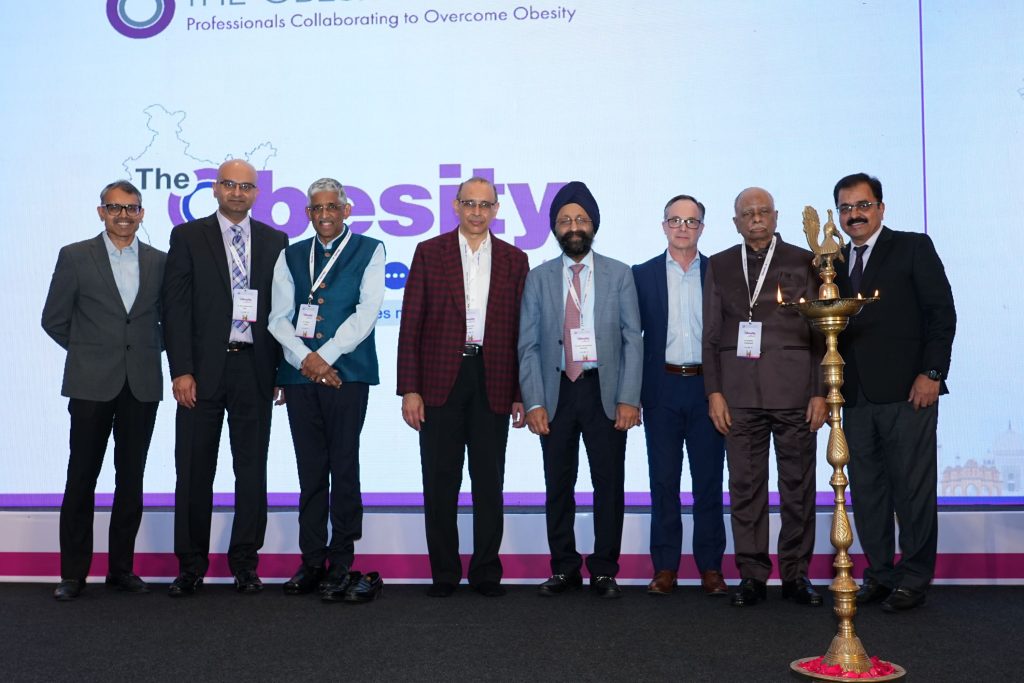
Hyderabad: The Obesity Society (TOS), one of the world’s leading professional organisations on obesity science, treatment and prevention based in the United States, recently concluded its inaugural edition of ‘The Obesity Conclave’ in India, brought together leading national and international experts to reimagine the future of obesity care in India through evidence-based, stigma-free and patient-centric approaches.
The two-day conclave was co-hosted by Insignia Learning Pvt. Ltd., a globally recognised knowledge partner for life sciences organisations, with support from Dr. Reddy’s, a global pharmaceutical company that served as the medical education partner for the conclave. This unique conclave aimed to address the growing burden of obesity and its associated cardio-metabolic complications by fostering dialogue, knowledge exchange, and clinical collaboration. The event witnessed participation from endocrinologists, cardiologists, diabetologists, and metabolic health specialists from across the country.
India faces a significant metabolic disease burden. As per National Family Health Survey-5 (NFHS-5), one in every four Indians is now having obesity. India ranks second globally in the number of adults living with diabetes, with about 90 million adults (20–79 years) affected in 2024 according to The Lancet Diabetes & Endocrinology and the IDF Diabetes Atlas. This escalating prevalence reflects rapid urbanisation, lifestyle transitions, and rising obesity trends across age groups.
The conclave opened with an impactful address by Padma Shri Dr. V. Mohan, Chairman, Dr. Mohan’s Diabetes Specialities Centre and Madras Diabetes Research Foundation, who presented key insights from the ICMR-INDIAB National Study, the largest epidemiological study on diabetes & non-communicable diseases (NCDs) in India, underscoring the rising prevalence of metabolic obesity in India and the urgent need for early, structured intervention.
“Obesity and related metabolic disorders have reached alarming levels across both urban and rural India, affecting more than 250 million people. Notably, over 43% of Indians have metabolic obesity despite a normal BMI (MONO), a distinct phenotype that carries serious metabolic consequences,” Dr Mohan said.
The day one also featured in-depth scientific deliberations on obesity and its link to cardio-renal-metabolic disorders. Renowned international experts from TOS including Dr. Marc‑Andre Cornier and Dr. Sriram Machineni discussed evolving perspectives and the need for individualized, long-term treatment strategies.
“Our understanding of obesity has evolved significantly over the years from isolated risk factors to a complex cardio-kidney-metabolic continuum. We now recognise that obesity, insulin resistance, dyslipidaemia, inflammation and cardiovascular risk are deeply interconnected and progress in stages. The challenge today lies in early identification, risk stratification, and timely intervention before irreversible damage occurs. The Obesity Conclave plays a crucial role in bridging the gap between evolving science and clinical practice,” said Dr. Marc-Andre Cornier, Director, Division of Endocrinology, Diabetes and Metabolic Diseases, Medical University of South Carolina, United States and Immediate Past‑President, The Obesity Society.
The day two featured expert-led workshops that explored a comprehensive, multimodal approach to obesity management and care, highlighting the latest advancements in obesity therapeutics, with a strong focus on real-world clinical evidence and patient-centric treatment pathways. These workshops underscored the need for personalised, phenotype-based treatment strategies, integrated with nutrition-aligned therapy and sustained patient engagement. The conclave concluded with a strong emphasis on the role of obesity exemplar centres in driving standardised, long-term care models that improve outcomes and support continuity of treatment.
Delivering his closing speech, Padma Shri awardee Dr. Shashank R. Joshi, Endocrinologist in Mumbai and one of the Founders of the Indian Obesity Society more than 25 years back, said, “Obesity must be viewed far beyond a weight-loss programme. It is a complex, chronic disease, and a one-size-fits-all approach simply does not work. This means individuals with a seemingly normal BMI may still be metabolically unhealthy, underscoring the need for personalised, phenotype-driven obesity management.”