


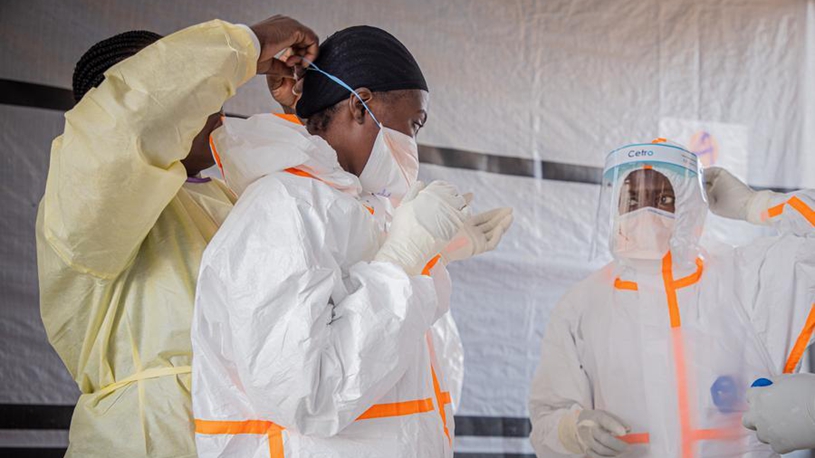
Kinshasa (Congo): In just over two months, the Democratic Republic of the Congo is confronting the fastest-spreading Ebola outbreak the world has ever recorded, one that has already claimed more than 1,000 lives and ranks as the third-largest epidemic in documented history.
Health authorities and international agencies confirm that the outbreak, driven by the Bundibugyo strain of the virus, has surged with a speed previously unseen. Declared in mid-May 2026 in Ituri province, it has left more than 1,000 dead while confirmed cases have climbed past 2,500. The two larger outbreaks — West Africa in 2014-2016 and eastern DRC in 2018-2020 — each unfolded over roughly two years. This epidemic has scaled up in a matter of weeks.
The tempo of transmission has no precedent. The 2018-2020 outbreak in eastern Congo took more than 10 months to reach 2,000 confirmed cases. The current wave crossed that threshold in approximately two months. In recent days, officials have recorded nearly 80 confirmed cases in a single day and, at one point, 37 deaths within 24 hours. The crude case fatality rate is hovering around 40 percent.
Ituri remains the epicentre, accounting for the overwhelming majority of infections and deaths, though cases have been confirmed in North Kivu, South Kivu, Haut-Uele and Tshopo. A limited number of cases have also appeared in neighbouring Uganda, with isolated travel-related detections further afield. The Bundibugyo virus lacks an approved vaccine or specific treatment, complicating containment efforts already hampered by insecurity, remote terrain, displacement and strained health infrastructure.
Responders describe unknown chains of transmission as a persistent challenge. Contact tracing has struggled to keep pace with the speed of spread, while attacks on health teams and community mistrust in conflict-affected zones have further slowed response operations. Safe burial practices, isolation of patients and community engagement remain critical, yet the rapid rise in daily figures continues to outstrip capacity in several health zones.
International partners, including the World Health Organization, Africa CDC and national authorities, have scaled up emergency operations. Experimental therapies and vaccine candidates are under accelerated evaluation, but none are yet available for widespread use against this strain. Modelling earlier in the outbreak warned that without stronger isolation and tracing, the epidemic risked becoming one of the largest on record.
For communities in eastern Congo, the human cost is immediate. Families have lost multiple members in days. Health workers continue to operate under extreme pressure, with reports of infections and deaths among responders underscoring the danger. Displacement camps and areas with limited clean water and sanitation face heightened vulnerability.
Officials stress that the window for containment is narrowing. While previous large outbreaks were eventually brought under control through sustained international and local efforts, the current speed of transmission demands an even more intensive and coordinated response. The world is watching an epidemic that has already rewritten the timeline of how quickly Ebola can escalate — and the next weeks will determine whether that trajectory can still be reversed.