


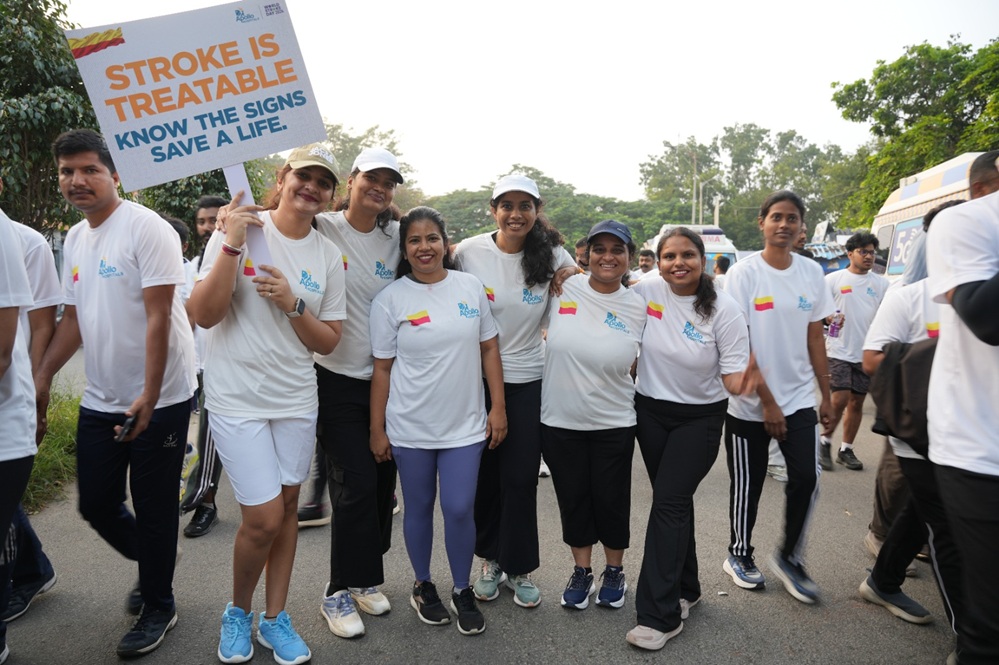
Bengaluru : Recognising stroke symptoms and seeking immediate medical attention can make a significant difference to a patient’s recovery, doctors highlighted at the Stroke Awareness Walk & Run 2026 organised by Apollo Hospitals, Bengaluru on Sunday. The event brought together healthcare professionals, students, families and members of the public to promote awareness about stroke prevention and timely treatment.
The event was attended by Shri H. D. Kumaraswamy, Hon’ble Union Minister for Heavy Industries and Steel, Government of India; Shri Tejasvi Surya, Member of Parliament, Bengaluru South; Shri C. K. Ramamurthy, Member of Legislative Assembly, Jayanagar; and Shri Seemant Kumar Singh, IPS, Commissioner of Police, Bengaluru City, who extended their support to the initiative.
Organised under the theme ‘Run & Walk for Your Brain’, the programme featured a 5-km walk and a 10-km run, starting and finishing at Kittur Rani Chennamma Stadium, Madhavan Park, Jayanagar. The event also included a flag-hoisting ceremony to mark the 70th Kannada Rajyotsava.
A stroke occurs when the blood supply to the brain is interrupted due to a blocked blood vessel or bleeding in the brain. This can damage brain cells and, without timely treatment, lead to permanent disability or death. According to the latest Global Burden of Disease estimates, approximately 13.2 million new stroke cases were reported globally in 2023, underlining the importance of early recognition and access to medical care.
Common stroke symptoms include sudden weakness or numbness in the face, arm or leg, particularly on one side of the body, difficulty speaking or understanding speech, sudden vision problems and loss of balance. The BEFAST approach helps people remember the key warning signs: Face drooping, Arm weakness, Speech difficulty and Time to seek emergency medical attention.
Doctors cautioned that symptoms should not be ignored even if they disappear within a few minutes. Such episodes could indicate a transient ischaemic attack (TIA), commonly known as a mini-stroke, which may signal an increased risk of a subsequent stroke.
Dr. P. Satish Chandra, Senior Consultant Neurology, Director and former Vice-Chancellor, NIMHANS; Dr. G. R. K. Sarma, Senior Consultant, Neurology; and Dr. Chinmay Nagesh, Senior Consultant, Stroke Management and Interventional Radiology, Apollo Speciality Hospital, Jayanagar, said, “One of the biggest challenges in stroke treatment is the delay in recognising symptoms and reaching a hospital. Sudden weakness, difficulty speaking or vision problems are sometimes mistaken for temporary discomfort, causing people to wait for the symptoms to pass. This can cost valuable time. Anyone experiencing these warning signs should be taken to the nearest hospital immediately, even if the symptoms disappear. Early medical assessment helps doctors identify the appropriate treatment and improves the chances of recovery.”
The doctors also highlighted that several stroke risk factors can be managed through lifestyle changes and regular health check-ups. High blood pressure, diabetes and high cholesterol are among the major risk factors, while smoking, obesity and physical inactivity can further increase the risk. Maintaining healthy blood pressure and blood sugar levels, eating a balanced diet, staying physically active and avoiding tobacco can help reduce the likelihood of a stroke.
Through the initiative, Apollo Hospitals, Bengaluru, aimed to take stroke awareness beyond the hospital and encourage people to recognise warning signs, address preventable risk factors and seek medical attention without delay.
****