


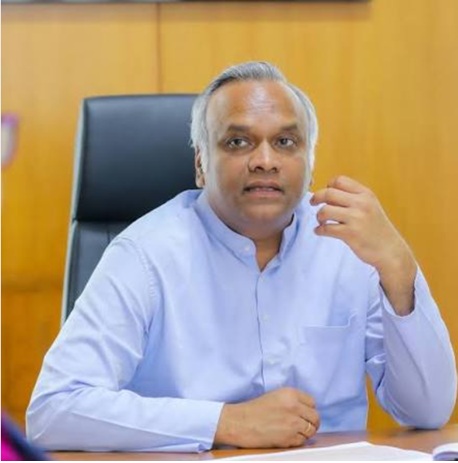
Yashwant Sahdev Shinde, a former RSS pracharak (activist), has written to Karnataka Home Minister Priyank Kharge and Union Home Minister Amit Shah demanding that the RSS, Vishva Hindu Parishad (VHP) and Bajrang Dal be declared terrorist organisations. He has also sought the arrest and investigation of RSS chief Mohan Bhagwat, RSS leader Indresh Kumar and VHP general secretary Milind Parande over alleged involvement in bomb blasts during the 2000s.
Shinde, who worked with the RSS from around 1990, claims he left after being asked to join a bomb-making and training team. In a 2022 sworn affidavit before a special CBI court in Nanded, he alleged participation in meetings planning blasts and bomb-making training under Parande in 2003 near Pune. He linked the activities to efforts to create communal polarisation for electoral gains around the 2004 Lok Sabha elections. The letters reiterate these claims and extend them to cases such as the Ajmer Sharif blast, while referring to acquitted accused in the Malegaon case.
The cases Shinde has cited were investigated and tried; the accused were eventually acquitted. The Nanded court itself acquitted all surviving accused in January 2025. Neither the RSS nor the VHP has publicly responded to Shinde’s specific allegations since he first raised them in 2022. After the Nanded verdict, the VHP described the acquittal as a “tight slap” on the Congress.
The letters arrive at a moment of heightened confrontation in Karnataka. Home Minister Priyank Kharge has been systematically challenging the RSS, including through an open letter to Mohan Bhagwat seeking details on its legal status, finances, organisational structure and tax compliance. He has questioned the organisation’s lack of formal registration and warned of possible state-level legislation. Shinde’s communication gives the Congress government additional ammunition to keep the RSS on the defensive in a key southern state.
At the national level, the demand to ban the Sangh outfits and investigate its top leadership revives the “Hindu terror” or “saffron terror” narrative that the BJP and RSS have consistently rejected as a politically motivated smear. For the opposition, particularly the Congress, it offers a ready tool to question the ideological parent of the ruling party and paint the Sangh Parivar as having a history of violent conspiracy. In the current political climate, however, any formal action at the Centre appears highly improbable. The letters are more likely to fuel partisan debate, media coverage and competitive mobilisation than produce legal consequences.
For the Sangh Parivar, the episode underscores a recurring vulnerability: allegations from former insiders, even if judicially unproven, can be amplified by political opponents to question the organisation’s legitimacy and moral authority. It may also reinforce the Sangh’s long-standing argument that it is the target of sustained vilification by ideological adversaries.
The Sangh’s expected line of defence rests on three pillars already visible in past responses. First, the courts have spoken: multiple high-profile cases from the 2000s ended in acquittals, undercutting claims of an organised conspiracy directed by the leadership. Second, Shinde is portrayed as a disgruntled former worker whose earlier attempt to enter the Nanded case as a witness was rejected by the trial court (and higher courts cited delay). Third, the timing and recipients of the letters—especially to a Congress home minister already locked in confrontation with the RSS—are likely to be dismissed as politically orchestrated rather than a genuine quest for justice.
By remaining largely silent on Shinde’s personal allegations for four years, the RSS and VHP have signalled that they do not consider them worthy of detailed public engagement. This strategy of non-response carries risks if the claims continue to circulate, but it also avoids elevating a single individual’s unproven assertions into a major organisational controversy.
In the short term, Shinde’s letters are unlikely to alter the legal or organisational position of the Sangh Parivar. Their real impact lies in the political arena—providing opposition leaders in Karnataka and beyond with fresh material to challenge the RSS’s self-image as a cultural and nationalist force, while allowing the Sangh and BJP to reiterate that the “saffron terror” charge has repeatedly failed the test of judicial scrutiny. The episode thus deepens the polarised contest over history, ideology and accountability that continues to shape Indian politics.