


By Suresh Unnithan
Agriculture remains the backbone of Assam’s economy, sustaining over 70% of the state’s population. Yet for decades, the sector was shackled by recurrent Brahmaputra floods, fragmented landholdings, high post-harvest losses, and limited market linkages. Today, a quiet but powerful transformation is underway—one powered not by subsidies alone, but by strategic partnerships with multilateral institutions and international technical agencies. These investments are shifting Assam from subsistence-oriented farming toward a climate-resilient, technology-driven, and globally integrated agribusiness ecosystem.
The cornerstone of this shift has been the Assam Agribusiness and Rural Transformation Project (APART), a flagship $200 million initiative supported by the World Bank. Implemented through the Assam Rural Infrastructure and Agricultural Services (ARIAS) Society, APART moved beyond conventional production support to focus on structural upgrades across priority value chains. It modernized dozens of warehouses under the Assam State Warehousing Corporation into advanced e-trading hubs equipped with scientific storage, grading, and cold-chain systems, dramatically cutting post-harvest losses.
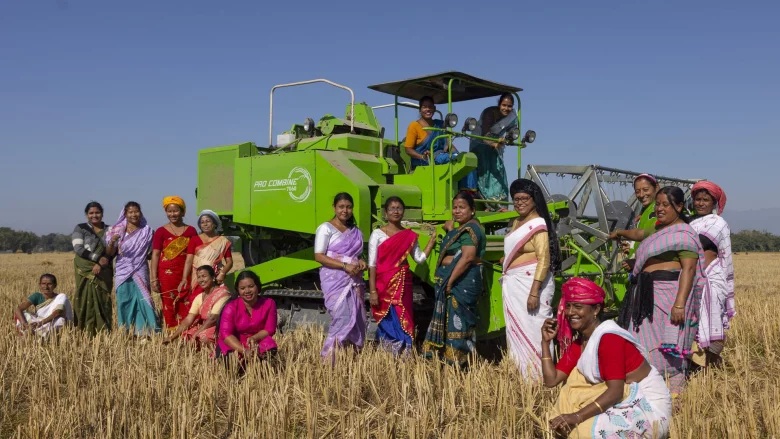
The project scaled Farmer Producer Organizations (FPOs) and Farmer Producer Companies (FPCs), enabling thousands of smallholders to aggregate produce, negotiate better prices, and bypass middlemen. A dedicated agribusiness equity fund injected risk capital into local startups, food-processing MSMEs, and rural entrepreneurs. By its concluding phase, APART had reached 664,392 households—32% above target—with women farmers comprising 188,676 participants, 25% above the goal.
Sustaining the momentum post-APART, international technical partners have stepped in to lock in gains. The International Rice Research Institute (IRRI) has continued collaboration with ARIAS to promote climate-resilient, stress-tolerant rice varieties such as Sub1 (“scuba rice”), which can survive submergence for up to two weeks. These varieties, introduced and scaled under APART, now protect hundreds of thousands of farmers from flood-induced crop failures. A structured exit and sustainability strategy ensures these technologies and practices endure beyond project closure.
Complementing rice efforts, WorldFish (a CGIAR center) has modernized aquaculture in Assam’s extensive beel (wetland) systems through improved genetic strains and sustainable practices, creating cleaner, more efficient fish value chains.
Fresh multilateral impetus arrived in late 2025 with the Asian Development Bank’s approval of the Assam Sustainable Wetland and Integrated Fisheries Transformation Project—a $71.9 million loan executed again by ARIAS. This initiative strengthens institutional frameworks for beel ecosystem management, develops community-based fisheries businesses, diversifies incomes, and restores wetlands. It directly builds on APART’s fisheries foundations while adding new layers of productivity, market access, and conservation.
Parallel ADB financing for Brahmaputra flood and riverbank erosion management further safeguards agricultural lands and rural livelihoods from climate shocks. Broader regional support from the International Fund for Agricultural Development (IFAD) through agroecology value-chain initiatives and climate-resilient upland farming approaches in the Northeast—including linkages to Assam—reinforces inclusive, sustainable practices for smallholders and women’s collectives.
These investments converge powerfully in high-value commodity clusters where Assam holds natural advantages:
- Tea: Support for small tea growers (STGs) has financed micro-processing units, enabling a shift from low-margin green-leaf sales to premium orthodox and certified organic teas destined for European and Middle Eastern markets.
- Geographical Indication (GI) products: Traceability systems, premium packaging, and quality certification have elevated Joha aromatic rice, Kaji Nemu (Assam lemon), Muga and Eri silks, and now Tezpur litchi. Recent milestones include the first commercial export of 25 metric tonnes of GI-tagged Joha rice to the United Kingdom and Italy in March 2026, followed by 1,000 kg of Tezpur litchi shipped to Dubai in June 2026—clear proof that Assam’s produce is meeting global standards.
- Spices and horticulture: Specialized processing zones in districts like Karbi Anglong link tribal farmers growing organic ginger and high-curcumin turmeric directly to multinational pharmaceutical and food companies.

The socio-economic dividends are tangible. Climate-smart inputs and scientific storage shield farmers from both weather disasters and seasonal price crashes. Standardized quality, certification, and packaging have opened doors to global e-commerce and export platforms. Project mandates for inclusive growth have transformed thousands of women-led self-help groups into commercial partners, fostering financial independence and rural entrepreneurship.
Looking ahead, Assam’s strategic location as India’s gateway to Southeast Asia under the Act East Policy amplifies the impact of these partnerships. Continued collaboration with multilateral financiers and CGIAR technical agencies—combined with state-level reforms and private-sector participation—positions the state to emerge as a model for climate-resilient, value-added, and export-oriented agriculture in the Northeast.
What began as targeted investments in infrastructure, institutions, and technology is evolving into a full-fledged agricultural revolution—one that promises higher incomes, greater resilience, empowered rural communities, and Assam’s rightful place on the global agri-food map. The fields of Assam are no longer just feeding the state; they are connecting to the world.