


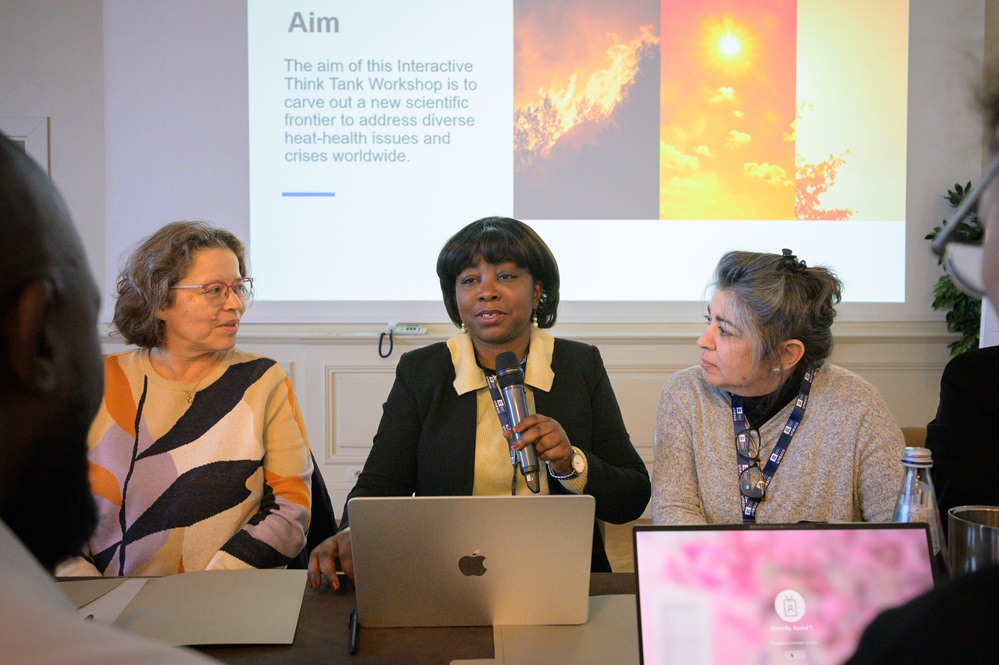
TRIESTE: 60 scientists from 40 countries are meeting in Trieste, Italy this week for the Heat Health Science workshop to set a global research agenda for heat-health science. This emerging field brings together experts in physiology, climate science, medicine, and public health to generate the evidence needed to turn research into action that protects people from extreme heat. The Heat Health Science workshop will take place from 3 to 6 November and is the first major activity of The World Academy of Sciences (TWAS) Transformative Heat-Health Science initiative (THHS).
Extreme heat is a growing threat to human health worldwide, and conventional public health measures are increasingly falling short. Closing the gap between climate experts and health experts will require new knowledge that no single discipline can produce. This workshop aims to bring together disciplines that have historically worked in silos, sparking conversations across scientific fields and identifying interdisciplinary opportunities that can build heat-health science into a research field of its own.
During the four-day workshop, participants will tackle heat-health challenges with insights from fields ranging from biology and physics to ecophysiology, pinpointing the most pressing knowledge gaps and aligning priorities for future research. The discussions will be guided by a committee of nine leading international experts in heat-health science and related fields.
All participants were selected for their expertise, scientific record, leadership, and interdisciplinary experience, with an emphasis on broad geographic representation. Many participants work in the regions where extreme heat hits hardest, bringing on-the-ground knowledge and research expertise from the regions most exposed to extreme heat and on which solutions can work in practice. Their leadership helps ensure that the new field is shaped by the communities that stand to benefit most.
“TWAS was created to bring scientists together across borders. By convening experts from many disciplines and from some of the countries most affected by extreme heat, we hope to help shape a stronger and more coordinated research agenda and accelerate the generation of evidence needed to address one of the most pressing health challenges of our time,” said Marcelo Knobel, TWAS Executive Director.
****