


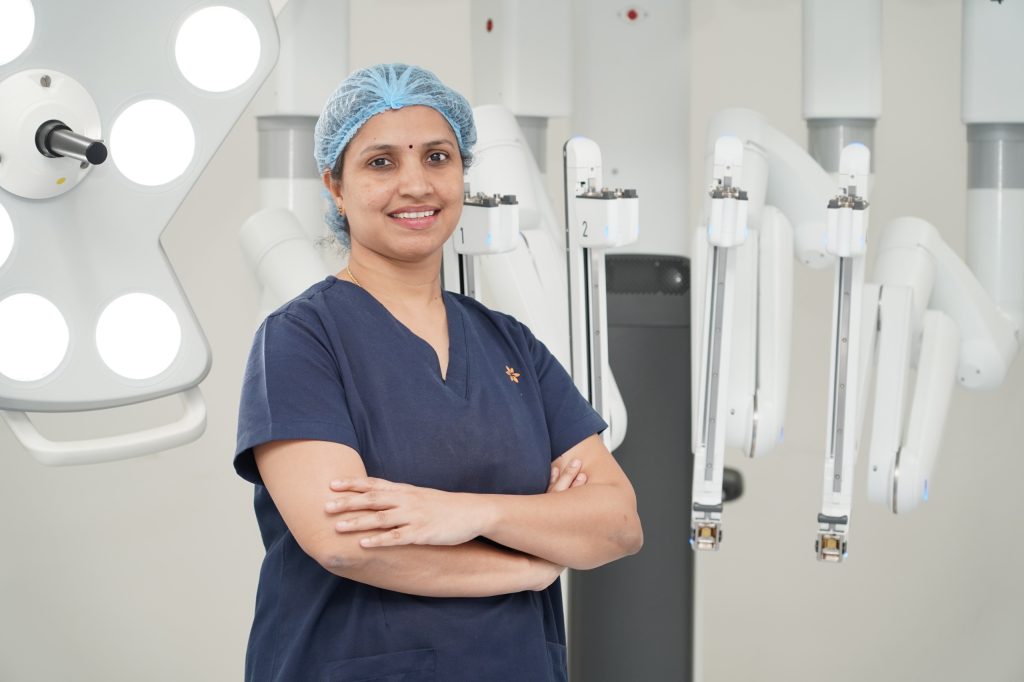
Hyderabad – A new India-based study led by Dr. Anitha Kunnaiah, Department of Gynaecology and Obstetrics, Robotic Sciences, Yashoda Hospitals, Hyderabad, has reported favourable surgical and recovery outcomes in women undergoing robotic-assisted surgery for endometriosis, including deep infiltrating endometriosis (DIE).
Published in the journal Cureus, the retrospective study evaluated 108 patients who underwent robotic-assisted endometriosis surgery between October 2023 and April 2025 using the da Vinci Xi surgical system. The study reported low intraoperative and postoperative complication rates, no conversions to open surgery in the study cohort, along with improvements in postoperative pain and quality-of-life measures following surgery.
Endometriosis affects nearly 10% of women of reproductive age globally and is associated with chronic pelvic pain, infertility and reduced quality of life. In many women, diagnosis is often delayed because symptoms can overlap with other gynecological and gastrointestinal conditions, resulting in years of unmanaged pain and disease progression before specialist intervention.
Commenting on the challenges surrounding diagnosis and treatment, Dr. Anitha Kunnaiah said, “One of the biggest challenges with endometriosis is that many women continue to experience delays in diagnosis and treatment, often living with chronic pain, fatigue, infertility concerns and reduced quality of life for several years before receiving appropriate care. By the time many patients reach a specialist centre, the disease may already be affecting multiple pelvic structures and significantly impacting their personal, social and reproductive wellbeing. This highlights the importance of greater awareness, earlier evaluation and timely intervention in women presenting with persistent symptoms.”
The study found that nearly 40% of patients had deep infiltrating endometriosis, an advanced form of the disease that can involve the bowel, bladder and other pelvic structures. Despite involving advanced disease across multiple pelvic organs, intraoperative and postoperative complication rates remained low at 0.9% each, while the average hospital stay was approximately 2.2 days. The study also reported early postoperative recovery, with patients able to walk independently within an average of 11 hours after surgery and resume normal daily activities in approximately 2.2 days following the procedure.
The study also reported sharp reductions in postoperative pain following surgery. Patients with non-deep infiltrating disease reported nearly 99% reduction in pain scores within seven days after surgery, while women with deep infiltrating endometriosis reported over 90% reduction during the same period. Significant improvements in quality-of-life scores were also observed across both groups.
Speaking about the findings, Dr. Anitha Kunnaiah said, “Advanced endometriosis surgeries can often be technically demanding because they involve operating in confined pelvic spaces while carefully preserving surrounding organs and structures. The da Vinci Xi surgical system was used in these procedures and provided visualisation and instrument articulation that supported surgical management in complex cases, particularly in patients with deep infiltrating endometriosis involving multiple pelvic structures. In this study cohort, no conversions to open surgery were reported, while postoperative recovery outcomes and hospital stay duration were also observed to be favourable across patient groups. We also observed changes in operative workflow over time with increasing procedural experience in robotic-assisted surgery.”
The findings contribute early Indian institutional experience to the growing body of evidence evaluating robotic-assisted surgery in complex gynecological conditions. Researchers noted that larger prospective studies with long-term follow-up would help further evaluate long-term outcomes and cost-effectiveness in the Indian healthcare setting.