


By Suresh Unnithan
Every eight minutes, a child goes missing in India—a stark claim highlighted in recent Supreme Court proceedings, underscoring the relentless nature of this hidden epidemic. While India strides toward economic prowess and global influence, thousands of children disappear each year, many ensnared by organized trafficking networks. The National Crime Records Bureau (NCRB) “Crime in India” 2023 report reveals a 9.2% rise in crimes against children, totaling 177,335 cases, with kidnapping and abduction emerging as the dominant category at 79,884 cases—affecting 82,106 young victims. Girls, often comprising over 70% of cases, bear disproportionate risks of sexual exploitation, forced marriage, and servitude. This article delves into the escalating statistics, the ruthless trafficking underworld—including chilling ties to organ trade—ongoing governmental shortcomings, recent judicial push for accountability, and a robust roadmap to safeguard these vulnerable lives.
The Escalating Crisis: Decoding the Data
NCRB reports chronicle a troubling upward trend in child vulnerabilities. In 2023, kidnapping and abduction cases alone victimized over 82,000 children, with 37,844 classified as “missing children deemed kidnapped.” This category captures disappearances that investigations link to abduction, separate from initial missing person’s reports. Notably, 14,637 cases involved abducting minor girls to compel marriage, highlighting gendered perils rooted in societal norms.
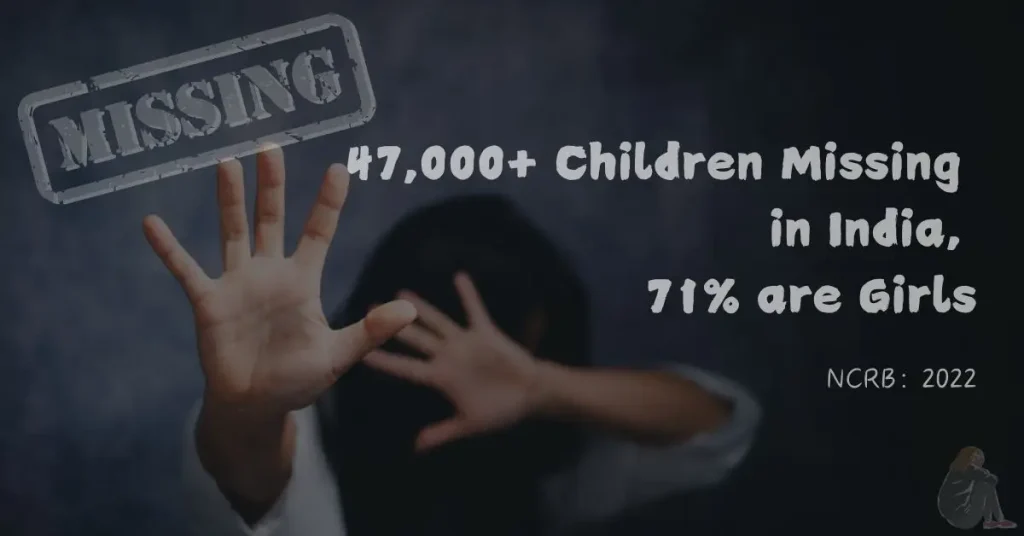
Previous years reflect fluctuations amid improved reporting and external factors: over 76,000 children were kidnapped or abducted in 2022, with more than 47,000 remaining untraced—71% girls. A sharp post-pandemic rebound occurred in 2021 following a 2020 dip due to lockdowns, while broader crimes against children rose from 162,449 in 2022 to 177,335 in 2023.
Hotspot states include Madhya Pradesh, West Bengal, Maharashtra, and Delhi, frequently acting as source or destination points for interstate operations. Recovery rates linger at 50-60% in many areas, consigning countless families to perpetual uncertainty. These figures transcend mere data; they embody profound trauma. Girls face heightened threats of commercial sexual exploitation and forced labour, while boys are coerced into factories, farms, or begging syndicates. Underlying factors—poverty, family breakdowns, migration, and disasters—compound risks, yet sophisticated syndicates systematically exploit them.
The oft-cited “every eight minutes” statistic, referenced by the Supreme Court in November 2025 as a “serious issue,” stems from activist estimates and older NCRB trends, emphasizing the urgency even if exact figures vary with reporting improvements.
The Dark Underworld: Trafficking Networks and Organ Trade Links
Lurking beneath these disappearances is a calculated mafia apparatus spanning states and borders. Traffickers target impoverished rural zones in Bihar, Jharkhand, Odisha, and West Bengal, enticing children with false promises of education or work. Urban centres like Delhi, Mumbai, and Kolkata serve as exploitation hubs for prostitution, domestic servitude, or industrial labour.
The U.S. Department of State’s 2024 Trafficking in Persons Report maintains India’s Tier 2 ranking, praising some initiatives but faulting low convictions, official complicity, and inadequate victim support. Despite thousands of registered cases, prosecutions falter, granting impunity to networks.
A more shadowy dimension involves organ trafficking, elusive in official data but exposed through probes. A July 2025 Al Jazeera investigation spotlighted Bangladesh’s “Village of One Kidney” in Joypurhat district, where poverty compels residents—including potential minors—to sell kidneys via cross-border brokers supplying Indian recipients. Donors receive meagre fractions of promised sums, enduring lifelong health woes, while brokers and hospitals reap massive profits. Forged documents, porous borders, and lax private facility regulations sustain this trade, commodifying the desperate.
Corruption aggravates the plight: Tardy FIR registrations, flawed investigations, and feeble interstate collaboration allow evasion. NGOs estimate up to 40% of missing children feed into trafficking channels, worsened by post-COVID economic fallout.
Governmental Response: Progress Amid Persistent Gaps
Programs like Operation Smile and Muskaan have historically rescued thousands. Tools such as the TrackChild portal, Khoya-Paya platform, and updated Standard Operating Procedures seek to enhance tracking and coordination. Anti-Human Trafficking Units (AHTUs) operate in numerous districts, bolstered by central funds.
Nevertheless, critiques abound: under-resourced units, ministerial data discrepancies, and inconsistent implementation. The 2024 U.S. report notes uneven utilization of platforms like the Crime Multi Agency Centre for sharing missing person’s intelligence.
The judiciary has intervened assertively. In 2025 proceedings, the Supreme Court labeled the crisis “serious,” mandating nodal officers in every state for real-time portal updates and nationwide data from 2020 onward. Directives in October-December 2025 emphasized dedicated Home Ministry oversight, simplified adoptions to deter illegal channels, and prosecution details. These measures address coordination lapses, with NGOs like Bachpan Bachao Andolan and Guria Swayam Sevi Sansthan lamenting inadequate political commitment.
A Comprehensive Path Forward: Urgent Multi-Layered Reforms
Eradicating this scourge requires immediate, holistic action. A robust, AI-driven national registry should be developed to merge NCRB, TrackChild, and state systems, enabling instantaneous tracking, facial recognition, and compulsory reporting. Law enforcement must be bolstered by fully resourcing AHTUs nationwide, instituting permanent interstate task forces, and imposing strict anti-corruption measures with independent monitoring.
Root causes demand attention through targeted awareness drives in vulnerable regions, embedding child rights curricula in schools, and amplifying economic buffers via expanded MGNREGA and housing schemes. Weak points like transit hubs and borders need fortification with CCTV and biometrics, while the Transplantation of Human Organs Act should be rigorously applied, including compulsory hospital audits to dismantle organ networks.
Victim-focused assistance is critical: compensation via the Nirbhaya Fund must be expedited, trauma-sensitive counselling provided, and fast-track POCSO courts prioritized for elevated convictions. Synergistic partnerships with NGOs should be deepened for rescues and rehabilitation, alongside revisions to the Juvenile Justice Act for severe trafficker penalties. Finally, sustained oversight is essential—faithfully executing Supreme Court orders on nodal networks and adoption streamlining, coupled with routine parliamentary reviews.
By weaving together prevention, enforcement, and support, these interconnected steps can disrupt the cycles of exploitation and restore hope to affected families.
Reclaiming the Future: An Urgent Moral Imperative
India’s crisis of missing children lays bare deep systemic fractures, permitting predators to prey on the innocent amid national progress. With tens of thousands vanishing annually and recovery lagging, this transcends statistics—it’s a humanitarian and security exigency eroding societal foundations. Yet, transformation is achievable through unified resolve: advanced technology, vigilant communities, ironclad enforcement, and steadfast leadership. As India aspires to developed status, true advancement hinges on shielding its youngest citizens. Only via collective action can we halt these shadows, ensuring every child thrives in safety and dignity.