


From Our Correspondent
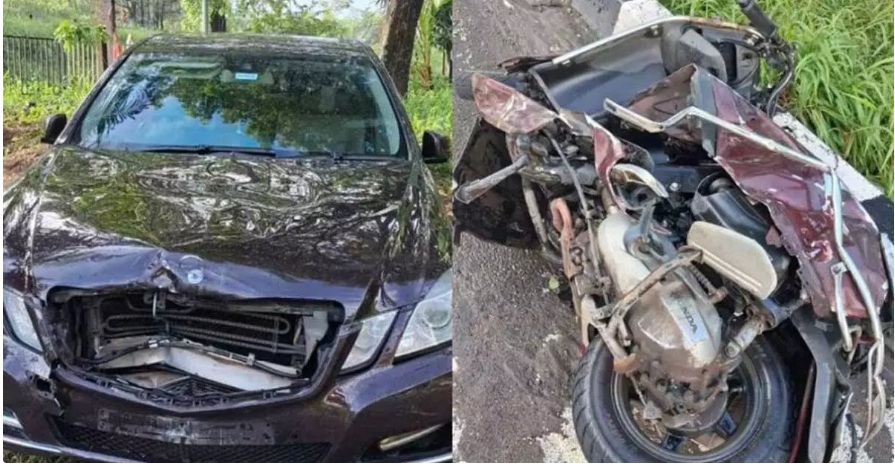
Kochi: The fatal collision near Cheranalloor in Kochi in the early hours of 25 October 2026 has placed in sharp focus both the statutory liability and the administrative accountability of a sitting judicial officer. Additional District and Sessions Judge Reno Francis Xavier (also referred to as Rino Francis Xavier), posted at the Motor Accidents Claims Tribunal, Irinjalakuda, has been booked under Section 199A of the Motor Vehicles Act, 1988, after the Kerala High Court granted the necessary administrative clearance. The portfolio judge for Thrissur has recommended his immediate suspension and a detailed inquiry, which now lies before the High Court’s Administrative Committee.
According to police reports, the Mercedes-Benz registered in the judge’s name, allegedly driven by his 17-year-old son who held no driving licence, struck the scooter of Jayabalakrishnan (55), a roadside eatery operator, from behind on Container Road at approximately 2:20 a.m. Evidence indicated speeds in the region of 104 km/h. The victim died at the scene. The minor was initially proceeded against under Section 106 of the Bharatiya Nyaya Sanhita and released on station bail. Following protests, the charge was escalated to Section 105 BNS (culpable homicide not amounting to murder). The Juvenile Justice Board granted bail; police have indicated they will seek its cancellation.
The High Court, acting on its administrative side, permitted the registration of a case against the judge. He has been booked under Section 199A. The investigation has been transferred to the Crime Branch. Family members of the deceased have alleged that the judicial officer visited the Cheranalloor police station shortly after the incident and that pressure was exerted regarding mobile-phone evidence. These claims remain under investigation.
Section 199A deems the guardian of a juvenile, or the registered owner of the vehicle, guilty of the contravention when a minor commits an offence under the Motor Vehicles Act. A statutory presumption operates that the vehicle was driven with the knowledge or consent of the owner, subject only to the defence of lack of knowledge and exercise of due diligence. Penalties include imprisonment up to three years, fine, and possible cancellation of registration for up to twelve months. The escalation of the charge against the minor to culpable homicide not amounting to murder strengthens the gravity of the offence attracting the owner’s liability. Judicial office confers no immunity; the High Court’s permission simply removed the procedural barrier to ordinary criminal process.
The control over subordinate judicial officers rests with the High Court. The portfolio judge’s recommendation for immediate suspension and inquiry reflects the institutional duty to protect public confidence. Suspension pending inquiry is the recognised interim measure when allegations touch upon the integrity of the officer or the reputation of the judiciary. The final decision rests with the Administrative Committee of the Chief Justice and senior judges. Given the circumstances—the fatal accident, the high speed, the minor’s lack of licence, the officer’s MACT posting, and public concern—the recommendation itself indicates the High Court’s approach to the matter.
Any subsequent departmental inquiry will examine whether the officer’s conduct amounted to misconduct. Ownership liability under Section 199A is distinct from gross misconduct such as interference with investigation or abuse of position. If allegations concerning the police-station visit or pressure on the family are substantiated, they would furnish independent grounds for severe consequences. The High Court’s dual response—clearing the criminal case and moving toward suspension—illustrates the functioning of existing institutional mechanisms.
Home Minister Ramesh Chennithala’s statement in the Assembly, acknowledging initial police lapses and directing action against the owner, further aligns with the principle that no one is above the law.
Criminal liability under Section 199A will be determined on evidence in the ordinary courts; disciplinary outcomes will follow the inquiry. Both processes operate independently yet serve the same end of addressing the circumstances of the case. Further orders of the Administrative Committee and the progress of the Crime Branch investigation will complete the process already set in motion by the High Court.