


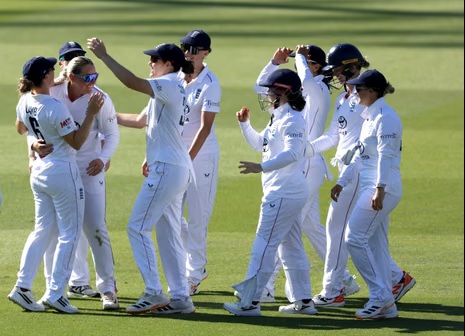
London: In the shadow of the iconic pavilion at Lord’s, where legends have etched their names into eternity, the Indian women’s cricket team carved a chapter of pure glory on July 13, 2026. Defying the weight of history and the pressure of uncharted territory, Harmanpreet Kaur’s warriors dismantled England by a staggering 270 runs in the first-ever women’s Test match at the Home of Cricket. It wasn’t just a victory—it was a thunderous declaration that Indian women’s cricket had arrived at the pinnacle, blending resilience, flair, and ruthless dominance.
The stage was set under overcast English skies, but the Indian batters brought sunshine to the occasion. Smriti Mandhana laid a solid foundation with fluent fifties across both innings, her elegant drives piercing the covers like arrows. Harmanpreet Kaur, the indomitable leader, anchored with a gritty 58, while Deepti Sharma’s composed 57 added steel. Yet, it was Yastika Bhatia who stole the spotlight in the second innings. Returning from injury, the left-hander unleashed a magnificent 113, a knock of pure class and courage. Her strokes flowed with timing and power—lofty drives over mid-off, precise cuts that bisected the field, and a fearless charge against the spinners. When she reached her century, the Indian dressing room erupted. Yastika had not just scored runs; she had planted the Indian flag firmly on Lord’s honours board, becoming a beacon for generations of aspiring cricketers.
But batting heroics alone don’t win Tests at the mecca of cricket. Enter debutant Kranti Gaud—the unsung destroyer. In England’s first innings, the young spinner spun a web of magic, claiming a sensational five-wicket haul for 37 runs. Her flighted deliveries dipped and turned sharply, bamboozling the English batters and earning her the rare honour of being the first Indian woman to have her name inscribed on the Lord’s honours board. It was poetry in motion: guile meeting grit, turning the historic venue into a fortress for India.
England, set a daunting target of 457, crumbled under the weight of expectation. They managed just 170 in the first dig and 186 in the second, bowled out shortly before lunch on day four. Sneh Rana complemented Gaud’s brilliance with four crucial wickets in the final innings, her variations proving lethal. The English batters, including a fighting fifty from Sophie Ecclestone, found no answers to India’s disciplined bowling and electric fielding.
As the final wicket fell, joy swept through the Indian camp. Captain Harmanpreet Kaur joined the pantheon of Indian skippers—Kapil Dev, MS Dhoni, and Virat Kohli—who have tasted victory at Lord’s. Sachin Tendulkar himself hailed the team’s composure and fight. This wasn’t merely a win; it was redemption, resilience, and revolution rolled into one. From the dusty maidans of India to the hallowed turf of Lord’s, these women had rewritten the script.
The 270-run margin echoed like a war cry, signalling to the world that Indian women’s cricket is no longer chasing shadows—it is casting its own formidable legacy. In this summer of glory, Lord’s bowed to the Ladies in Blue. The future? Brighter than ever.