


By Suresh Unnithan
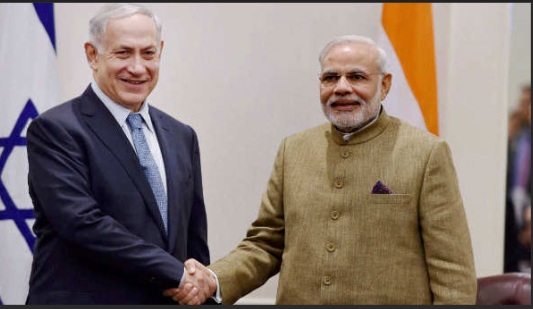
Prime Minister Narendra Modi arrived in Israel on February 25, 2026, for a two-day state visit at the invitation of Israeli Prime Minister Benjamin Netanyahu. This marks Modi’s second trip to Israel—the first Indian prime minister to visit in 2017—and the first time an Indian leader will address the Knesset. The visit occurs against a backdrop of significant regional volatility, including mounting US-Iran tensions and ongoing conflicts in Gaza and the West Bank. While the two governments describe the trip as a routine consolidation of long-standing bilateral ties, critics in India and abroad have questioned its timing and urgency, arguing that it risks complicating New Delhi’s broader Middle East engagements. The following analysis examines the strategic drivers behind the visit, the concerns it has raised, and India’s efforts to maintain diplomatic balance.
Strategic and Defensive Drivers
India and Israel have built a robust strategic partnership since establishing full diplomatic relations in 1992, one that both sides characterise as driven by mutual interests rather than ideological alignment. Defence cooperation forms the cornerstone. India has long been one of Israel’s largest customers for military hardware, including missiles, drones, radar systems, and precision-guided munitions. During the visit, officials are expected to review ongoing projects and explore new avenues for co-development in areas such as air-defence systems, unmanned aerial vehicles, and advanced missile technology. Media reports suggest discussions could pave the way for deals potentially worth several billion dollars, though no major contracts were confirmed to be signed on the spot. Israeli systems like elements of the Iron Dome and newer laser-based defences (Iron Beam) have been cited as areas of interest for India’s own multi-layered air-defence architecture.
Beyond defence, the agenda covers a wide spectrum of practical cooperation. Science and technology, artificial intelligence, cybersecurity, quantum computing, agriculture, and water management feature prominently. Israel’s expertise in drip irrigation and arid-zone farming complements India’s needs in water-scarce regions, while joint ventures in start-up ecosystems and innovation hubs have already yielded tangible results. Trade has grown steadily; bilateral commerce reached approximately $6.5 billion in recent years, with negotiations for a free-trade agreement advancing. People-to-people ties, including tourism, education, and cultural exchanges, are also on the table.
The visit is framed by both governments as a continuation of India’s “de-hyphenated” foreign policy—treating relations with Israel and the Palestinian territories on their own merits without linking one to the other. This approach, formalised under the Modi government, allows New Delhi to pursue defence and technology ties with Israel while maintaining political support for Palestinian statehood. Netanyahu has spoken of a broader “Hexagon” of alliances that would include India, Israel, Greece, Cyprus, and selected Arab, African, and Asian partners to promote stability and counter what he terms “radical axes” in the region. Indian officials have not formally endorsed the concept, but the idea is expected to be discussed as part of wider regional security conversations.
Proponents of the visit argue that these engagements serve core Indian interests: enhancing national security capabilities, accessing cutting-edge technology, and diversifying economic partnerships in a multipolar world. With India modernising its armed forces and facing security challenges along its borders and in the Indian Ocean, reliable defence suppliers and technological collaborators remain valuable. The timing, they suggest, reflects the maturity of the relationship rather than any sudden urgency.
Reasons for Raised Eyebrows
The decision to proceed with the visit has nevertheless drawn criticism, particularly from opposition parties in India and commentators in the Global South. The primary concern is timing. The Middle East remains tense, with reports of US naval build-ups near Iran and speculation about possible military escalation between Washington and Tehran. Against this backdrop, some observers question whether a high-profile engagement with Israel—widely perceived as aligned with US interests in the region—could be misinterpreted or complicate India’s energy imports, diaspora safety, or trade routes through the Gulf.
Critics also point to the domestic and international position of Prime Minister Netanyahu, who faces ongoing legal proceedings and international scrutiny over Israel’s military operations in Gaza. Opposition leaders in India, including spokespersons from the Congress party, have accused the government of “abandoning” the Palestinian cause and conducting a “cynical” policy that prioritises strategic ties over moral consistency. Civil-society groups and some analysts argue that the visit, including Modi’s address to the Knesset, could be read globally as tacit endorsement of Israeli policies at a moment when humanitarian concerns in Gaza remain acute. India has provided humanitarian assistance to Gaza and recently reiterated its condemnation of settlement expansion in the West Bank, yet the optics of the visit, they contend, risk diluting that message.
Additional worries centre on India’s standing among Arab nations and in the Global South. With millions of Indian expatriates working in the Gulf and substantial energy dependence on the region, any perception of tilting too heavily toward Israel could affect diplomatic goodwill or worker safety in the event of wider conflict. Pakistani media and some Arab commentators have portrayed the trip as further evidence of India’s shift away from its traditional non-aligned and anti-colonial positions. Within Israel itself, the visit has become entangled in domestic politics, with opposition parties threatening to boycott Modi’s Knesset address over protocol disputes involving the Supreme Court president.
Safety considerations have also been raised. While the visit itself is tightly secured, the broader regional instability—potential US-Iran clashes, Red Sea disruptions, and persistent Gaza tensions—adds an element of risk. Critics maintain there was no pressing deadline necessitating the trip at this juncture, suggesting it could have been deferred until the regional outlook clarified.
India’s Balancing Act
New Delhi has consistently maintained that its engagement with Israel does not come at the expense of its traditional support for Palestine. India was among the first countries to recognise the State of Palestine in 1988 and continues to back a two-state solution based on pre-1967 borders with East Jerusalem as the Palestinian capital. In January 2026, India hosted the second India-Arab Foreign Ministers’ Meeting in New Delhi, co-chaired with the UAE and attended by representatives from all 22 Arab League states, including Palestinian Foreign Minister Varsen Aghabekian Shahin. Prime Minister Modi personally received the delegation and reiterated India’s commitment to the Palestinian cause and to peace and stability in West Asia. The Delhi Declaration adopted at the meeting emphasised cooperation in trade, energy, and development while underscoring support for a just resolution of the Palestinian issue.
Analysts describe India’s approach as pragmatic multi-alignment rather than zero-sum alignment. Ties with Israel focus on defence technology and innovation—areas where Israel offers unique strengths—while political and economic relations with Arab states and Iran are managed separately. India has maintained engagement with Iran on projects such as Chabahar port (despite US sanctions pressures) and continues to import energy from the Gulf. Humanitarian aid to Gaza and diplomatic statements calling for ceasefires and dialogue reflect an effort to preserve credibility across divides.
Government sources emphasise that foreign policy decisions are guided by national interest, not ideology. In an era of supply-chain vulnerabilities and technological competition, access to Israeli defence systems and agricultural know-how is seen as enhancing India’s strategic autonomy. At the same time, regular high-level outreach to Arab capitals and participation in forums such as the BRICS and SCO allow India to articulate positions on Palestinian rights and regional de-escalation.
A Calculated Continuation or Needless Risk?
Whether the visit was advisable depends on one’s assessment of priorities. Supporters view it as a logical next step in a mature partnership that has delivered concrete benefits in security and technology without compromising India’s broader diplomatic space. The pre-visit Arab ministerial engagement and consistent rhetorical support for a two-state solution are cited as evidence of successful balancing. Critics counter that the symbolism of the timing—amid potential US-Iran confrontation and ongoing Gaza hostilities—outweighs the incremental gains, potentially eroding India’s moral authority and complicating relations with key energy and diaspora partners.
In practice, the visit appears to reflect New Delhi’s long-standing preference for issue-based diplomacy over bloc politics. By pursuing defence and technology cooperation with Israel while sustaining political dialogue with Arab states and reiterating support for Palestinian statehood, India seeks to maximise options in a volatile region. The coming days will reveal the concrete outcomes—new MoUs, upgraded security frameworks, or progress on trilateral initiatives such as India-UAE-Israel cooperation. Whether these deliverables justify the diplomatic risks remains a matter of ongoing debate. In the end, the visit underscores a fundamental reality of contemporary Indian foreign policy: strategic partnerships are calibrated according to capability gaps and national requirements, even when the international environment is clouded by uncertainty.
*Research By Nanditha Subhadra