


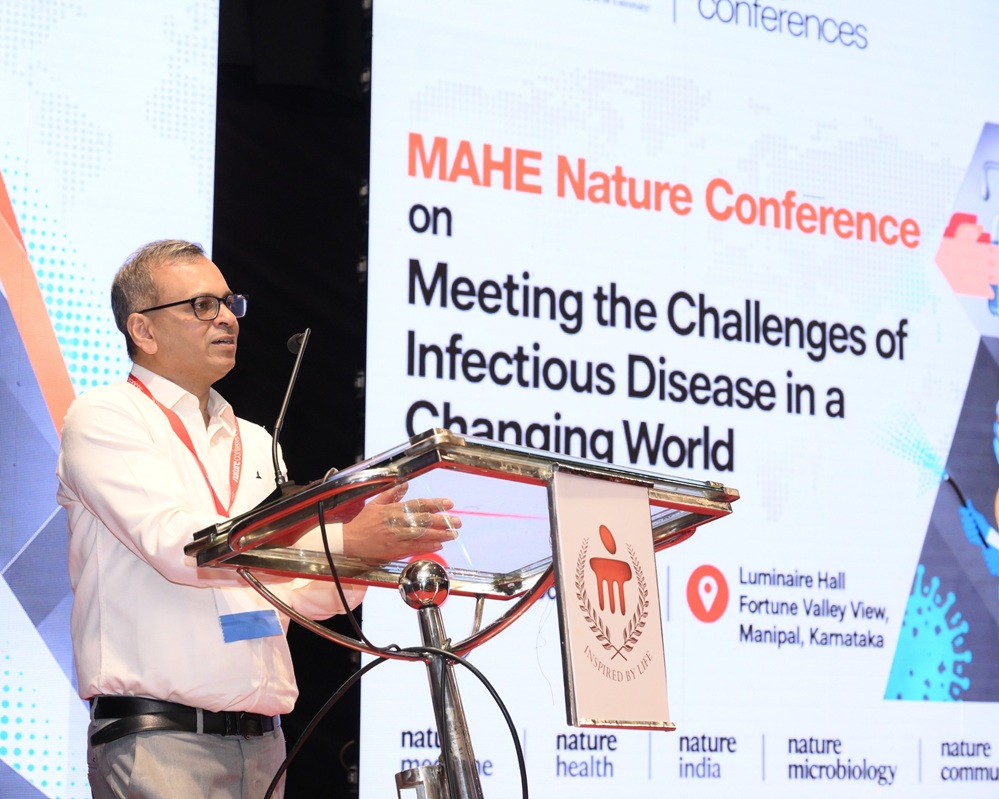
Manipal: As drug-resistant infections spread, climate change reshapes disease patterns and lessons from COVID-19 remain fresh, some of the world’s leading infectious disease experts spent three days at the Manipal Academy of Higher Education (MAHE), an Institution of Eminence Deemed to be University, searching for answers. The second Nature Conference in India, ‘Meeting the challenge of infectious diseases in a changing world’, concluded today.
Held from 14 to 16 October and organised by Nature Medicine, Nature Microbiology, Nature Health, Nature Communications and MAHE, the conference brought together researchers and public health experts from India and around the world. Sessions covered disease surveillance and forecasting, antimicrobial resistance (AMR), diagnostics, disease prevention, vaccine development, climate change and pandemic preparedness, with a focus on challenges that matter to India’s health system.
The conference follows the first Nature Conference in India, also held at MAHE Manipal in 2024 on nanomaterials in biomedical applications.
Dr Sharath K. Rao, Vice Chancellor, MAHE said: “Hosting the second Nature Conference in India at MAHE is an important opportunity to bring together researchers and experts working across disciplines and geographies. Infectious diseases present complex challenges that require scientific collaboration, sustained research and the exchange of knowledge. We are pleased to partner with Nature Portfolio in creating a platform for meaningful scientific engagement and in supporting conversations that can contribute to the advancement of research and public health.”
Lorenzo Righetto, Senior Editor, Nature Health, said: “Addressing infectious diseases requires a deeper understanding of emerging pathogens, antimicrobial resistance, disease prevention and the wider environmental factors that influence health. The Nature Conference brings together researchers working across these areas, creating opportunities for scientific exchange and interdisciplinary collaboration. We are delighted to continue our partnership with MAHE and support a forum that enables the research community to engage with some of the most pressing challenges in global health.”
The programme featured keynote addresses, research presentations and poster sessions, bringing together perspectives from epidemiology, microbiology, public health, clinical research and environmental science. Discussions examined the importance of strengthening surveillance systems, improving disease detection, advancing treatment and prevention strategies, and understanding the connections between environmental change and infectious disease risk.
****