


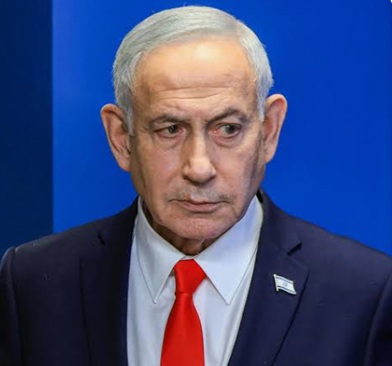
JERUSALEM : Israeli President Isaac Herzog has handed former army chief Gadi Eisenkot the first formal chance to form a government, dealing a clear setback to Prime Minister Benjamin Netanyahu after an inconclusive October 27 election. The decision, conveyed on Saturday and to be formalised at a ceremony at the President’s Residence in Jerusalem on Sunday, follows consultations in which parties representing 67 Knesset members recommended Eisenkot against 46 for Netanyahu.
Eisenkot, leader of the centrist Yashar party, will have 28 days—extendable by 14 more—to assemble a coalition holding at least 61 of the Knesset’s 120 seats. Netanyahu remains caretaker prime minister in the interim. The outcome places the longest-serving Israeli premier on the defensive after his religious-nationalist bloc secured 53 seats, Eisenkot’s four-party Jewish opposition alliance won 48, and Arab-led parties took a record 19.
Eisenkot’s Strategy
Eisenkot has framed the moment as a national emergency requiring rapid action. He has publicly committed to forming a “national emergency government” and has set four non-negotiable conditions for any partner: recognition of Israel as a Jewish and democratic state; commitment to the values of the Declaration of Independence; universal service (military, national or civilian) for all citizens; and recognition of Hamas as a terrorist organisation whose military and governing capabilities must be dismantled.
He has ruled out bringing the Arab-led parties (Joint List and Ra’am) into a formal coalition, even though their recommendations helped give him the numerical edge. His preferred path appears to be a minority government built on the 48-seat Jewish opposition bloc (Yashar, Together led by Naftali Bennett and Yair Lapid, Yisrael Beiteinu under Avigdor Liberman, and the Democrats), relying on external parliamentary support from Arab parties to pass a confidence vote. Israeli law requires only a simple majority to install a government, while ousting one demands an absolute majority of 61 for an alternative.
An alternative route is to peel away the ultra-Orthodox parties—United Torah Judaism (which declined to recommend Netanyahu) and Shas—for a 61-seat majority. This collides with Eisenkot’s insistence on universal service and the opposition’s long-standing opposition to blanket draft exemptions. Liberman has signalled limited openness to the ultra-Orthodox while warning that a minority government propped up by Arab parties would be short-lived and ultimately strengthen Netanyahu.
Eisenkot has also prioritised immediate parliamentary steps once the new Knesset is sworn in, including electing a new speaker (replacing Likud’s Amir Ohana) and legislating a state commission of inquiry into the security failures preceding the October 7, 2023 Hamas attacks. He has dismissed Netanyahu’s call for a unity government as a “pathetic spin,” stating that Likud would be welcome only if it dissolved its alliance with far-right partners and joined under an Eisenkot-led government.
The Political Arithmetic and Obstacles
Netanyahu’s bloc lost its majority, and the refusal of United Torah Judaism to recommend him exposed a fracture. Netanyahu has warned that any government dependent on Arab parties would “dismantle the State of Israel from within” and has urged a broad national unity arrangement that includes his entire camp. He has also continued to question aspects of the election result, claims rejected by election authorities.
The challenges for Eisenkot are substantial. Divisions within the opposition over the acceptability of external Arab support, the draft issue, and cabinet allocations remain sharp. Some right-leaning elements of the anti-Netanyahu camp, including Liberman, have expressed deep scepticism about minority arrangements. Success would require compromises that risk alienating core voters on both the secular right and the centre-left.
Background and Stakes
Eisenkot, 66, served as IDF chief of staff from 2015 to 2019. He entered politics in 2022 with Benny Gantz’s National Unity, sat in Netanyahu’s wartime cabinet as an observer after October 7, and resigned in 2024 over strategic disagreements. His son and two nephews were killed while serving in Gaza. He founded Yashar in September 2025, positioning it as a security-focused, centrist force emphasising institutional accountability and national service. Born to Moroccan immigrant parents and raised in the periphery, he presents a contrast to Netanyahu’s long dominance of Israeli politics.
The mandate is the clearest opening yet for ending Netanyahu’s continuous influence at the centre of Israeli politics for more than three decades. Failure by Eisenkot would return the mandate to another candidate—potentially Netanyahu—and could lead to another election in early 2027. For now, the former general has the first opportunity, but converting recommendations into a durable coalition will test both his strategy and the opposition’s capacity to hold together.