


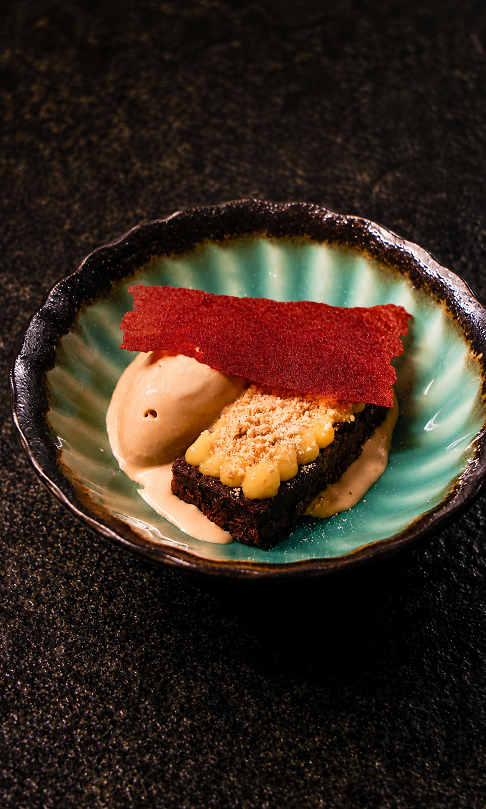
Bengaluru – This May, Nila presents the second chapter of its evolving menu, turning its exploration of India to the Backwaters in the southern region of the country. Staying true to his vision of celebrating the diversity of India through ingredients, the new menu by Chef Rahul Sharma brings you a 12 course tasting menu that moves away from traditional dish formats in the country. The result is a body of work that feels familiar in flavour yet shifts form with intent, offering a new way to experience regional Indian ingredients.
Staying true to the brand, the menu reads like a study of the region’s ecology: rice paddies that flood and retreat with the seasons, toddy tapped at dawn, mangoes that move between pickle and dessert, coconut in all its forms. The dining experience unfolds as a 12-course progression, moving between small compositions, shared elements, and more substantial mains; each course features one ingredient as the hero.
The meal opens with snack-led introductions, playful yet precise. Coconut appears across textures, lifted by curry leaf and fresh herbs, while bilimbipuli and toddy vinegar bring clarity and acidity.
As the meal progresses, preservation and fire begin to define the narrative. Pickling, fermentation, and gentle charring deepen flavour, while Kuttiattoor mango and Vazhakulam pineapple move fluidly between sweet and savoury. Seafood and meat begin to anchor the progression, integrated rather than isolated.
Rice forms a quiet backbone, with Navara, Gandhakasala, and Kalipad appearing in varied expressions, bringing earthiness, fragrance, and minerality shaped by their terrain. These ingredients trace their roots to the agricultural and backwater regions of Kerala, where land, water, and seasonality continue to shape everyday cooking practices.
The meal shifts into a shared format, where breads, broths, and condiments come together at the table. Rooted in India’s enduring condiment culture, where chutneys, pickles, podis, and preserves are as integral to a meal as the main dish itself, this sensibility continues to shape the experience at Nila.
Coastal seafood, duck from the paddy fields, and plant-based elements coexist, with Edayur chilli lending warmth and Alleppey green cardamom adding lift.
In the latter courses, depth builds through smoke and slow cooking. Karimeen, pork, and duck are layered with pepper, coconut, and fermented elements, while coconut husk smoke adds a quiet, lingering warmth. Sweetness is anchored by Travancore jaggery, complex and restrained.
Across the progression, the approach remains consistent: ingredients are allowed to evolve through technique, but never lose their identity, resulting in a menu that feels familiar in flavour, yet distinct in form.
With this chapter, Nila continues its exploration of India’s regional diversity, translating landscape and memory into a contemporary tasting experience.