


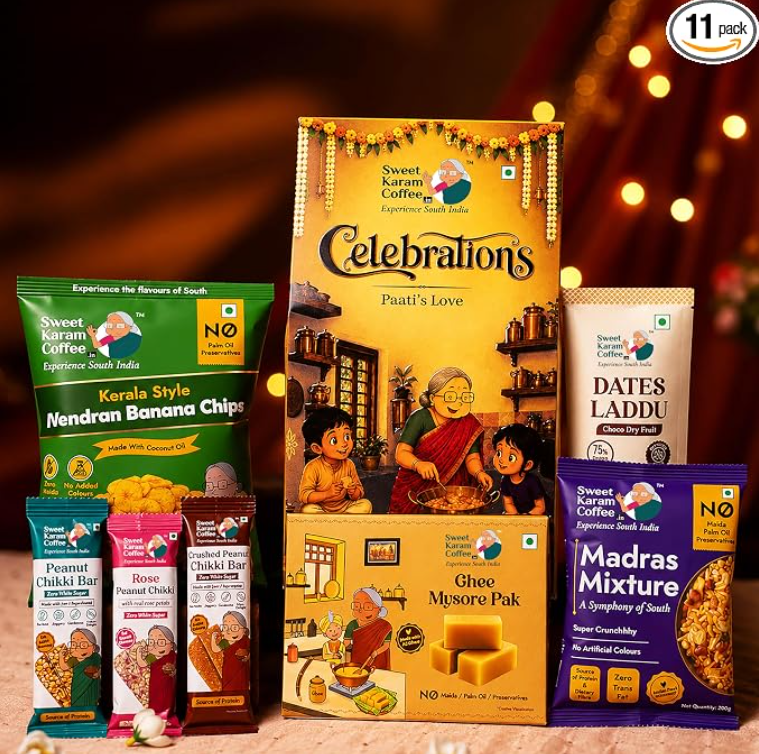
In India, every festival begins in the kitchen. Long before the lamps are lit, there is sundal simmering in Tamil homes as the golu steps fill with dolls. In Kolkata, the air turns sweet with bhog and the boxes of mishti are carried from door to door on Bijoya. In Mysuru, the palace glows for Dussehra, while Gujarat dances through nine nights of garba and the North gathers to watch Ravana burn. The dishes change with every state, but one rule holds everywhere: no guest leaves hungry. Sweet Karam Coffee was built on that very rule. Born from the recipes of a grandmother’s kitchen, the brand has spent years bringing traditional Indian sweets and snacks to homes across the country, and this festive season, it is filling plates from golu to pandal.
In every region, food sits at the centre of these festivals. It is offered to the goddess, shared with neighbours and handed to every guest at the door. Sweet Karam Coffee, a South Indian food brand whose recipes are inspired by its grandmother figure, Janaki Paati, has brought out a festive range built on these traditions.
Here are nine flavours that define the season, along with the stories behind them.
1. Sundal, the golu evening staple
In Tamil homes, each evening of Navratri ends with a small bowl of sundal for visitors. The legume changes over the nine days, from chickpeas to green gram to peanuts, and is tempered with mustard seeds, curry leaves and grated coconut. For many people, it is the taste they remember most from going golu-hopping as children.
2. Mysore Pak, Dasara’s own sweet
Few sweets are as closely linked to Dussehra as Mysore Pak. It is said to have been created in the kitchens of the Mysore Palace, which is still the centre of Mysuru’s famous Dasara celebrations. Families continue to debate whether the soft, ghee-rich version is better than the firm, porous one. This season, Sweet Karam Coffee has introduced a Kaju Mysorepak as a limited festive edition, alongside its soft ghee and mango versions.
3. Boondi laddu, the prasad everyone waits for
Boondi laddu is offered at temples and home pujas alike, and it is often the first sweet placed before the goddess during Navratri. It is also the first to disappear once the puja is over. For families who would rather not spend an afternoon frying boondi, Sweet Karam Coffee’s Boondi Laddu can go straight onto the offering plate.
4. Athirasam, a sweet that takes patience
Athirasam is made from rice flour and jaggery and is a traditional offering in many Tamil homes. The dough needs to rest for a day or more before it is shaped and fried, so many families now make it only on special occasions. Sweet Karam Coffee’s Athirasam follows the traditional jaggery recipe for those who want the taste without the wait.
5. Mishti on Bijoya Dashami
In Bengal, Pujo ends with Bijoya visits. Younger family members touch the feet of their elders, greetings of “Shubho Bijoya” are exchanged, and no guest leaves without something sweet. Narkel naru, sandesh and rosogolla are passed around in every home, and the coconut and jaggery sweets of the East are not very different from those made in the South.
6. Pori and kadalai on Ayudha Puja
On the ninth day of Navratri, homes and workplaces across the South honour the tools of their trade, from books and musical instruments to vehicles and machinery. The offering is simple. Puffed rice, roasted chana, jaggery and bananas are placed before the tools and later shared with everyone who works with them.
7. Filter coffee for every visitor
Navratri brings a steady stream of guests, and in the South no visit is complete without a tumbler of filter coffee. It is what keeps hosts going through nine evenings of welcoming people into their homes.
8. The thamboolam bag
Golu visitors, especially women, go home with a small return gift of betel leaves, turmeric, kumkum and a coconut or fruit. Over the years, the bag has grown to include sweets, chikkis and small keepsakes, but the custom of never sending a guest away empty-handed has not changed.
9. Something spicy to balance the sweet
After days of laddus and burfis, most people start craving something savoury. In Kolkata, that might be nimki or ghugni during a long Pujo adda. In the South, it is usually a bowl of mixture or banana chips with evening coffee. Sweet Karam Coffee’s Special Madras Mixture and its Kerala Banana Chips, which are fried in coconut oil, are well suited to these evening gatherings.
Many of these recipes take more time than busy households can spare today. This is one reason brands such as Sweet Karam Coffee, which makes traditional sweets and snacks without palm oil or preservatives, have found a place on festive tables. Whether the food is made at home or bought on the way to a golu, the tradition of sharing it remains the same.