


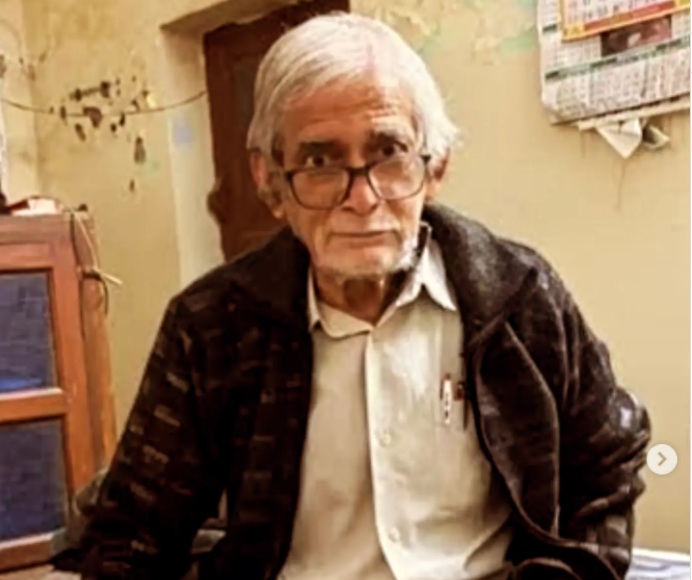
On a cold January morning this year, neighbours in a quiet block of flats near Banaras Hindu University grew uneasy. The thin old man who walked past their doors every day with a black umbrella and a simple cloth bag had not come for his milk. Four days passed. No light under the door, no sound from inside. When the latch finally gave way under their shoulders, they found Dr Tapan Kumar Lahiri lying motionless on his bed, soiled and barely breathing. The man Varanasi has long called “Dr God” had almost died alone.
The 85-year-old cardiothoracic surgeon has spent more than half a century answering a different kind of call. Born in Kolkata on 3 January 1941, he trained with distinction—FRCS in cardiac surgery in England in 1969, M.Ch in thoracic surgery in 1972—and could have built a comfortable life anywhere. Offers from abroad, including associations with some of the finest surgical centres, came and went. In 1974 he walked into the Institute of Medical Sciences at BHU instead, beginning on a lecturer’s salary of a few hundred rupees. He rose to head the Department of Cardiothoracic Surgery, trained generations of surgeons, and published dozens of papers. Yet the wealth that usually follows such a career never interested him.
In the mid-1990s, when his salary with allowances crossed one lakh rupees, Lahiri stopped taking it. He directed the entire amount toward medicines and help for patients who could not pay. After formal retirement in 2003 he accepted the post of Professor Emeritus only on the condition that he receive nothing. To this day he lives on the bare minimum needed for two plain meals, giving the rest of his pension to a university fund for the poor. He has no phone, no vehicle, no private practice. For years he walked nearly two kilometres to Sir Sunderlal Hospital every morning, rain or heat, the black umbrella his only companion.
Patients remember a doctor who treated the rich and the destitute with the same quiet attention. Political leaders who sought private consultations were told, politely but firmly, to come to the OPD like everyone else. He never married. Colleagues say the hospital and its poorest patients became his family. Students still speak of his rigorous teaching and of the way he would quietly arrange free treatment or medicine when a family had nothing left.
The January incident did not end his story. He was brought to the same hospital he had served for decades and has been recovering slowly. Those who know him say the near-death only deepened the legend: here was a man who had given everything and asked for nothing, found at the end by the very community he had never stopped serving.
In 2016 the nation recognised him with the Padma Shri. For the people of Varanasi the honour had come long before. They still speak of the slight figure under the black umbrella, of the surgeon who refused fortune so that a labourer’s child or a widow’s husband might live. In an age when medicine is often a marketplace, Dr Tapan Kumar Lahiri remains a reminder that healing can still be an act of pure, almost monastic devotion—one that continues, even now, in the quiet rooms of the hospital he never really left.