


By Team Authentic Press Network
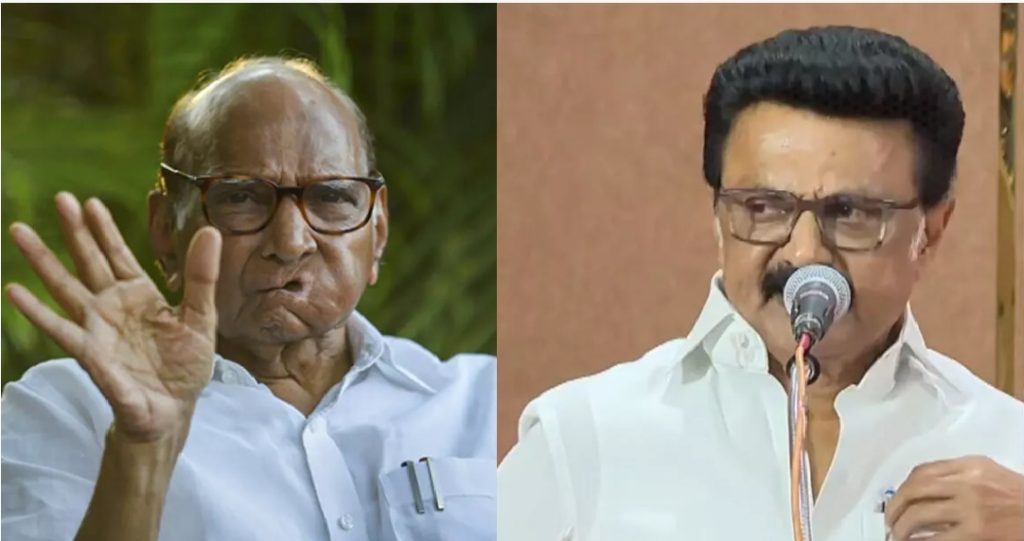
New Delhi / Chennai: Regional parties in India have long operated less as vehicles of ideology or public interest and more as tightly held private limited companies. Their balance sheets are measured in seats, cash flows, and personal or dynastic survival rather than governance outcomes. Sharad Pawar’s successive pivots and the DMK’s latest U-turn on delimitation are only the most recent entries in a familiar ledger. In November 2026, these parties have again sold their parliamentary arithmetic to the cash-rich BJP, enabling the passage of the Constitution (132nd Amendment) Bill and the Delimitation (Second) Bill. The transaction is dressed as “pragmatic defence of state interests.” In substance it is a short-term survival pact for parties that fear irrelevance and for a central leadership that fears the voter.
Prime Minister Narendra Modi and Home Minister Amit Shah are under no illusion about their political and social position. After the 2024 general election left the BJP without a majority of its own, successive state results, youth-led protests over voter-roll revisions (the SIR process that opposition parties and activists claim deleted well over 13 crore names), paper leaks, unemployment, and farmer distress have eroded the aura of invincibility. With the 2029 Lok Sabha election approaching and the 2027 Census set to expose population realities, the duo has chosen the classic instrument of incumbents under pressure: redraw the map. The revised bills mandate a uniform 50 per cent increase in Lok Sabha and Assembly seats, freeze inter-state ratios on the 1971 Census basis until 2051, and pave the way for 33 per cent women’s reservation. Tamil Nadu’s seats are projected to rise from 39 to 59 while retaining roughly 7.18 per cent of the House; the Lok Sabha ceiling moves toward 816–850. Southern parties that opposed the April 2026 version (which fell 298–230, short of two-thirds) have now signed on.
DMK chief M.K. Stalin has called the outcome a “victory for sustained struggles” and for southern states. NCP (Sharadchandra Pawar) leaders describe delimitation as a “constitutional requirement.” YSRCP and others have joined. Together with existing NDA partners and some breakaways, this support has lifted the government’s estimated Lok Sabha backing from around 320 to 350–354 — within striking distance of the 360 votes needed if all roughly 540 sitting members participate. A DMK delegation met Amit Shah to formalise the decision. The arithmetic is clear; the politics is transactional.
Critics inside the INDIA bloc and beyond see something else. Congress leader and Leader of Opposition Rahul Gandhi has stated the core objection bluntly: the real issue is not state share but “850 seats” that hand “the BJP, Adani, Ambani, Gyanesh Kumar and Amit Shah a blank cheque to redraw constituencies across the country, destroy democracy and continue looting the people of India.” He and allies have demanded a bipartisan Delimitation Commission and immediate women’s reservation without waiting for boundary redraws. Former civil servants, academics and activists have written to the government seeking a 30-day consultation, flagging the Centre’s control over the Commission’s chairperson and tenure, and the absence of safeguards against gerrymandering. These are not abstract fears. Previous delimitation exercises in Assam and Jammu & Kashmir drew precisely such charges.
The regional parties’ defence — that they chose the “lesser of two evils” and locked in a 25-year freeze — does not survive scrutiny of their own history. Pawar’s faction has repeatedly demonstrated that survival of the political enterprise outweighs alliance or principle. The DMK, after years of railing against population-based delimitation that would punish southern states for better family-planning outcomes, has accepted a formula that preserves relative shares while expanding the absolute number of seats. This is the logic of a private company protecting its equity percentage even as the total share capital grows; the absolute power and patronage opportunities expand for everyone who stays inside the deal. Whether cash, future seat adjustments, or protection from central agencies formed part of the inducement is secondary to the observable outcome: parties that positioned themselves as anti-BJP or federalist have supplied the numbers the NDA lacked in April.
This arrangement will not protect the BJP from the electorate. Voter discontent is no longer limited to opposition rhetoric. Youth protests over alleged electoral-roll bias, exam leaks and joblessness have brought Gen Z onto the streets; analysts note this is among the most sustained challenges to Modi since 2014. Unemployment remains stubbornly high for a large under-30 cohort that constitutes roughly a quarter of the electorate. Farmers continue to cite fertiliser shortages, inadequate prices and input costs. Inflation and the concentration of growth among a handful of corporate groups are recurrent themes. Rahul Gandhi has spent years documenting the claim that the BJP has fused finance and politics by favouring Gautam Adani and Mukesh Ambani — airports, ports, energy, cement and other critical sectors — while manufacturing and broad-based private investment stagnate. He has linked recent trade concessions to protection of specific corporate interests facing overseas legal scrutiny. Whether every allegation holds in court is for judicial processes to decide; the political effect is that a substantial section of voters now associates the ruling dispensation with pro-corporate outcomes and anti-people costs. Expanding the House or redrawing boundaries does not erase that perception.
Increasing the number of Lok Sabha and Assembly seats creates more opportunities for patronage and resource-intensive campaigns — advantages that accrue disproportionately to the party with the deepest war chest. It does not address the structural grievances. A larger Parliament is more expensive and potentially more unruly; only the best-funded organisation can fully exploit the expanded map. Women’s reservation is a legitimate constitutional goal, but linking it to a delimitation exercise whose Commission is under executive influence invites the charge that representation is being instrumentalised. Southern states that accept the freeze until 2051 have bought temporary relief; they have not removed the underlying demographic and economic divergence, nor the risk that future governments will revisit the formula once the freeze expires or political conditions change.
Predictions follow from the evidence rather than wishful thinking. Modi’s personal political aura — once the dominant asset of the BJP — is diminishing. The 2024 result already demonstrated limits. Tight opinion polls in key states such as Uttar Pradesh (where recent surveys show the NDA and INDIA bloc ranges overlapping the majority mark, with dozens of seats too close to call), continued protests, and the need to buy regional support for a constitutional amendment all point in the same direction. Regional parties that have repeatedly prioritised their own survival over opposition unity will continue to trade votes for seats or protection; they are structurally incapable of sustained ideological resistance. The BJP’s reliance on such partners and on institutional levers such as delimitation signals anxiety about organic majorities. Public ire over perceived corporate capture, joblessness, and institutional opacity will not be legislated away. If the opposition consolidates the narrative that delimitation is gerrymandering in service of corporate-linked power, and if youth and rural discontent persists, the expanded House of 2029 could prove as hostile to the current dispensation as the present one has become.
The regional parties have once again behaved like private limited companies: protecting their percentage stake, securing short-term cash or seat flows, and subordinating broader democratic or federal principles. The BJP and its leadership have used that willingness to manufacture the numbers for a map redraw they hope will extend their tenure. Neither calculation accounts for the simmering discontent among voters who increasingly view the arrangement as anti-people. Delimitation and additional seats are instruments of incumbency, not antidotes to legitimacy deficits. The coming years will test whether institutional engineering can outrun public judgement.