


From Our Correspondent
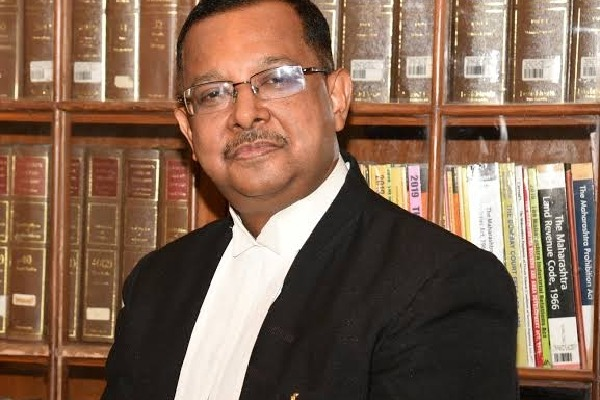
NEW DELHI: Supreme Court judge Justice Ujjal Bhuyan Friday powerfully denounced the “distressing” conduct of Delhi Police officers who personally assaulted NEET protesters at Jantar Mantar, declaring the incident symptomatic of “vanishing professional detachment” in law enforcement and warning that such actions breed “systemic lawlessness.”
Speaking at Viceroy Hall here during the launch of retired IPS officer Yashovardhan Azad’s book Policing the Republic, Justice Bhuyan delivered a searing critique that went beyond the July 20 protest violence to address fundamental policing principles in a constitutional democracy.
“All of us are dismayed when we see young officers of the Indian Police Service personally going and assaulting protesters and demonstrators,” Justice Bhuyan stated solemnly. “This is something very, very distressing to observe.”
The judge’s remarks directly addressed viral footage showing Delhi Police personnel using excessive force against students demonstrating against alleged NEET-UG 2026 paper leaks on July 20. His concerns extended to the very philosophy of policing, referencing wider institutional issues including custodial torture and extra-judicial “encounter” killings.
The Vanishing Line Between Authority and Aggression
“The detachment expected of police officers somehow seems to be disappearing, and this is indeed a matter of grave concern,” Justice Bhuyan emphasized, articulating what many see as the central crisis in modern Indian policing: the erosion of professional objectivity.
He invoked constitutional principles to challenge assumptions about police authority versus citizen rights: “Does a citizen shed off his fundamental right the moment a policeman arrests him?”
“The answer indeed has to be an emphatic no,” he declared, establishing a clear boundary between lawful enforcement and rights violations.
Justice Bhuyan offered a stark warning about the consequences when those entrusted with upholding laws become their primary violators: “If the functionaries of the government become lawbreakers, it is bound to breed contempt for the law and will encourage lawlessness. No civilized nation can permit that to happen.”
Constitutional Policing and the Credibility Crisis
The Supreme Court judge outlined a vision for reformed policing anchored in democratic values and professional standards: “For most common people, a policeman on the street wearing a whistle and a lathi represents the power and authority of the state. When they feel wronged, they seek the help of the police. It is, therefore, of utmost importance that the police force maintains its credibility.”
He prescribed the only sustainable path: “It can do so only by strictly adhering to the Constitution, by functioning as a truly professional force, acting impartially, displaying courage and acting with conviction, maintaining integrity and adhering to secular principles, thereby upholding the rule of law.”
Justice Bhuyan specifically condemned the culture of extra-judicial violence that has occasionally marred Indian policing: “Encounter philosophy is a criminal philosophy. It cannot be a part of policing.”
On custodial abuse, he delivered an unequivocal judgment: “Custodial death is perhaps one of the worst crimes in a civilized society governed by the rule of law. Any form of torture, of cruel, inhuman, or degrading treatment would fall within the inhibition of Article 29, whether it occurs during investigation, interrogation or otherwise.”
Supreme Court Action and Sustained Scrutiny
The judge’s intervention comes amid active Supreme Court oversight of the July 20 incident. The apex court has constituted a high-powered five-member committee chaired by former SC judge Justice R. Subhash Reddy to investigate allegations of excessive force, electronic baton use, and harassment of women protesters.
Other committee members include former Punjab and Haryana High Court Chief Justice Ravi Shankar Jha, former Delhi High Court judge Justice Shalinder Kaur, former CBI director Rishi Kumar Shukla, and retired Meghalaya DGP Dr. LR Bishnoi.
Justice Bhuyan emphasized that effective policing could be achieved “without resorting to the excessive use of force or infringement of human rights,” offering a clear alternative to the confrontational approach witnessed at Jantar Mantar.
The Delhi Police maintains force was used only after protesters allegedly turned violent, with some sections of the crowd reportedly engaging in stone-pelting against security personnel. However, the Supreme Court committee will examine allegations of disproportionate response, targeted violence, and violation of constitutional norms.
“There is a lesson for all of us. There is a lesson for India,” Justice Bhuyan concluded, referencing recent unrest in Manipur to suggest respectful, lawful policing remains essential to national cohesion in diverse democratic contexts.
As Justice Bhuyan spoke, copies of Azad’s book — carrying the poignant title Policing the Republic — served as a symbolic backdrop, highlighting the widening gap between democratic ideals and street-level policing realities that his speech sought to address.