


By Suresh Unnithan
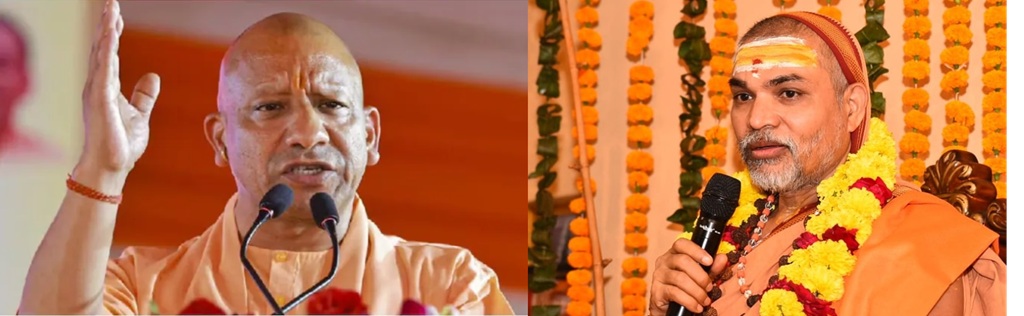
The ongoing tussle between Jyotish Peeth Shankaracharya Swami Avimukteshwaranand Saraswati and Uttar Pradesh Chief Minister Yogi Adityanath has escalated from a ritual dispute into a full-blown ideological battle, exposing fault lines within the Bharatiya Janata Party (BJP) and its vaunted Hindutva agenda. With top BJP leaders like Prime Minister Narendra Modi and Home Minister Amit Shah maintaining a conspicuous silence, a section of the party appears to be quietly aligning with the Shankaracharya, mounting unprecedented pressure on Yogi. This could culminate in his resignation or, at the very least, force the BJP high command to jettison him to salvage its image as the guardian of Hindu interests. As other Shankaracharyas join the fray and plans for a Delhi march gain momentum, the issue risks blowing out of proportion, potentially derailing the BJP’s electoral fortunes in Uttar Pradesh and beyond.
The controversy ignited on Mauni Amavasya, January 18, 2026, during the Magh Mela in Prayagraj. Swami Avimukteshwaranand, claiming the title of Shankaracharya of Jyotish Peeth, attempted to take a traditional “royal bath” (shahi snan) in a palanquin, accompanied by his disciples. Police intervened, citing restricted routes and public order concerns, leading to a scuffle. The seer alleged that authorities created a “stampede-like situation” to harm him, with disciples being beaten, dragged by their sacred threads (janeu), and even stripped. He accused the Yogi administration of a “murder conspiracy,” linking it to his past criticisms of the government on issues like cow slaughter, temple management, and the mishandling of the 2025 Maha Kumbh stampede, where bodies reportedly floated in the Ganga. In response, the Magh Mela administration issued two show-cause notices: one questioning his use of the “Shankaracharya” title amid a pending Supreme Court case on the peeth’s succession and another threatening a permanent ban from the mela for alleged violations. The seer has since staged a dharna and hunger strike, refusing further baths until an apology from Yogi.
The war of words has been venomous, revealing deep-seated animosities. Avimukteshwaranand has not minced words, labelling Yogi a “liar” for tweeting about a peaceful mela while ignoring the alleged atrocities. He compared the CM to Mughal emperor Aurangzeb, claiming, “More temples are being demolished today than even Aurangzeb destroyed,” referring to over 150 ancient shrines allegedly razed in Varanasi for the Kashi Vishwanath corridor project. “Yogi is not worthy of being called a Hindu; he is power-hungry and silent on temple demolitions to protect his chair,” the Shankaracharya thundered in a viral video, demanding Yogi’s immediate resignation. Yogi, without naming the seer, hit back indirectly during a speech in Haryana, invoking the Ramayana to warn of “Kaalnemi” forces—demonic entities disguised as ascetics—attempting to weaken Sanatan Dharma. This veiled jab has fuelled accusations that Yogi views critics within the Hindu fold as enemies, further alienating traditionalists.
The rift has drawn in the other three Shankaracharyas—those of Dwarka, Puri, and Sringeri—amplifying the crisis. Swami Sadanand Saraswati of Dwarka Peeth condemned the “grave insult” to Avimukteshwaranand, warning that “power comes and goes, but misuse against seers invites the sin of cow slaughter.” Reports indicate the Shankaracharyas are coordinating a potential Delhi march to protest the “attack” on their institution and disciples, potentially mobilizing lakhs of devotees.
Within the BJP, the response has been muted at the top, but fissures are evident. Uttar Pradesh Deputy Chief Minister Keshav Prasad Maurya, often seen as a rival to Yogi, broke ranks by offering “respects at the feet of the revered Shankaracharya” and urging him to end the protest while promising an inquiry into any disrespect. This subtle support echoes murmurs from party sections, including BJP leader Sunil Bhalara, who openly stated that “insulting Shankaracharya is insulting Sanatan Dharma” and criticized “demonic mindset” officers. Maurya’s intervention, amid his own ambitions for the CM post, suggests internal manoeuvring. Sources indicate a faction within the BJP, frustrated with Yogi’s perceived arrogance and handling of issues like the 2025 Kumbh mishaps sees this as an opportunity to push for change. The silence from Modi and Shah could be strategic, allowing the controversy to test Yogi’s resilience before the 2027 UP assembly elections.
Politically, this has put the BJP on the backfoot, undermining its Hindutva narrative. The party which gained prominence on the Ram Temple wave and positions itself as Hinduism’s defender, now faces accusations of hypocrisy. Opposition parties have seized the moment: Samajwadi Party chief Akhilesh Yadav called the treatment “the biggest adharm,” accusing the BJP of “insulting Sanatan Dharma.” Congress leaders like Pawan Khera demanded Modi’s intervention. Protests have spread, with Tripura Congress burning effigies of Modi and Yogi. Social media is ablaze with hashtags like #YogiAdityanathMustResign, amplifying narratives of the BJP as “anti-Hindu” in its pursuit of power. This echoes past controversies, like the 2024 Ram Temple boycott by Shankaracharyas, but now strikes at the core of BJP’s voter base—devout Hindus who revere seers above politicians.
The mounting pressure could force the BJP to jettison Yogi. His bulldozer governance, while popular among hardliners, has alienated allies and now religious figures. If the Delhi march materializes, it could spark nationwide unrest, reminiscent of the farmers’ protests. Substantiated reports suggest internal BJP surveys show eroding support in eastern UP due to such rows. Replacing Yogi with Maurya, a backward caste leader, might consolidate OBC votes while appeasing seers. However, this risks portraying the party as weak.
Critically, this episode reveals the BJP’s Hindutva as instrumental rather than ideological. By prioritizing administrative control over religious sensitivities, the party has invited backlash from the very ecosystem it claims to protect. Avimukteshwaranand’s past “expulsion” of Rahul Gandhi from Hinduism and boycott of the Ram Temple show his independence, making his critique harder to dismiss as opposition-orchestrated. If unresolved, this schism could fracture the BJP’s monolithic Hindu vote bank, proving that even saffron robes can clash when power eclipses piety. As the seer warns, “We have opposed Mayawati and Akhilesh too; today, Yogi is wrong.” The BJP must heed this or risk electoral karma.