


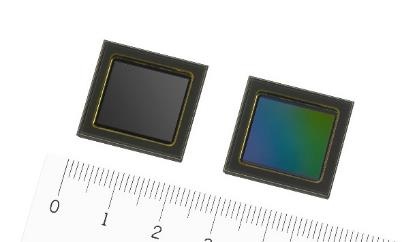
Bengaluru : Sony Semiconductor Solutions Corporation (Sony) today announced the launch of the L910, an approximately 50-effective megapixel*¹ image sensor for mobile applications that delivers 100 dB high dynamic range imaging with low power consumption.
This is one of the first LYTIA lineup with the LOFIC*² structure. It also features the new HDR technology along with the logic circuit technology that helps in reducing the random noise in dark areas of images. These technologies offer high-quality imaging by reducing highlight blowout in bright areas and noise in dark areas, compared to conventional products. Additionally, it also offers HDR video recording at 4K, 60 fps, which has become more popular recently, while maintaining low power consumption with optimized circuit design. With these enhanced features, the new sensor provides high-quality imaging that looks like what is seen by the human eye and clear capturing of both highlights and shadows in high-contrast scenes, such as night views with bright LED lights bringing new value to the shooting experience on mobile cameras.
In recent years, the need for camera functionality that can provide stable, high-quality imaging in various environments continues to grow along with the popularity of video production and live streaming. Consequently, image sensors require expanded dynamic range and improved power efficiency.
Therefore, the new sensor combines the expanded saturation capacity enabled by the LOFIC structure with the new HDR and circuit technology. It achieves a dynamic range of 100 dB with a single exposure, enabling imaging
with rich gradations from highlights to shadows and minimal noise. Compared to multi-exposure HDR technologies, this design help suppresses motion blur and flicker when shooting moving subjects, since the synthesizing process is not needed. Also, Sony’s proprietary circuit design reduces power consumption, enabling high-quality video recording at 4K, 60 fps even when shooting in HDR.
Model name Mass-production shipment date
LYTIA L910 1/1.28-type (12.49 mm diagonal) 50-effective-megapixel*1 stacked CMOS image sensor Summer 2026
Key Features:
1. The new HDR and circuit technologies offers 100 dB high dynamic range imaging in a single exposure
The new sensor comes with the LOFIC structure, which can store overflow charge from the photodiode and expand the saturation capacity compared to Sony’s conventional product. *³ It also uses the Triple Conversion Gain-HDR (TCG-HDR) technology, which reads out the charge obtained from a single exposure at three different conversion gains and that makes it possible to reduce highlight blowouts in bright areas and noise from dark areas to mid-tones to render high-quality imaging from bright areas to dark areas. Also, the Ultra High Conversion Gain (UHCG) circuits technology enhances charge to voltage conversion efficiency.
It reduces random noise by approximately 30% compared to Sony’s conventional product, *³ improving image quality in low-light conditions. These technologies achieve 100 dB high dynamic range images with a single exposure, suppressing noise in low-light conditions and enabling imaging with smooth gradations in high-contrast scenes. Single exposures also reduce moving subject blur, and the extended exposure time improves the image signal-to-noise ratio (SNR)*⁴ and suppresses light source flickering.
2. With optimized circuit design, the new sensor delivers low power 4K video recording while maintaining high dynamic range
Sony’s proprietary circuit design and advanced processes reduce the time required for analog-to-digital signal conversion, thereby lowering sensor power consumption. This feature leads to lower battery consumption for smartphones and enables high-quality 4K video recording at 60 fps while maintaining a high dynamic range. It also enables users to preview images in HDR quality on their smartphone screens. By capturing images and video as they appear, the sensor contributes to improved shooting experiences.