


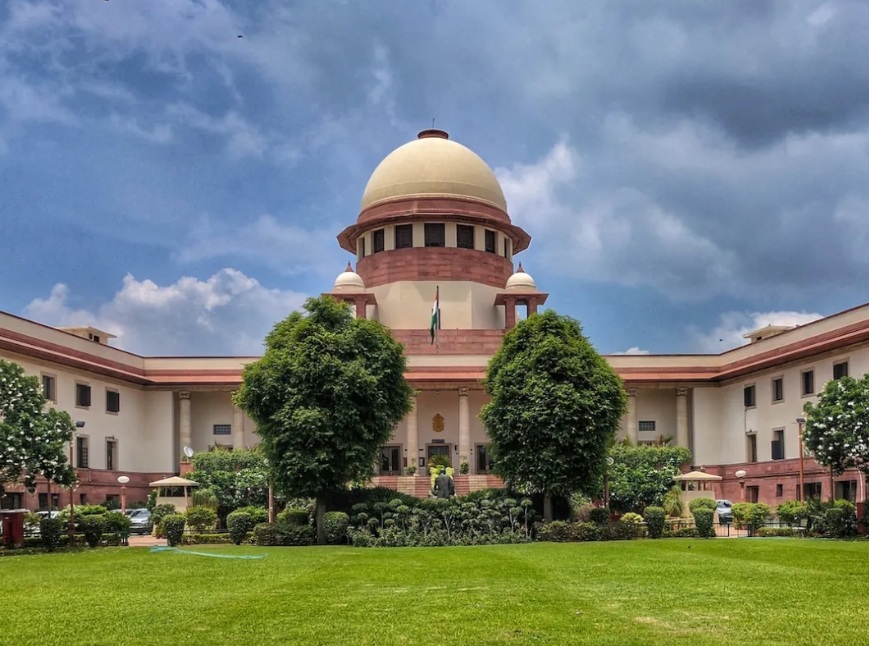
New Delhi: The Supreme Court of India on Sunday directed the Centre and Delhi Police to remove unnecessary barricades across the national capital, restore normal public transport services, and refrain from illegal detentions of peaceful protesters during the ongoing Cockroach Janta Party (CJP) demonstrations. The directions were issued by a two-judge bench of Justices Joymalya Bagchi and V. Mohana in an extraordinary special sitting convened to hear a batch of petitions, including contempt pleas, challenging the extensive restrictions imposed on Saturday.
The court ordered that barricades placed in various parts of Delhi must be reviewed forthwith and removed unless “absolutely warranted” by law-and-order or traffic considerations. It directed that Delhi Metro and railway services shall function normally, with restrictions permissible only when justified under Article 19(2) of the Constitution to prevent disturbance to public order. Internet facilities were ordered to remain undisturbed in accordance with the law, though the bench clarified that this did not curtail statutory powers under the Information Technology Act. Free movement of people and vehicles across the city must be permitted, subject only to lawful traffic regulations, and authorities were told not to hinder the professional duties of lawyers, journalists and other citizens.
On detentions, the bench was categorical: there shall be no illegal detention of any individual except in accordance with the procedure established by law, particularly in respect of peaceful and unarmed assemblies outside areas where prohibitory orders under Section 163 of the Bharatiya Nagarik Suraksha Sanhita (BNSS) are in force. The court also directed the removal of any notice boards announcing Section 163 restrictions in and around the Supreme Court premises to ensure unhindered access to justice. “We are duty-bound under Article 32 to protect and enforce fundamental rights,” Justice Bagchi observed during the hearing.
These interim directions came in response to petitions alleging that authorities had violated the court’s earlier order of October 9, when a bench headed by Chief Justice of India Surya Kant had directed that there should be no “complete prohibition” on metro and train services entering Delhi on October 10. Despite that direction, around 45 metro stations—mostly in and around central Delhi—were closed, roads were heavily barricaded, and mobile internet services were curtailed. Petitioner and advocate Shailendra Mani Tripathi had moved a contempt plea against the Union Home Secretary, Delhi Police Commissioner and Delhi Metro Rail Corporation Chairperson, contending that the closures amounted to wilful disobedience. Other pleas, including one by Trinamool Congress MP and Senior Advocate Menaka Guruswamy, raised issues of preventive detention of opposition leaders and citizens, and alleged excessive police action.
Solicitor General Tushar Mehta, appearing for Delhi Police, assured the bench that metro stations had reopened by 10 pm on Saturday and that internet services had already been restored. The court recorded these assurances while issuing notices to the authorities, seeking short affidavits and compliance reports by Tuesday, when the matter is scheduled to be heard again. Justice Mohana also urged those present to ensure that protests remain peaceful and do not instigate others.
The CJP, a Gen-Z-led satirical movement founded in May 2026 by Abhijeet Dipke after remarks by Chief Justice Surya Kant comparing certain unemployed youth and activists to “cockroaches,” had called for a protest at Jantar Mantar on Saturday demanding electoral reforms and the resignation of Chief Election Commissioner Gyanesh Kumar over the Special Intensive Revision (SIR) of electoral rolls. Delhi Police had denied permission, citing law-and-order concerns. Reports indicated that hundreds to several thousand people, including CJP leaders Dipke, Saurav Das and Ashutosh Ranka (detained upon arrival by flight from Mumbai), lawyers, student activists and opposition figures, were detained. The leaders were later released by a special executive magistrate, subject to conditions. Heavy multi-layered barricading, deployment of tens of thousands of security personnel and curbs on movement effectively turned large parts of central Delhi into a restricted zone for a second consecutive day.
The court’s intervention underscores the tension between the fundamental right to peaceful assembly and protest under Article 19 and the state’s duty to maintain public order. While affirming that the right to protest must be exercised within the bounds of law, including the Police Act, the bench emphasised that restrictions cannot amount to a complete shutdown of the capital’s essential services or a blanket suppression of lawful gatherings. The matter will be taken up again on Tuesday for further compliance and responses from the authorities.