


From Our Legal Correspondent
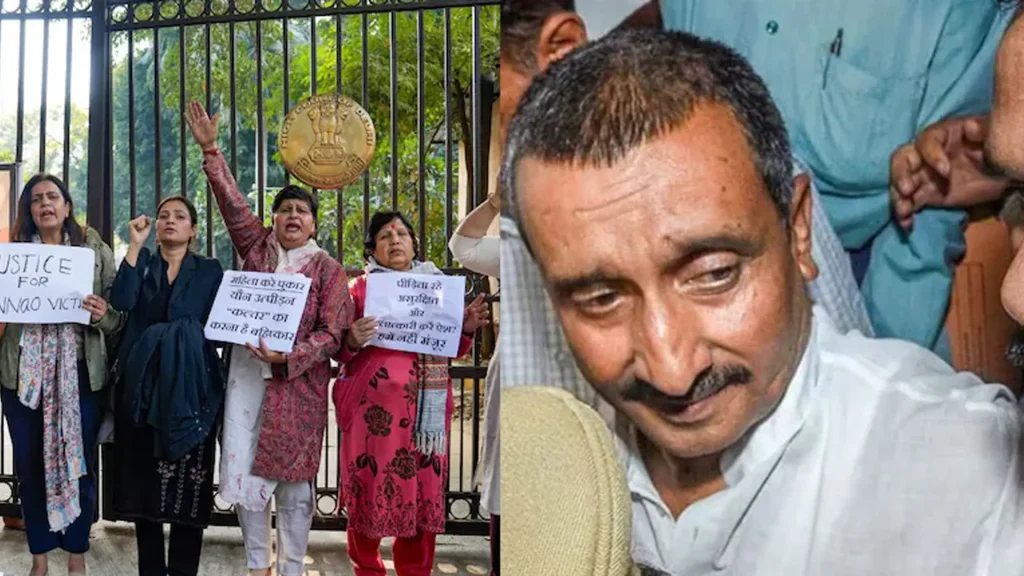
New Delhi: In a significant development that has reignited public faith in India’s justice system, the Supreme Court on December 29, 2025, stayed the Delhi High Court’s order granting bail to former Bharatiya Janata Party (BJP) MLA Kuldeep Singh Sengar in the infamous 2017 Unnao rape case. This decision ensures that Sengar, convicted of raping a minor and sentenced to life imprisonment, remains behind bars while the court hears appeals against the High Court’s ruling. The apex court’s intervention comes amid widespread outrage over the High Court’s December 23, 2025, order, which suspended Sengar’s life sentence on grounds of his health and time served, allowing him conditional bail. Legal experts and activists appreciate today’s SC verdict as a corrective measure that underscores the judiciary’s commitment to protecting victims in high-profile cases involving powerful individuals.
The Unnao rape case, which unfolded in Uttar Pradesh’s Unnao district, stands as a stark reminder of the vulnerabilities faced by women, particularly minors, in the face of political influence and systemic delays. On June 4, 2017, a 17-year-old girl was allegedly gang-raped by Kuldeep Singh Sengar and his accomplices. The victim, from a modest background, accused Sengar—a four-time MLA from Unnao—of luring her to his residence under the pretext of job assistance before assaulting her. What followed was a harrowing saga of intimidation and tragedy. The girl’s father was arrested on fabricated charges and died in police custody in April 2018, reportedly due to injuries sustained from beatings orchestrated by Sengar’s brother and associates. In July 2019, the victim’s family survived a suspicious car accident that killed two aunts and left the survivor critically injured, raising suspicions of foul play to silence witnesses.
Sengar, born in 1966, rose through the ranks of Uttar Pradesh politics, switching parties multiple times before settling with the BJP in 2017. He represented the Bangarmau constituency in the Uttar Pradesh Legislative Assembly from 2002 to 2017, wielding considerable local influence as a strongman in Unnao. His criminal background is extensive. Prior to the rape conviction, Sengar faced charges in over a dozen cases, including murder, attempt to murder, rioting, and arms violations. In 2019, a Delhi court convicted him of rape under the Protection of Children from Sexual Offences (POCSO) Act, culpable homicide not amounting to murder in the death of the victim’s father, and criminal conspiracy. He was sentenced to life imprisonment for the rape and 10 years for the father’s death. Despite being expelled from the BJP following his arrest in 2018, Sengar’s case highlighted how political clout can delay justice— it took public outrage, including protests and media scrutiny, to prompt his arrest.
The Delhi High Court’s decision to grant bail drew sharp criticism from various quarters, questioning the judicial prudence and integrity of the bench involved. Justices Prathiba M. Singh and Amit Sharma cited Sengar’s deteriorating health, including oral cancer, and the fact that he had served over seven years in jail as reasons for suspending his sentence. However, critics argued that this overlooked the gravity of the crimes and the on-going threat to the survivor. Social media erupted with condemnation, with activists labelling the order as a “miscarriage of justice” that favoured the powerful over the vulnerable. The Central Bureau of Investigation (CBI), which investigated the case under Supreme Court directives, swiftly appealed, contending that bail in such a heinous case undermines public confidence in the legal system. The survivor’s family expressed fears for their safety, stating they felt “unsafe” and needed protection. Opposition leaders and women’s rights groups accused the judiciary of bias, pointing to Sengar’s political connections as a potential influence.
The Supreme Court’s stay, delivered by a vacation bench, has been welcomed as a step toward restoring equilibrium. During the hearing, Solicitor General Tushar Mehta described the case as “horrific,” emphasizing the rape of a minor and the subsequent cover-ups. The court issued notices to Sengar, seeking his response within four weeks, and allowed the victim to intervene. This move not only halts Sengar’s potential release but also signals that the judiciary is attuned to public sentiment and the need for stringent oversight in sensitive cases.
On a larger scale, this judgment has profound implications for India’s judiciary. It reinforces the principle that no one, regardless of status, is above the law, countering perceptions of a two-tiered system where politicians escape scrutiny. In recent years, high-profile cases like Nirbhaya and Kathua have exposed flaws in judicial processes, including delays and lenient bail grants. The Unnao case, transferred to Delhi by the Supreme Court in 2019 to ensure fairness, exemplifies how apex intervention can prevent miscarriages. By staying the High Court’s order, the Supreme Court has bolstered public trust, particularly among survivors of sexual violence who often face intimidation.
Moreover, it prompts a broader debate on judicial accountability. Criticisms of the High Court judge’s integrity highlight the need for transparency in bail decisions, especially in POCSO cases where victim safety is paramount. Social media reactions, including from CPI(M) leader Brinda Karat, underscore disappointment in political support for convicts like Sengar, urging parties to prioritize justice over affiliations. Activists like Yogita Bhayana view the stay as a “positive sign” for formalized justice.
Ultimately, the Supreme Court’s action in the Unnao case could set a precedent for handling appeals in similar matters, emphasizing victim-centric approaches and swift resolutions. As the nation grapples with rising crimes against women, this judgment serves as a reminder that the judiciary must evolve to meet societal expectations. For the Unnao survivor, who has endured years of trauma, it offers a glimmer of hope that justice, though delayed, will prevail. The coming weeks will reveal whether this stay leads to a permanent revocation, but for now, it has undoubtedly strengthened the pillars of India’s democratic institutions.