


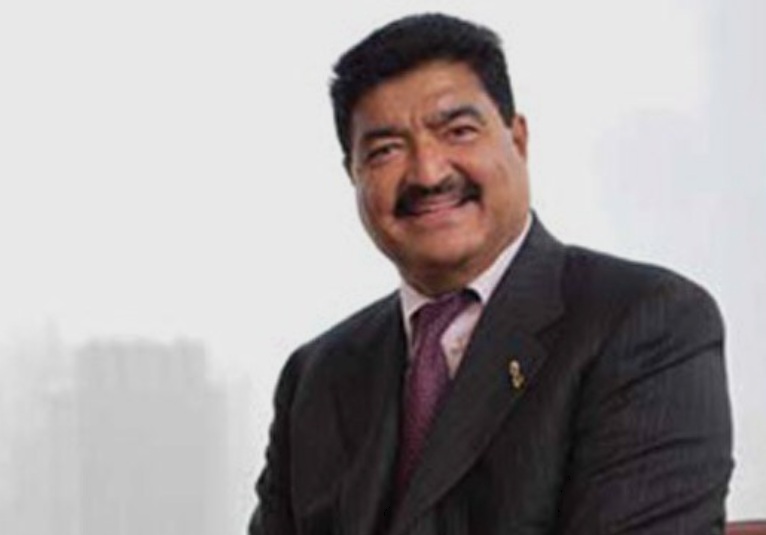
In early 2018, in the lobby of a five-star hotel, Dr. Bavaguthu Raghuram Shetty spoke without strain. His manner was flamboyant in the way successful men of his generation often are—expansive, certain, generous with plans—yet nothing in his voice or hands suggested calculation. He spoke of a film drawn from the fiction of a great Malayalam writer and storyteller, and of health projects that would require more than a thousand crore rupees. He appeared every inch the billionaire he was then widely believed to be. Those who knew him longer described a man who had built clinics and schools alongside the hospitals, who treated philanthropy not as an afterthought but as part of the work itself.
His story had always been told as one of the purest rags-to-riches journeys of the Gulf. In 1973 a pharmacist’s son from Udupi stepped off a plane in Abu Dhabi with roughly seven dirhams. With his wife as the only doctor, he opened a small clinic. Over four decades he turned it into NMC Healthcare, the region’s largest private healthcare group, listed in London and admitted to the FTSE 100. He received the Padma Shri. He was called a billionaire. The calm in that hotel lobby belonged to a man who had already done the impossible once.
Less than two years later the same man had withdrawn from public view. NMC had left his hands. His accounts were frozen. The empire once valued in the billions was reduced, in key respects, to a symbolic dollar. The first public crack had appeared in December 2019 when a short-seller’s report questioned cash, profits and debt. Within months the board itself disclosed billions in previously hidden borrowings. Dual sets of books had been maintained for years. False invoices had been used to raise bank finance on transactions that never existed. Cash had moved out of the company. In April 2020 the English High Court placed NMC into administration. Related businesses followed. Finablr, once worth billions, was later sold for one dollar. Shetty’s personal fortune evaporated.
What the Abu Dhabi Global Market Court later established, in a judgment delivered on 5 November 2026 by Justice Sir Andrew Smith, was that the disaster was not the work of unknown outsiders. It was carried out from within, by Shetty and by former CEO Prasanth Manghat. Both, the court held, dishonestly and knowingly participated in an eight-year fraud that ran from 2012 to 2020. The starting point for the contributions they must make to the assets of the company is $5.397 billion. The exact sums each must pay will be fixed later. Both men have denied the findings. The court rejected their defences.
More than five hundred transfers moved money into Shetty’s personal accounts. After money that returned the other way was netted off, the court accepted a net figure of roughly AED 2.6 billion. Those funds bought a private jet, property in Dubai Hills, and a stake in a Wyoming oil field. The judge observed that the scale of the scheme made it inherently improbable that it could have been hidden from the founder. Manghat was found to have been the operational architect: he facilitated the movement of money, the production of false financial statements, and the concealment of true debt from auditors. He was not treated as a subordinate who merely followed orders. In a separate action Abu Dhabi Commercial Bank established claims against him running into more than a billion dollars in outstanding liabilities and lost profits.
Bank of Baroda, which had been named in the proceedings on allegations that it helped conceal overdrawn accounts, settled with the administrators for $600 million without admitting liability. The court issued no definitive ruling against the bank.
Shetty has said he was himself a victim of fraud by senior executives—the people he had trusted with the company he had built from nothing. The court, after hearing evidence, did not accept that account. Yet the human outline of the story remains what he first suggested: a founder who placed his trust in those closest to the accounts, and who watched that trust become the instrument of the company’s undoing. Patients continued to enter NMC hospitals. Employees continued to draw salaries. Lenders continued to extend credit. All of them did so on the strength of accounts the court has now held were knowingly false. When those accounts could no longer be sustained, the collapse was abrupt. The film was never made. The health projects were never built in the form imagined. The philanthropic work that had once accompanied the hospitals was left unfinished.
He has now crossed eighty-four. The man who arrived with seven dirhams and left behind a listed giant is left with frozen accounts and a judgment that he knowingly took part in the destruction of what he had built. Whether he still has the energy, the time, or the will to attempt any recovery of the empire that once bore his name is a question the court did not answer, and that only the remaining years can decide. What is left, for now, is the quieter residue of the fall: the hospitals that continue under new ownership, the creditors who absorbed the losses, and the memory of a flamboyant, generous man who, for a few more years, could still speak as if the numbers were real.