


From Our Foreign Correspondent
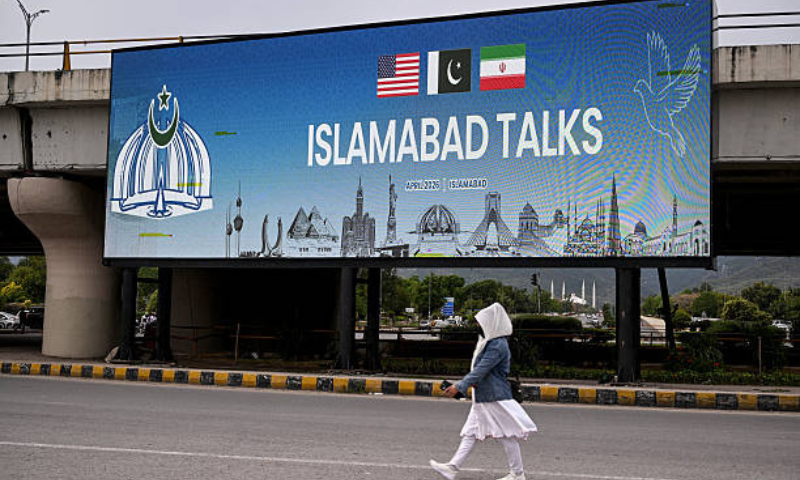
Today, on April 11, 2026, Islamabad has become the unlikely epicenter of Middle East diplomacy. Pakistan is hosting direct talks between the United States and Iran aimed at converting a fragile two-week ceasefire into a lasting de-escalation agreement. The negotiations—widely dubbed the “Islamabad Talks”—come after a brief but intense 2026 Iran war triggered by U.S.-Israeli strikes on Iranian targets on February 28. Pakistan has positioned itself as the key mediator, a role both Washington and Tehran have publicly acknowledged.
Delegations on the ground: The U.S. team, led by Vice President JD Vance (accompanied by special envoy Steve Witkoff and Jared Kushner), arrived in Islamabad around 11 AM IST. The Iranian delegation, headed by Parliament Speaker Mohammad Bagher Ghalibaf and Foreign Minister Abbas Araghchi, landed earlier and has already met Pakistani Prime Minister Shehbaz Sharif.
Talks underway: Negotiations officially began today at venues including the Serena Hotel, with Pakistan’s Prime Minister and Foreign Minister Ishaq Dar facilitating. Issues on the table include sanctions relief (including possible unfreezing of Iranian assets), security in the Strait of Hormuz, a permanent ceasefire, and de-escalation in Lebanon.
Security lockdown: Islamabad is under heavy protection with over 10,000 security personnel deployed. Pakistani fighter jets even escorted the Iranian delegation.
International reactions: Russia has urged all parties to act responsibly. President Trump has sent a “final message” to Iran, warning that the Strait of Hormuz will reopen “with or without them.” Iran had earlier linked participation to a halt in Israeli strikes on Lebanon.
Why Israel Has Been Kept Away
Israel is deliberately not at the negotiating table—and this was never intended to be a trilateral format. Several factors explain its exclusion:
Bilateral US-Iran format: The talks are structured as direct U.S.-Iran negotiations, with Pakistan acting purely as host and facilitator. Including Israel would fundamentally change the dynamics and likely make progress impossible.
Pakistan’s strong anti-Israel stance: Pakistani officials, including Defence Minister Khawaja Asif, have used sharp language—describing Israel as a “cancerous state” and accusing it of “genocide” in Lebanon. Israel’s Prime Minister’s office condemned the remarks as “outrageous” and questioned how Pakistan could claim neutrality.
Israel’s explicit rejection of Pakistan as mediator: Israeli Ambassador to India Reuven Azar publicly stated, “We don’t trust Pakistan as it sponsors terrorism,” and made clear Israel would not participate. Israel’s UN Ambassador Danny Danon echoed that Jerusalem would “do whatever is necessary” independently to counter Iranian threats.
Iranian precondition on Lebanon: Tehran made clear it would not attend unless Israeli military actions in Lebanon (particularly strikes on Beirut and southern areas) stopped. Iran reportedly used the threat of boycotting the Islamabad talks to pressure the U.S. to rein in Israel, which appears to have contributed to a temporary pause in those strikes.
In short, Islamabad’s own diplomatic positioning—historically pro-Palestinian and aligned with Iran on many issues—made Israeli participation untenable, even if the U.S. had wanted it.
The Road Ahead
The Islamabad Talks are still in their opening hours. No breakthroughs have been announced, and deep mistrust lingers over Iran’s nuclear program, sanctions, and Israel’s security concerns. Yet the mere fact that senior U.S. and Iranian officials are sitting in the same Pakistani city under the same roof is historic.
Whether these talks deliver a durable peace or merely a pause in hostilities, one thing is clear: Pakistan has thrust itself back onto the global diplomatic map. For a nation often viewed through the lens of internal challenges, today’s role as host of the “Islamabad Talks” is a significant—and risky—statement of ambition. The world is watching whether Islamabad can deliver.