


From Our Foreign Desk
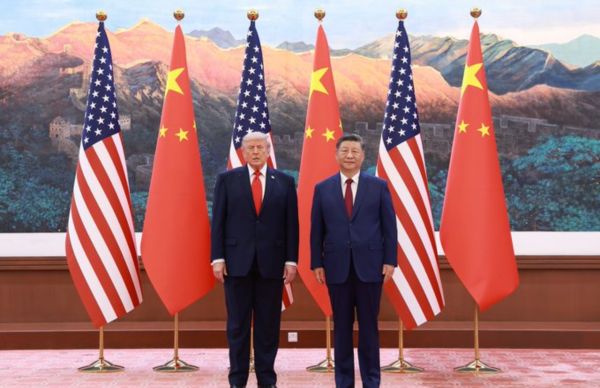
President Donald Trump’s state visit to Beijing (May 13-15, 2026) has produced the expected ceremonial splendor and carefully worded joint statements about a “fantastic future together.” Yet the real story is one of asymmetric leverage and unintended consequences. Xi Jinping negotiates from a position of economic resilience and strategic patience, while a politically weakened Trump chases tactical wins. European allies, largely sidelined from the process, risk becoming collateral damage in the form of trade diversion, energy volatility relief at the price of lost influence, and accelerated marginalization in a emerging G2 world.
Xi Jinping’s Stronger Position
China enters the talks with robust export performance and no major active military entanglements comparable to America’s involvement in the Iran conflict. This allows Xi to focus on long-term priorities: securing tariff reductions, preserving access to the U.S. market, and projecting stability without appearing weak. Beijing can afford to offer headline-grabbing purchase commitments on U.S. agriculture, energy, and aircraft—items Trump can brandish as victories back home—while extracting concessions on technology restrictions or Taiwan-related issues. Xi’s firm warnings during the summit that mishandling Taiwan could lead to “extremely dangerous” territory underscored Beijing’s red lines and reinforced China’s image as an equal, if not superior, power.
Trump’s Need for a Win
Facing low approval ratings and looming midterm elections, Trump required deliverables: large-scale Chinese purchases to demonstrate economic gains and, crucially, Chinese diplomatic or economic leverage to help de-escalate tensions with Iran and stabilize the Strait of Hormuz. The latter directly affects global energy prices. A transactional deal offers Trump symbolic victories to sell to his domestic audience, even if past Phase One-style agreements often fell short on structural reforms regarding subsidies, IP theft, and market access.
Shared Interests Mask Deeper Rivalry
Both leaders share a desire to prevent the trade war from spiraling into full decoupling. A fragile truce serves immediate purposes: tariff relief supports Chinese exporters, while purchase deals and Iran-related progress give Trump political breathing room. However, this managed rivalry leaves fundamental divergences—on governance, territorial claims, technology standards, and global order—unresolved.
The European Dimension: Sidelined and Exposed
European allies emerge as clear losers in terms of agency and influence. Excluded from shaping the agenda, they now face the fallout. A U.S.-China truce that eases tariff pressure on Beijing risks significant trade diversion. Chinese overcapacity in electric vehicles, steel, solar panels, and chemicals—already pressuring EU industries—could flood European markets as exporters seek alternative outlets. This echoes the first Trump term, when similar dynamics forced Brussels to ramp up anti-subsidy tariffs and defensive measures, raising costs for European consumers and businesses.
On security, any Chinese assistance in de-escalating the Iran conflict could indirectly benefit Europe by lowering energy prices, easing inflation, and reducing shipping disruptions. Yet the absence of European input at the table highlights deepening transatlantic drift. Trump’s bilateral transactionalism—prioritizing deals with Beijing over alliance coordination—reinforces European fears of unreliability, especially on Taiwan and Indo-Pacific security. Concessions by Washington on tech controls or Taiwan could undermine EU efforts to deepen ties in the region and accelerate China’s technological advances at Europe’s expense.
The broader risk is a classic G2 condominium: Washington and Beijing setting rules on trade, semiconductors, critical minerals, and AI, leaving the EU as a rule-taker rather than a co-shaper. This summit accelerates Europe’s push for strategic autonomy—strengthening internal market defenses, friend-shoring, Carbon Border Adjustment mechanisms, and defense capabilities—while hedging between the two superpowers.
Critical Verdict: Tactical Gains, Strategic Costs
In the short term, both Trump and Xi can claim partial victories. Xi secures stability and export breathing room while projecting strength. Trump gains political optics and potential progress on Iran. Europe may enjoy modest relief from stabilized energy flows but confronts heightened dumping risks, lost influence, and further erosion of transatlantic trust.
The asymmetry remains clear: Xi operates with patience and structural advantages; Trump plays a shorter, more urgent game dictated by domestic politics. Europe, caught in the middle, must absorb externalities without a seat at the table. This visit changes little in the underlying U.S.-China contest but underscores a recurring pattern—grand bilateral summits often deliver performative wins for the principals while allies manage the messy consequences.
Long-term, America’s true leverage lies not in episodic deals but in domestic industrial revival and credible alliances. For Europe, the imperative is unmistakable: build resilience independently rather than depend on great-power diplomacy that consistently treats the continent as an afterthought. The fragile truce holds for now, but the deeper contest—and its global ripple effects—continues unabated.