


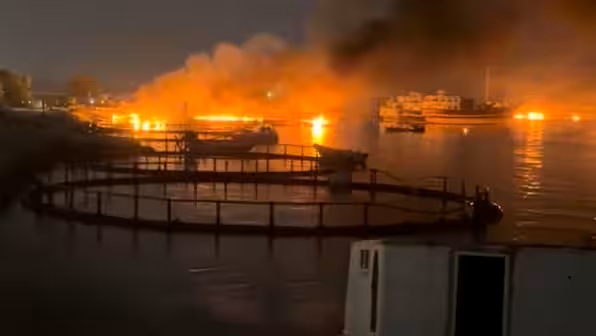
Washington: U.S. forces conducted a fresh round of airstrikes on Iranian military targets, marking the seventh consecutive night of attacks amid the ongoing escalation in the Persian Gulf following the collapse of a fragile ceasefire agreement.
The U.S. Central Command (CENTCOM) announced via social media that the operation was carried out at the direction of the Commander in Chief to further degrade Iranian military capabilities, particularly those threatening freedom of navigation in the Strait of Hormuz. Targets included surveillance sites, military logistics infrastructure, underground weapons storage, maritime capabilities, coastal defenses, and related facilities.
Iranian state media reported multiple explosions in southern port cities, including Bandar Abbas (Iran’s largest port and a key Revolutionary Guard facility on the Strait of Hormuz) and Sirik. Explosions were also noted in areas such as Qeshm Island, Jask, and other coastal sites in Hormozgan province. Bridges and infrastructure linking Bandar Abbas to central Iran were reportedly hit, aiming to disrupt logistics.
CENTCOM denied Iranian claims that two oil tankers had exploded in the Strait of Hormuz after striking mines, emphasizing that U.S. actions were in response to continued Iranian aggression against commercial shipping. The strikes follow a pattern of tit-for-tat exchanges triggered by attacks on vessels in the vital waterway, through which about one-fifth of global oil supplies pass.
In retaliation, Iran’s Islamic Revolutionary Guard Corps (IRGC) stated that its forces launched drone and missile attacks targeting U.S. military facilities in the region, including sites in Jordan and Kuwait. Kuwait’s military confirmed its air defenses engaged hostile drones, describing the actions as Iranian aggression. Sounds of explosions were attributed to interception systems. Similar reports emerged from other Gulf allies, with interceptions reported over Bahrain, Qatar, and related areas.
The escalation comes after the breakdown of a June ceasefire deal, with both sides accusing the other of violations. U.S. officials have stressed the need to protect international commerce, while Iran has asserted its right to control aspects of transit in the Strait and vowed a “crushing response” to further strikes.
Casualty figures remain fluid. Iranian authorities have reported dozens killed and hundreds wounded in recent U.S. strikes, including impacts on infrastructure. The U.S. has acknowledged injuries to some service members but provided limited details. Oil prices have spiked amid concerns over disruptions in the Hormuz region.
This latest round underscores the fragility of diplomacy in the Middle East. Analysts warn that continued exchanges risk broader regional instability, drawing in more actors and threatening global energy markets. President Trump has indicated openness to negotiations even as military pressure continues, while Iranian leaders have called diplomacy “futile” without concessions on key issues.
The situation remains fluid, with both sides posturing for advantage ahead of any potential talks. International observers, including maritime authorities, continue to monitor the Strait of Hormuz closely for further incidents affecting commercial shipping.