


By Shreya Anand, Director of Vedaanta Senior Living
India’s retirement landscape is undergoing a fundamental transformation. Longer life expectancy, changing family structures, increasing mobility, and evolving lifestyle aspirations are reshaping how seniors want to live in their post-retirement years. While this shift is visible across the country, it is South India that has emerged as the clear frontrunner in organised senior living.
According to the latest JLL-ASLI report, South India accounts for nearly 60% of India’s organised senior living market, making it the epicentre of the country’s retirement housing growth. This leadership is not accidental. It is the outcome of a unique combination of demographic trends, social realities, healthcare infrastructure, and migration patterns that have been unfolding over several decades.
The first and perhaps most important reason is demographics. Southern states have consistently recorded lower fertility rates, higher life expectancy, and better health outcomes than many other parts of the country. As a result, they are ageing faster than the national average. Kerala offers the clearest example. According to the Kerala Government’s Elderly Budget 2026-27, nearly one in five residents in the state is already a senior citizen. Tamil Nadu and Karnataka are witnessing similar trends, creating a larger and more immediate need for age-friendly housing and support ecosystems.
In many ways, South India is experiencing today what the rest of India is likely to encounter over the next two decades. As the country’s senior population continues to grow and is projected to exceed 190 million by 2030, demand for organised retirement communities is expected to accelerate significantly. The JLL-ASLI report estimates that the potential market for senior living will expand from 1.57 million households in 2024 to over 2.27 million households by 2030.
The second factor is cultural acceptance. Organised senior living has historically faced hesitation in India because ageing was viewed primarily as a family responsibility. However, South India has adapted more quickly to changing social realities. With increasing urbanisation, smaller family sizes, dual-income households, and children pursuing opportunities across cities and countries, families are recognising that retirement communities can offer a better quality of life than isolated living at home.
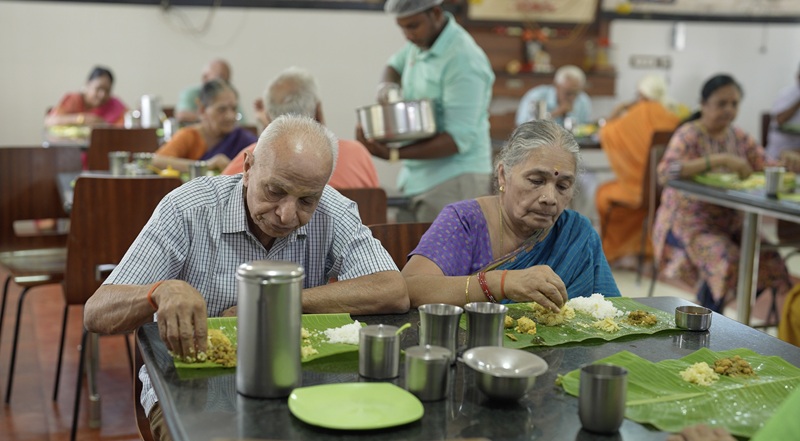
What is particularly encouraging is that senior living is increasingly being viewed not as a care solution but as a lifestyle choice. Seniors today are looking for companionship, wellness, security, recreation, and independence. The growing acceptance of organised senior living across the South reflects a broader shift in how ageing itself is being perceived.
The third driver is the region’s large NRI population. States such as Kerala, Karnataka, Tamil Nadu, and Andhra Pradesh have a long history of international migration. Millions of families have children settled in the Middle East, North America, Europe, and Southeast Asia. While these families remain deeply connected to their roots, geographical distance often creates concerns around the safety, healthcare access, and day-to-day well-being of ageing parents living in India.
For many such families, organised senior living communities provide peace of mind. Professionally managed environments, healthcare support, emergency response systems, security, and opportunities for social engagement help bridge the gap created by physical distance. In fact, the JLL-ASLI report identifies the higher concentration of parents with NRI children as one of the reasons South India has emerged as the country’s dominant senior living market.
Closely linked to this is a fourth trend that is becoming increasingly visible: the return of NRIs to their hometowns after retirement. After spending decades abroad, many are choosing to return to familiar cultural environments while seeking the comfort, convenience, and lifestyle standards they have experienced overseas.
At Vedaanta Senior Living, we are seeing growing interest from returning NRIs who want the best of both worlds: proximity to family, culture, and community, combined with professionally managed living environments that support active and independent ageing. South India’s mature senior living ecosystem positions it particularly well to cater to this emerging segment.
The fifth and perhaps most enduring advantage lies in healthcare and urban infrastructure. South India is home to some of India’s most advanced healthcare networks, offering retirees access to multispecialty hospitals, specialised medical care, rehabilitation services, and preventive healthcare facilities.
Importantly, this advantage is no longer restricted to metropolitan cities. Tier 2 destinations such as Coimbatore, Kochi, Kottyam, Guruvayur, Mysuru, and several cities across Kerala and Tamil Nadu are increasingly attracting retirees. These locations offer quality healthcare, lower living costs, less congestion, stronger community connections, and a better overall quality of life. For many seniors, they represent the ideal balance between accessibility and tranquillity.
As India prepares for an ageing future, the question is no longer whether senior living will become mainstream. The real question is which regions are best positioned to lead this transition. South India’s demographic maturity, cultural readiness, strong NRI connect, returning retiree population, and healthcare-led urban development have together created a powerful foundation for growth.
The region is not merely witnessing the rise of retirement communities. It is shaping a new model for ageing in India, one that prioritises independence, dignity, wellness, and community. That is why South India is steadily establishing itself as the retirement capital of India.