

₹30,000 Crore Tax Robbery Every Year: Dabba Trading’s ₹100 Lakh Crore Daily Racket Bleeds India

By Our Business Correspondent
India is haemorrhaging money through a parallel financial system that operates in plain sight yet remains largely untouched. Dabba trading, the illegal off-exchange betting racket on stock and commodity prices, has grown into a vast underground market whose daily turnover is estimated at nearly ₹100 lakh crore — a volume that matches or exceeds large segments of legitimate trading on the National Stock Exchange and Bombay Stock Exchange. The direct cost to the national exchequer exceeds ₹30,000 crore every year in lost tax revenue. Behind these figures lies a deeper threat: the systematic rerouting of illegal money into domestic assets and the growing suspicion that part of these funds may be supporting anti-national and disruptive activities aimed at destabilising the country.
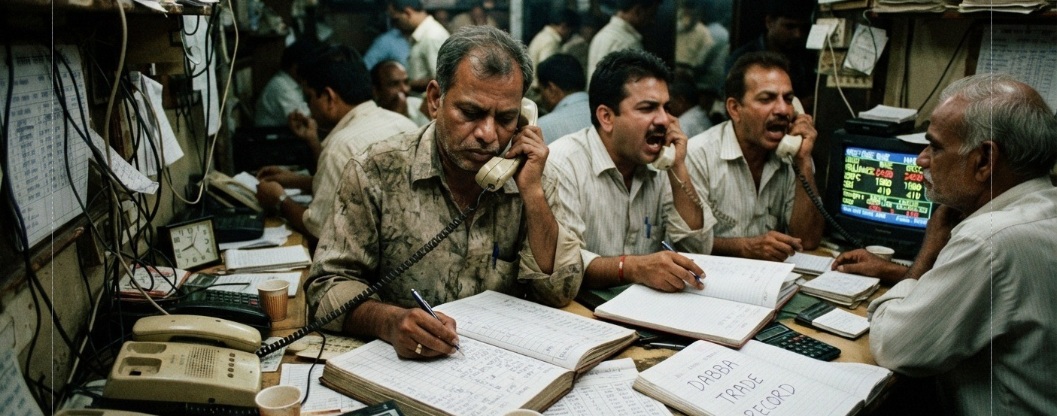
In dabba trading, also known as bucket trading, no real shares or commodities change hands. There is no delivery into any Demat account. Unauthorised operators act as the counterparty to every bet, recording transactions in private ledgers or unverified apps and settling profits and losses in cash or through informal channels. High leverage is freely offered. Securities Transaction Tax, Goods and Services Tax, stamp duty and capital gains tax are completely bypassed. The entire activity remains outside the jurisdiction of SEBI, leaving participants with no legal protection if an operator defaults or vanishes.
The scale is staggering. After SEBI tightened regulations on futures and options lot sizes and margins, market reports indicated that dabba trading volumes surged to nearly ₹100 lakh crore per day. Because these trades never enter the formal system, the government loses more than ₹30,000 crore annually in direct tax revenue alone. The broader damage is greater still. The heavy dependence on cash and unaccounted funds creates an efficient channel for black money generation and money laundering.
A significant portion of the proceeds is believed to be systematically rerouted back into India. Operators and their networks convert the illegal gains into real estate, luxury assets, businesses and other holdings, effectively cleaning the money while accumulating substantial domestic wealth. More disturbing are the concerns that part of these unaccounted funds may be diverted to finance anti-national and sabotaging activities. There are serious suspicions that elements of this parallel economy could be bankrolling disruptive forces working to undermine the country’s stability from within. When an illegal market of this magnitude operates with relative impunity, the threat extends far beyond tax evasion into the domain of national security.
Despite the clear legal position — participation is a serious criminal offence under Section 23(1) of the Securities Contracts (Regulation) Act, punishable by imprisonment of up to ten years and heavy fines — the principal organisers largely remain free. Many have relocated to tax havens and the UAE, where they continue operations under the respectable cover of NRI business magnets and legitimate commercial identities. One operative booked more than a decade ago in a major dabba trading case is reportedly still active from a UAE location under an entirely different professional title. Local facilitators on Indian soil face occasional raids and asset seizures, but the higher network that designs the platforms, controls the cash flows and sits safely abroad continues largely unhindered.
This situation raises pointed questions for the Enforcement Directorate, the Economic Offences Wing of the CBI, and Interpol. Sustained international efforts to freeze assets, seek extradition and disrupt cross-border settlement channels have not matched the scale of the problem. Decade-old cases appear to have drifted into administrative inertia while the individuals concerned prosper under new identities. The pattern points to a combination of jurisdictional hurdles, slow mutual legal assistance processes, and insufficient determination to treat dabba trading as a national economic and security threat rather than a collection of isolated local rackets.
Every day this shadow market operates at the reported scale of ₹100 lakh crore, India loses revenue that could fund development and public welfare. Every year the exchequer is short by more than ₹30,000 crore. And every year the suspicion deepens that part of the proceeds may be strengthening forces hostile to the country’s internal stability. The legal instruments exist. What remains missing is the consistent, coordinated will to deploy them against those who have simply moved the operation offshore while continuing to extract wealth from the Indian economy.
Note: A detailed investigative story examining the full scale of the financial fraud, the networks involved, the asset trails and the enforcement gaps will be carried in the next issue of the magazine.
(Courtesy : The Rising Nation)
