

International Stage of Rosatom’s Scientific and Educational Project Icebreaker of Knowledge has started

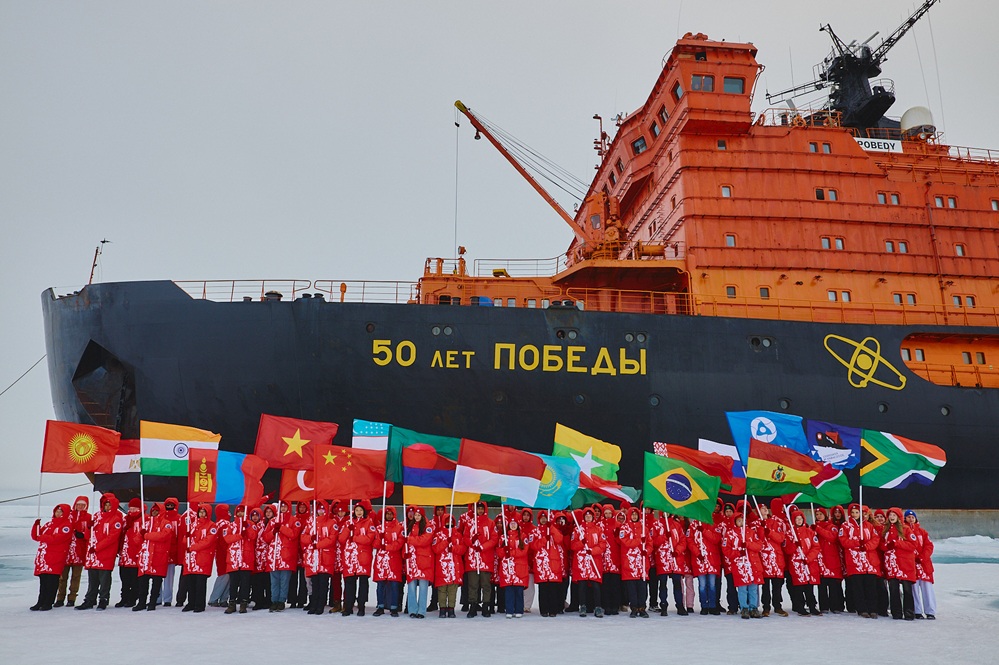
Mumbai : On 5 May 2026, Rosatom started the competitive selection process for international participants in its VII international scientific and educational project “Icebreaker of Knowledge”. Schoolchildren aged 14 to 16 years old from 22 countries, including India, Bangladesh, Belarus, Bolivia, Brazil, Hungary, Vietnam, Egypt, Indonesia, Kazakhstan, China, Kyrgyzstan, Mongolia, Myanmar, Namibia, Rwanda, Serbia, Tanzania, Turkey, Uzbekistan, and South Africa, are invited to participate in the international stage of the selection process. The project winners from each country will participate in an Arctic expedition to the North Pole aboard the nuclear icebreaker 50 Let Pobedy which will take place in August 2026. Some of the expedition participants will be the first representatives of their countries to reach the pole.
The selection process for international participants consists of three stages. At the first stage, those who register on goarctic.energy take part in a science-based quiz. The second stage comprises a series of webinars on Rosatom’s innovative solutions, including technologies used to ensure the safe development of Arctic shipping. After watching the videos, each participant takes a test to assess their knowledge and completes tasks based on the presented material. Top 10 finalists from each country with the highest scores in the first two stages present their ideas related to the topic of the final task in a form of a video business card.
“This is the third time that the Icebreaker of Knowledge project has been organized in an international format. Children from 23 countries will embark on a fascinating and educational journey to the North Pole on a nuclear icebreaker. During 10 days, they will explore the Arctic on board the nuclear icebreaker with leading scientists, science communicators, and bloggers. This expedition is an opportunity not only to reach the highest point on Earth, but also to broaden horizons, make new friends, set records, and perhaps even see a polar bear,” said Alexandra Yustus, Deputy Director General for Communications at RAIN Private Institution.
