

Caspian Sea Emerges as Key “Back Channel” for Russia-Iran Military and Economic Ties Amid Regional Blockades and Sanctions

From Our Foreign Correspondent
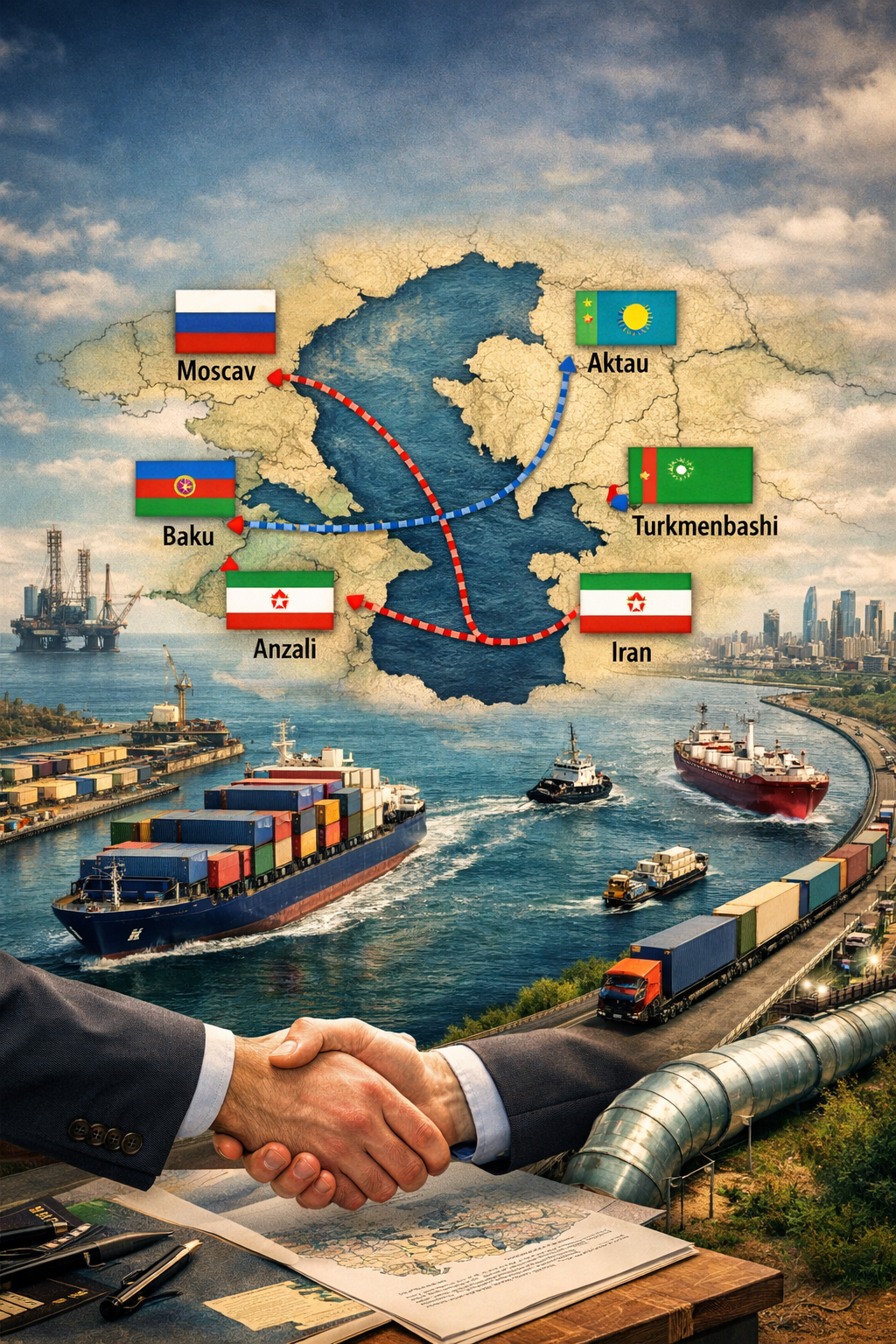
In the landlocked waters of the Caspian Sea — the world’s largest inland body of water — a route long viewed as secondary has become a vital strategic corridor for Russia and Iran. As of May 2026, this maritime link serves as a primary conduit for military cooperation and sanction-evasion, enabling both nations to sidestep disruptions in the Persian Gulf, Strait of Hormuz, and Black Sea routes.
A Secure Military Logistics Route
Heightened tensions and naval risks in the Strait of Hormuz have elevated the Caspian’s importance. Russia is reportedly transferring drones (including upgraded Shahed variants), ammunition, components, and other military equipment to Iran via this route. This support helps Tehran replenish stocks depleted during recent conflicts.
Reports indicate that U.S. and Israeli strikes in operations such as “Epic Fury” significantly damaged Iran’s drone production facilities and arsenals, with some estimates suggesting losses of 60-80% of certain capabilities, including storage sites and manufacturing plants. Russian shipments aim to help rebuild these capacities during periods of ceasefire or reduced hostilities.
Shadow Fleet Operations: Many vessels operate as part of a “dark” or shadow fleet. They disable Automatic Identification System (AIS) transponders and radars to evade Western surveillance while traveling between Russian ports like Astrakhan (a key Volga River hub) and Iranian ports such as Bandar Anzali. This secrecy complicates monitoring by intelligence agencies.
Geographic and Legal Advantages: The Caspian Sea is bordered exclusively by five littoral states (Russia, Iran, Azerbaijan, Kazakhstan, and Turkmenistan). Under the 2018 Convention on the Legal Status of the Caspian Sea, it functions more as a lake than a sea in legal terms, barring extra-regional naval powers like the U.S. from establishing a presence or conducting interdictions. This provides “geographic immunity” for sensitive transfers, according to regional analysts.
Economic Lifeline and Food Security
The corridor extends far beyond military goods. It has become essential for Iran’s economic stability and food security, especially with traditional southern routes under pressure.
Iranian northern ports, particularly Bandar Anzali (the largest Caspian port complex), now operate near full capacity — often around the clock — to handle rerouted imports. Commodities such as wheat, corn, sunflower oil, and other grains, previously routed via the Black Sea or southern ports, now arrive in large volumes through the Caspian.
Bilateral Russia-Iran trade via the Caspian has grown sharply. Projections suggest cargo turnover could reach or exceed 10 million tons by the end of 2026, including Russian machinery, industrial goods, and energy-related items that Iran struggles to source elsewhere due to sanctions. Recent data shows significant year-on-year increases in cargo handling at Anzali, with exports and imports both rising substantially.
Centerpiece of the International North-South Transport Corridor (INSTC)
This Caspian route forms a core segment of the International North-South Transport Corridor (INSTC), a roughly 7,200-km multimodal network connecting Russia to the Indian Ocean via Iran. It combines sea, rail, and road links for faster, cheaper transit.
Efficiency Gains: The corridor is approximately 40% shorter and up to 30% cheaper than traditional routes via the Suez Canal, offering a strategic alternative amid Red Sea and Gulf disruptions.
Key Infrastructure: India’s 10-year agreement (signed around May 2024) to operate Chabahar Port provides a critical southern gateway, connecting to the Caspian via Iranian roads and rails despite U.S. sanctions pressures. Other Iranian Caspian ports like Amirabad and Nowshahr also play supporting roles.
Challenges and Resilience
The U.S. and Israel have targeted this “back channel.” Israel conducted strikes on Bandar Anzali port infrastructure in March 2026, hitting naval facilities, shipyards, and related sites to disrupt weapons flows. Additional incidents have been reported, yet traffic volumes have reportedly rebounded and continue to rise.
For Moscow and Tehran, the Caspian Sea has evolved from a peripheral waterway into a resilient artery sustaining their partnership. It supports military resupply, economic stability, and broader ambitions for a Eurasian trade architecture less dependent on Western-controlled chokepoints. As geopolitical pressures mount, this “inland sea” corridor underscores the deepening Russia-Iran axis and the shifting dynamics of global logistics.
