


A pan-India study of Indians diagnosed with high blood pressure reveals a stress-driven crisis
hiding behind a medical label, and a 60% openness to Ayurvedic intervention
Ahead of World Hypertension Day 2026, a new Kapiva study, based on a survey conducted by Kantar has revealed that stress and sleep disruption are emerging as major concerns among Indians living with hypertension. Despite being one of India’s most prevalent chronic conditions, the study suggests that for most patients, it remains persistently out of control and shows a clear picture of how urban Indians are living with hypertension in 2026, and what is truly driving it.
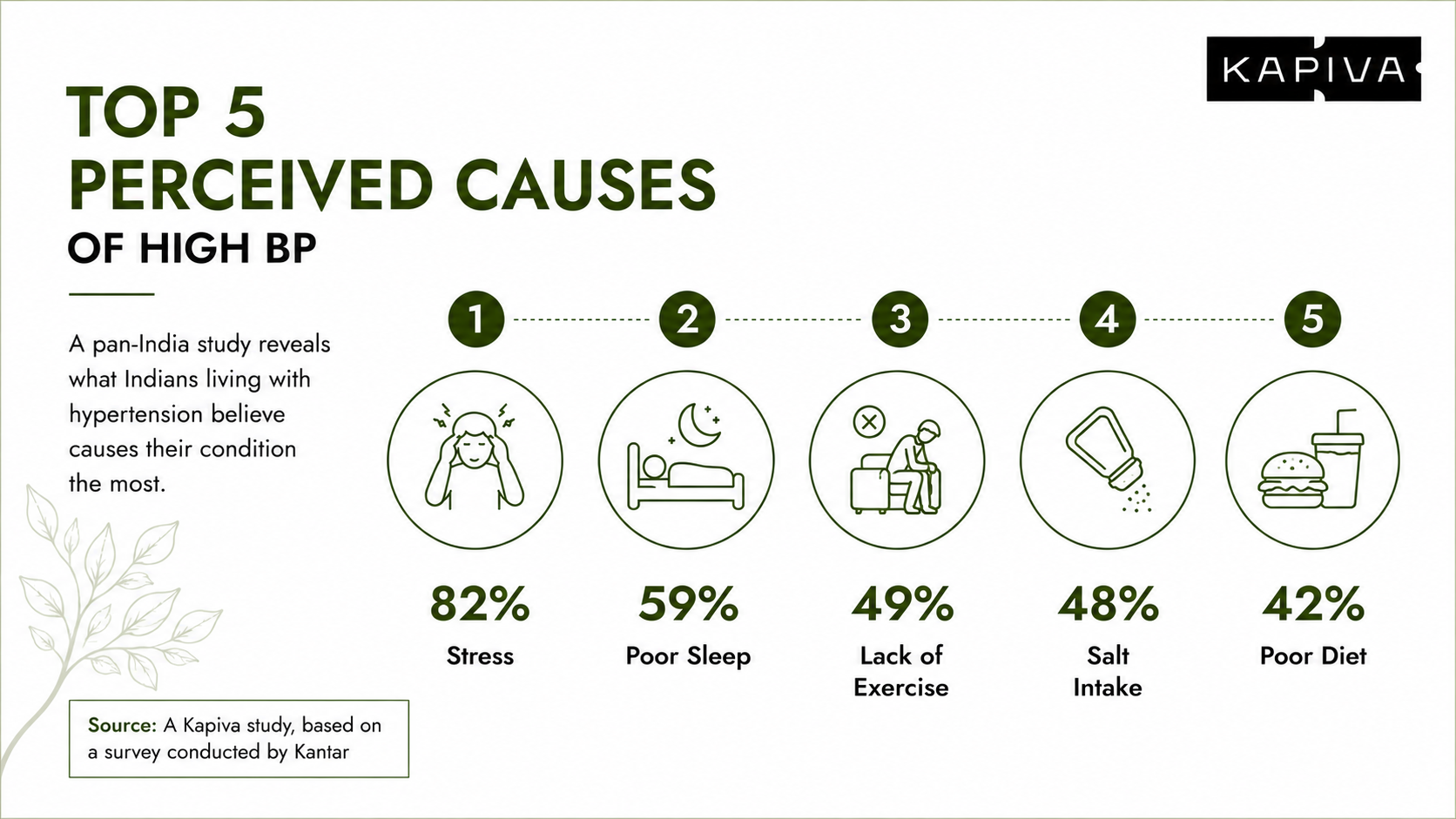
The findings challenge conventional assumptions. When patients cross Tier 1 and Tier 2 cities were asked what caused their high blood pressure, 82% cited stress as the primary perceived cause, ranking above diet, genetics, and age combined. While nearly 6 in 10 say poor sleep can trigger BP fluctuations. Among younger patients (25–44-year-olds), 43% described their workplace stress as very high. Poor sleep and acute stress were tied as the leading triggers for BP going out of control, each cited by 59% of respondents. Seven in ten patients who experience BP fluctuations do so every single week.
The physical toll is equally significant. 43% report frequent headaches, 29% experience anxiety and restlessness, and 18% suffer heart palpitations that nearly half describe as unbearable. For most patients, hypertension is not a condition managed with a twice-yearly doctor visit. It is the background noise of daily life.
Commenting on this, Ameve Sharma, Founder and CEO of Kapiva, said “This study reaffirms that India’s BP crisis is as much a stress and lifestyle crisis as it is a cardiovascular one. As these numbers show, preventive health solutions and sustained lifestyle changes are becoming as important as clinical intervention. At Kapiva, we have always followed a consumer-out approach, understanding what people are going through and then building solutions around those needs. Our offerings are a direct outcome of that thinking, a formulation built not just around a diagnosis but around how people are actually living with health conditions every day.”
The study also reveals a parallel care system operating quietly alongside prescription medication. 35% of BP patients are already using natural or home remedies in addition to their prescribed treatment, reaching for lemon water (71%), amla (57%), garlic (53%), and Arjun Chaal (39%). The instinct is right, but the execution faces real limits: 34% cite inconsistency and inconvenience as barriers, and 25% admit they cannot maintain the habit daily.
Critically, 60% of BP patients say they are open to trying an Ayurvedic juice for blood pressure management, a figure that rises to 73% among younger patients (25–44-year-olds).
Dr. R. Govindarajan, Chief Innovation Officer, Kapiva, added: “Hypertension today is no longer just a lifestyle condition associated with age. What we are increasingly witnessing is the impact of chronic stress, poor sleep, mental fatigue, and always-on lifestyles on cardiovascular wellness, especially among younger Indians. The study findings also emphasize the need for a more holistic approach to blood pressure management, where stress management, nutrition, sleep quality, and long-term consistency become equally important alongside medical supervision. At Kapiva, our focus has been on combining traditional Ayurvedic knowledge with standardized, research-led formulations that can support modern wellness needs in a more accessible and consistent manner.”
The study was conducted in February 2026 across Tier 1 and Tier 2 cities including Mumbai, Delhi NCR, Bengaluru, Hyderabad, Chennai, Kolkata, Pune, and Ahmedabad, covering equal representation of males and females with a sample size of 303 across age groups from 25 to 65 and above.
