


By Veerabalan
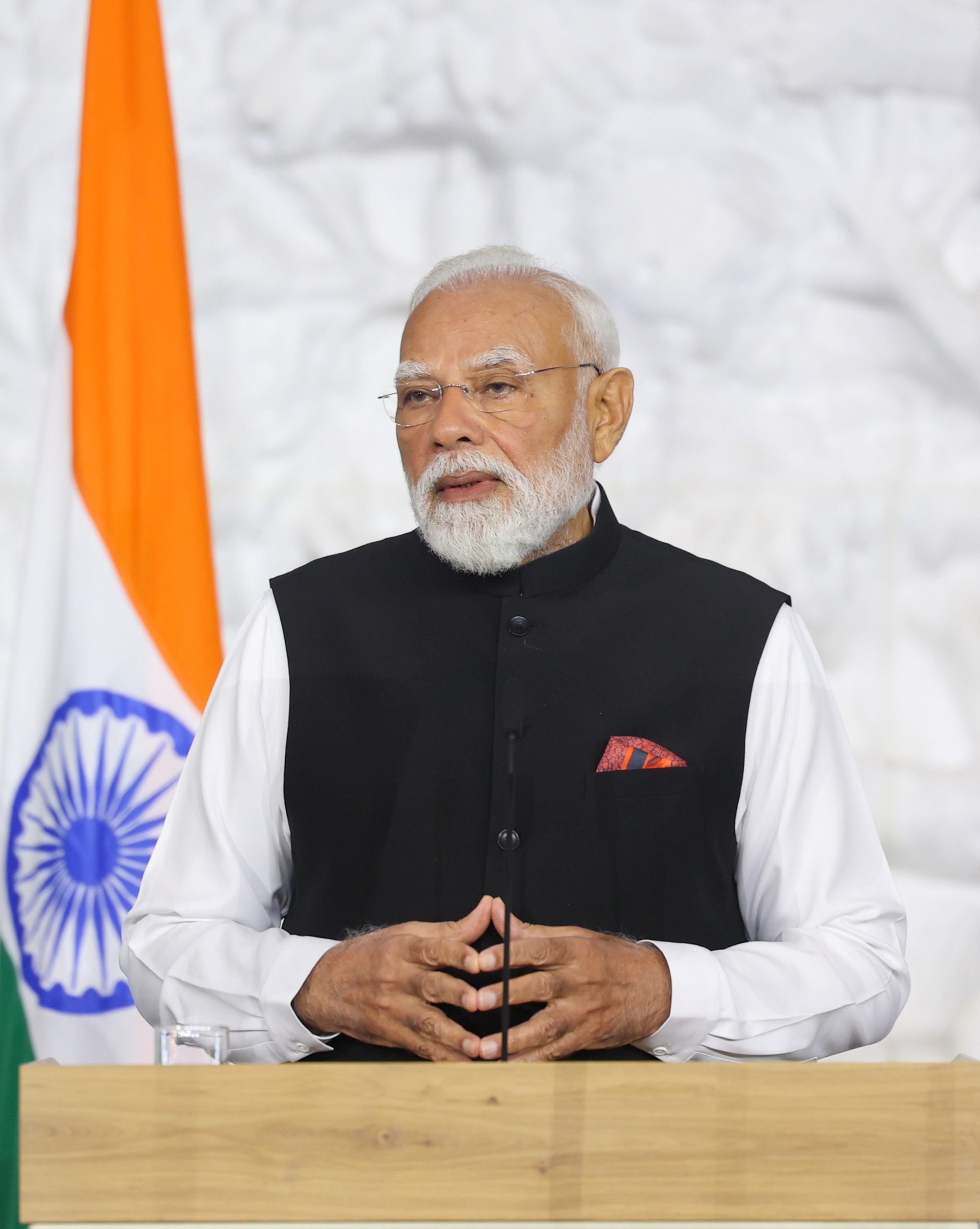
Prime Minister Narendra Modi’s recent European swing was proceeding with the usual diplomatic choreography — warm handshakes, joint statements, and carefully lit photographs — until the press decided it was time for an unscripted interval. What followed in Oslo and The Hague was less a press conference and more a classic Indo-Western culture clash: one side allergic to open questions, the other convinced its ranking proves moral superiority.
The spark came in Oslo. Norwegian journalist Helle Lyng, from a country that tops the World Press Freedom Index with admirable consistency, asked PM Modi why he wouldn’t take questions from “the freest press in the world.” Modi, displaying the enthusiasm of a man cornered by relatives asking about marriage plans, simply walked off. No rebuttal, no charm offensive — just a strategic exit. Critics called it evasion. Supporters called it “maintaining dignity.” Neutral observers called it vintage Modi brand management.
Not to be outdone by their Norwegian colleagues, Dutch journalists in The Hague pressed Indian diplomats on why the traditional post-bilateral press interaction was skipped. They also helpfully reminded everyone that the Dutch PM had raised concerns about press freedom and minority rights. Indian diplomats responded in classic MEA fashion: polite deflection wrapped in civilizational grandeur.
Then came the evening briefing — the diplomatic equivalent of adding petrol to a mild heartburn.
MEA Secretary (West) Sibi George took the stage and delivered a robust, 17-minute defence that was nothing if not consistent. India’s low press freedom ranking? Dismissed as the handiwork of “ignorant NGOs.” Questions on human rights? “Go to court — we have a Constitution.” India’s size? Invoked with near-mystical reverence: one-sixth of humanity, 200 TV channels in Delhi alone, and therefore not to be judged by ordinary mortal standards.
To his credit, George was clear: “You ask the question, don’t ask the answer.” A refreshingly honest summary of the government’s media philosophy.
European coverage, predictably, framed the episode as defensive bluster from a thin-skinned power. Norwegian papers emphasised their tradition of holding leaders accountable. Dutch outlets tut-tutted about managed visits and minority rights. Back in India, television studios lit up with righteous indignation about “foreign interference,” while opposition leaders, especially Rahul Gandhi, circulated the clips with the speed of seasoned social media warriors, using the moment to once again question the state of Indian democracy.
Both sides, as usual, gave their audiences exactly what they wanted.
The Norwegian journalist got her viral moment confronting the leader of the world’s largest democracy. The MEA got to showcase its signature combative style, turning a small briefing into global headlines. The Indian opposition got fresh ammunition. And Prime Minister Modi got to complete another foreign tour with minimal unscripted discomfort — mission largely accomplished on the branding front.
There is, of course, truth on multiple sides worth chuckling at. India does have a massive, chaotic, noisy media ecosystem — far more plural than many critics admit — and running a country of 1.4 billion people is not the same as governing Norway’s five million. Dismissing international rankings entirely as NGO propaganda, however, sounds less like confident rebuttal and more like coping mechanism.
Conversely, Western journalists and governments sometimes wield press freedom indices with the smugness of a school prefect, conveniently forgetting their own media polarisation, occasional self-censorship on sensitive topics, and history of lecturing others while struggling with domestic trust deficits. Selective outrage is a renewable global resource.
In the end, the episode was less about press freedom in absolute terms and more about mismatched expectations. One side believes diplomacy should include tough questions on domestic matters. The other believes foreign tours are for projecting strength and securing deals, not auditioning for a global democracy exam. Both positions are understandable. Neither was particularly graceful in execution.
As India aspires to greater global stature, it may eventually discover that “strategic silence” and “go to court” have limited shelf life when the cameras are rolling. And European journalists might realise that dramatic gotcha moments, while satisfying, rarely deepen nuanced understanding of a civilisation-scale democracy.
Until then, we remain entertained by the recurring show: Mann Ki Baat versus Press Ki Demand. Same planet, different wavelengths.
