

Dharmendra Pradhan Must Face Accountability: Resign Over the NEET Betrayal of 22 Lakh Students

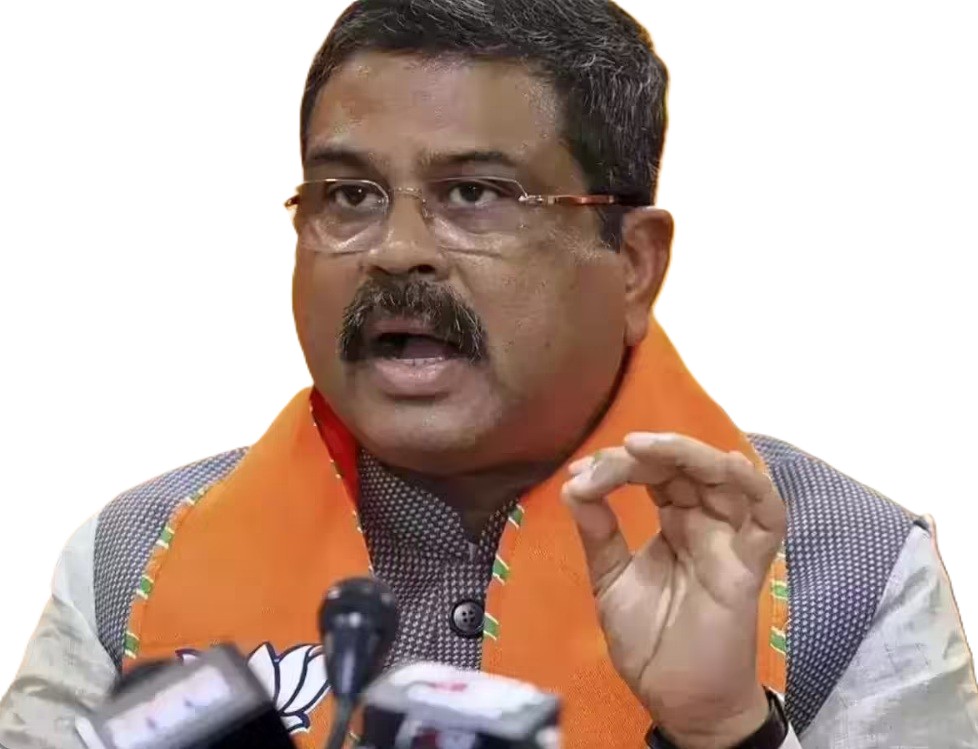
By Suresh Unnithan
Over 22 lakh NEET-UG 2026 aspirants have seen their dreams crushed by a preventable paper leak, yet Union Education Minister Dharmendra Pradhan continues to enjoy the perks of office without facing any consequences. This is not mere administrative oversight — it is a brazen display of personal incompetence, moral bankruptcy, and deliberate evasion of accountability. Pradhan, who has helmed the Education Ministry since 2021, stands directly and personally responsible and must face full accountability for the systemic collapse that has betrayed India’s youth. His initial silence after the scandal, followed by hollow admissions without any willingness to resign, only deepens the outrage. He must resign immediately. The Prime Minister and BJP leadership’s refusal to demand his ouster confirms their complicity in shielding a failed minister at the expense of students’ futures.
The scandal reeks of Pradhan’s personal negligence. The NEET-UG 2026 exam on May 3 was cancelled on May 12 after a “guess paper” from Rajasthan matched over 100 questions. For days after the cancellation, Pradhan maintained a conspicuous silence, refusing to address the media directly or answer pressing questions, choosing evasion over transparent leadership.
When he finally broke his silence, Pradhan admitted there had been a “breach in the command chain” despite previous reforms and claimed “full responsibility” for the anguish of 22.79 lakh candidates. He announced a shift to computer-based testing from next year and vowed “zero tolerance” for the education mafia. Yet these words ring completely hollow. Admitting failure while refusing to resign is not accountability—it is political theatre designed to deflect personal responsibility. Pradhan has offered no concrete timeline for structural overhaul, no acceptance of his own role in protecting vested interests, and no moral courage to step down.
CBI probe findings have laid bare the shocking extent of the breach and the ministry’s failure to prevent it. The agency has arrested key figures, including retired chemistry professor P.V. Kulkarni (alleged mastermind and question setter with NTA links), Pune-based biology lecturer Manisha Gurunath Mandhare (an NTA-appointed expert), and Shivraj Raghunath Motegaonkar of Renukai Chemistry Classes. Investigators recovered leaked question papers and ready answer keys directly from the accused’s phones—some accessed as early as April 23, ten days before the exam. The probe points to a selective leak involving Chemistry, Biology, and Physics sections, sold for ₹5-25 lakh through a multi-state network spanning Rajasthan, Maharashtra, Haryana, and beyond. Crucially, CBI sleuths are zeroing in on potential “insider roles” within the high-security chain of custody under the NTA, with over 7-11 arrests so far and raids expanding to parents and other beneficiaries.
This was entirely predictable under Pradhan’s watch. In 2024, leaks in Patna and Hazaribagh triggered national outrage. The Supreme Court, in its pragmatic 2024 ruling led by then Chief Justice D.Y. Chandrachud, acknowledged localised breaches but declined a full re-test, relying on Pradhan’s ministry assurances of reform through the K. Radhakrishnan Committee. The Court directed technological upgrades and stronger safeguards. Pradhan personally betrayed that judicial trust. The 2026 leak, with CBI uncovering NTA-linked insiders and pre-exam access to papers, proves his implementation was negligent, superficial, or deliberately weak. Two years of inaction on dismantling coaching cartels and corrupt networks expose his gross incompetence and inability to govern the department.
Under Pradhan’s prolonged tenure, the NTA — a toothless registered society lacking statutory accountability — has repeatedly failed. Leaks, grace mark scandals, technical glitches, and now full cancellation affecting over 22 lakh students define his legacy. Despite the Public Examinations Act 2024, he failed to enforce ironclad security. Parallel CBSE revaluation disasters — portal crashes, illegible scans, and evaluation disputes — further highlight his ministry’s operational paralysis. Pradhan’s decade-plus in power has bred dangerous complacency; he treats students’ futures as collateral while evading personal consequences through silence and deflection.
Opposition parties have rightly targeted Pradhan’s personal accountability. Rahul Gandhi has repeatedly slammed the minister’s failures and demanded his immediate resignation, sharply questioning PM Modi’s silence and why a repeatedly failing minister is protected. Leaders like Supriya Shrinate, and others have echoed this, stating Pradhan “has no right to continue.” NSUI, Youth Congress, and public petitions have explicitly called for Pradhan’s ouster. These demands reflect widespread public anger against a minister who admits breaches yet refuses to own moral responsibility through resignation.
The human toll of Pradhan’s negligence and evasion is devastating. Rural and modest-background aspirants, whose families sacrificed everything, now face shattered careers. India’s demographic dividend is being squandered by one minister’s incapacity and silence. In any mature democracy, failures of this magnitude force resignation. Here, Pradhan’s defensive press conference and the government’s shielding of him reveal that loyalty trumps governance.
Dharmendra Pradhan must resign without further delay. It is the bare minimum moral act to restore credibility and allow fresh leadership. The government must accept his resignation, restructure the NTA as per judicial and CBI insights, and enforce real accountability. Until ministers like Pradhan face personal consequences for their negligence and evasion, such scandals will recur, eroding merit and crushing India’s youth. Protecting this untouchable minister is not strength — it is a national betrayal. Pradhan’s continuation in office is a disgrace.
