


By Suresh Unnithan
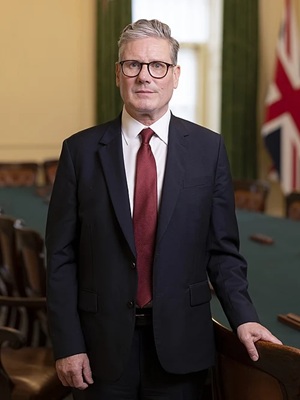
Keir Starmer’s announcement on Monday that he will resign as leader of the Labour Party and step down as UK Prime Minister once a successor is chosen marks a stunning collapse of authority. Less than two years after storming into Downing Street with a landslide victory that ended 14 years of Conservative dominance, Starmer is being forced out amid mounting internal revolt. His exit does far more than remove one man — it exposes the profound governing difficulties facing Labour and deepens the sense of chronic instability gripping British politics.
Starmer entered office in July 2024 pledging a new era of change, accelerated economic growth, revitalised public services, and tighter controls on illegal immigration. Those promises quickly collided with harsh fiscal reality. His government became squeezed between the imperative to limit public spending and intense pressure from Labour MPs, trade unions, and core voters demanding substantially higher social investment.
Controversial moves to restrict winter fuel payments for pensioners and overhaul disability benefits triggered fierce opposition. Policy concessions and multiple reversals that followed only reinforced the damaging impression of a government lurching from one crisis to another without a steady direction. Questions about Starmer’s judgment intensified after controversy surrounding former ambassador Peter Mandelson’s links to the late Jeffrey Epstein. The departure of several senior Downing Street aides further signalled a weakening administration.
The final blow landed in May’s local and regional elections, where Labour suffered severe defeats. Reform UK surged on the right by hammering immigration concerns, while the Greens peeled away left-leaning voters disillusioned with the government’s compromises. Once a critical mass of Labour lawmakers and senior cabinet members concluded that Starmer had lost command of his parliamentary party, his position as Prime Minister became unsustainable. Without the confidence of one’s own party in Parliament, effective premiership is virtually impossible.
Starmer deserves recognition for rescuing Labour from the unelectable depths of 2019 and delivering a decisive 2024 victory. Yet he proved unable to translate that success into competent governance. A string of policy U-turns and unforced errors steadily dismantled his authority, turning a landslide winner into a lame-duck prime minister in record time.
Burnham Positioned as the Next Prime Minister
Andy Burnham emerges as the clear front-runner to become the next UK Prime Minister. The former culture and health secretary under Gordon Brown, who has twice run for the Labour leadership, returned to the House of Commons after a commanding victory in the Makerfield by-election, decisively beating Reform UK’s Nigel Farage. Burnham has signalled his readiness to enter the contest, and key figures such as former Health Secretary Wes Streeting have already thrown their support behind him.
Burnham’s win in Makerfield has been hailed as a much-needed jolt for Labour, strengthening his credentials as the candidate best equipped to blunt Reform’s advance. He brings extensive experience, robust regional appeal from Greater Manchester, and a straightforward style that connects with ordinary voters. Nevertheless, the leap from regional mayor to national prime minister will be immense, and Burnham still has much to prove on the bigger stage.
While his agenda may tilt toward greater public service investment, he will inherit the identical fiscal straitjacket that constrained Starmer. Official forecasts point to anaemic growth of just 1.1 percent in 2026, with worker productivity already declining. High public debt, rising borrowing costs, and rigid fiscal rules offer precious little room for bold new spending. Any attempt to loosen those rules will immediately draw scrutiny from bond markets.
Starmer’s departure as Prime Minister will produce the seventh occupant of Downing Street in roughly a decade since the 2016 Brexit referendum — a damning indictment of Britain’s political volatility.
This revolving door at the top offers no genuine solutions. The next prime minister will face the same stubborn realities of weak growth, overburdened public services, and a political system increasingly out of step with the needs of a modern economy and society. Both major parties have repeatedly resorted to leadership changes as a survival tactic rather than confronting deeper structural failures. This pattern risks locking Britain into a low-efficiency cycle of repetition, where short-term political fixes replace the hard work of long-term reform.
Starmer’s resignation as UK Prime Minister may buy Labour a temporary reprieve, but it resolves nothing of substance. Whoever follows him — most likely Burnham — will confront the same unforgiving constraints and fractured electorate. Until Britain’s political class stops merely rotating leaders and starts addressing the country’s foundational weaknesses, this cycle of raised hopes and swift disillusionment will continue. The United Kingdom cannot afford another decade of musical chairs in Downing Street while its economy stagnates and public trust erodes. The time for real, systemic change is long overdue.
