

Jharkhand’s Green Energy Gold Rush: 46 GW Potential, Billions in Investment & 600,000+ Jobs

From Our Business Desk
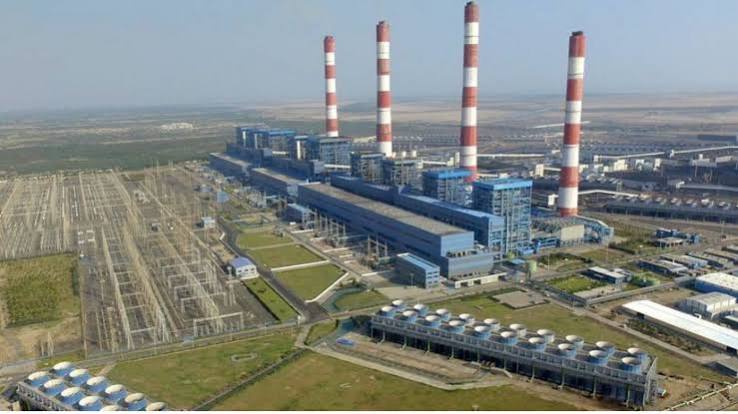
Jharkhand — India’s traditional coal capital — is on the verge of a historic clean energy transformation. Long dominated by thermal power that accounts for over 85% of its generation, the state today has only around 434 MW of renewable capacity, representing roughly 13–14% of its total power mix. Yet beneath this modest base lies extraordinary potential.
Recent assessments peg Jharkhand’s renewable energy resources at over 46 GW, complemented by up to 20 GW of pumped hydro storage potential. The Jharkhand State Solar Policy 2022 has set a bold target of 4,000 MW solar by 2027. At the same time, the state’s Industrial and Investment Promotion Policy aims to attract USD 12 billion in investments, with green energy as a priority sector.
Scenario modelling shows this transition could generate between 390,000 and over 630,000 direct and indirect green jobs by 2030 across solar, storage, green hydrogen, biomass, and manufacturing. Abundant abandoned mining land, strong policy incentives, and ready industrial demand for green power position Jharkhand to convert its coal legacy into a clean energy advantage.
This is not merely an energy shift — it is Jharkhand’s opportunity to emerge as eastern India’s clean energy powerhouse while delivering large-scale investment, employment, and sustainable growth.
Current Landscape: A Significant Gap to Bridge
As of 2024–25, Jharkhand’s total installed renewable energy capacity stands at approximately 434 MW. Solar power dominates recent additions with roughly 162–200 MW installed, followed by biopower at around 19 MW and small hydro at just 4 MW. Thermal power continues to dominate the state’s energy mix, leaving a vast gap between current capacity and what is possible.
This low renewable base, however, presents a unique advantage: the state can leapfrog into modern, decentralised, and storage-backed renewable systems without being weighed down by outdated infrastructure.
Enormous Resource Potential
Jharkhand possesses one of the most underutilised renewable resource bases in India. While the Ministry of New and Renewable Energy estimates solar potential at over 18 GW, broader assessments by the Center for Environment and Energy Development and others place the total renewable potential at 46 GW, with additional pumped hydro storage capacity ranging from 1.5 GW (exploitable) to as high as 20 GW.
Key resources include:
- Solar: 18–41 GW potential, with excellent irradiation in districts such as Giridih, Ranchi, Gumla, and Palamu.
- Small Hydro: 228 MW exploitable potential.
- Biomass & Waste-to-Energy: Approximately 146 MW potential, supported by agricultural residues and forest cover.
- Pumped Hydro Storage: Critical for delivering firm, round-the-clock renewable power and grid stability.
A major enabler is the availability of 340 sq km of abandoned mined-out land, ideal for large-scale solar projects and offering a genuine pathway for just transition in coal-affected regions.
Policy Framework and Ambitious Targets
The Jharkhand State Solar Policy 2022 is the cornerstone of the state’s renewable push. It targets 4,000 MW of solar capacity by 2027, comprising roughly 3,000 MW of utility-scale projects and the balance from rooftop, distributed, and off-grid systems.
The policy offers strong investor-friendly incentives, including 100% stamp duty exemption on land, exemptions on transmission and wheeling charges, electricity duty benefits, and SGST incentives. JREDA serves as the single-window nodal agency. Complementary schemes such as PM-KUSUM (solar pumps), mini-grids, ethanol, and compressed biogas plants further strengthen the ecosystem. These measures align with national targets of 500 GW non-fossil fuel capacity by 2030.
Growth Prospects, Investment Opportunities & Job Creation
Growth can be rapid. Reaching the 4 GW solar target by 2027 would mean a nearly 20-fold increase in solar capacity within a short period. With focused execution on land banks, grid connectivity, and project approvals, the state can comfortably move into double-digit GW renewable capacity by the early 2030s, supported by storage.
Investment Opportunities Jharkhand offers compelling opportunities across the value chain. The state’s Jharkhand Industrial and Investment Promotion Policy (JIIPP) 2021 targets USD 12 billion in investments, with green energy and clean manufacturing as priority areas. Current project pipeline already exceeds 1 GW, including large pumped storage initiatives by DVC, SECI’s floating solar projects, and captive developments.
High-potential areas for investors include utility-scale and floating solar parks, pumped hydro storage, green hydrogen and ammonia (for steel decarbonisation), biomass and waste-to-energy, agrivoltaics, and green manufacturing clusters for solar components, batteries, and hydrogen equipment. Strong industrial offtake from steel, mining, and manufacturing sectors, combined with central government support and viability gap funding, makes projects financially attractive.
Job Creation The employment impact is substantial. According to detailed modelling by the Climate Policy Initiative:
- An Ambitious Policy Scenario projects 81,332 direct and 311,410 indirect jobs by 2030 (total ~393,000).
- An Accelerated Green Transition Scenario projects 137,172 direct and 492,924 indirect jobs (total over 630,000).
These jobs will be created in solar EPC and O&M, biomass, green hydrogen, clean mobility, and manufacturing supply chains. Every USD 1 million invested in renewables is estimated to generate significantly more employment than equivalent fossil fuel investments.
Strategic Advantages of Jharkhand
Jharkhand holds several structural advantages that can accelerate its renewable energy growth:
- Large tracts of suitable wasteland and post-mining land for utility-scale projects.
- Complementary resources (solar + pumped storage) that enable reliable, dispatchable clean power.
- Existing industrial base and transmission infrastructure that can support rapid scaling.
- Strong policy incentives and single-window clearance mechanisms.
- Clear just transition pathway that repurposes coal assets and creates alternative livelihoods.
- Growing demand from industries seeking affordable green power to meet ESG goals.
The Way Forward
Jharkhand’s renewable energy sector offers a rare combination of scale, speed, and socio-economic impact. By leveraging its natural resources, policy support, and just-transition opportunities, the state can attract billions in investment, generate hundreds of thousands of jobs, and establish itself as a clean energy leader in eastern India.
Success will depend on swift implementation, grid modernisation, institutional strengthening of JREDA, and inclusive planning that benefits communities historically dependent on coal. With decisive action, Jharkhand can turn its green energy gold rush into a lasting engine of sustainable prosperity. The opportunity is open now.
