

Jainism is the Mother of All Religions— Daaji at ‘Heart of a Jain’ International Conclave Calling for Spiritual Transformation Beyond Philosophy

Mumbai / Hyderabad : Calling Jainism the “mother of all religions,” Revered Daaji – Guide of Heartfulness and President of Shri Ram Chandra Mission on Saturday urged the Jain community to carry its ancient spiritual inheritance beyond philosophy and ritual into lived experience, ethical action and ecological responsibility. The much-awaited two-day international conclave reconnecting Jainism with Bhagwan Rishabh Dev’s civilizational legacy ‘The Heart of a Jain’ kickstarted today at Kanha Shanti Vanam – headquarters of Heartfulness Institute in the outskirts of Hyderabad. Distinguished chief guests include Prof. Sachin Chaturvedi, Vice Chancellor, Nalanda University; Shri Chetanya Kasyap Ji, Hon’ble Cabinet Minister, Government of Madhya Pradesh; and Padma Shri Kumarpad Desai Ji, scholar of Jainology. Over 100 delegates from India and abroad will participate, including Jain leaders serving as conveners, such as Kushal Bhansali, Shri Ramesh Jain, Shri Kushal Kumar Kankaria, and Dr Sharmila Oswal.
The conclave brought together more than 100 Jain scholars, philosophers, spiritual leaders, government officials, and community representatives to explore the contemporary relevance of Jain wisdom. The conclave’s purpose was to reconnect contemporary Jainism with the civilizational legacy of Bhagwan Rishabh Dev at the centre of a transformative dialogue addressing consciousness, ethics, sustainability, and human development in the modern age; and develop the framework for a proposed Bhagwan Rishabh Dev Chair in Philosophy at HARI University.
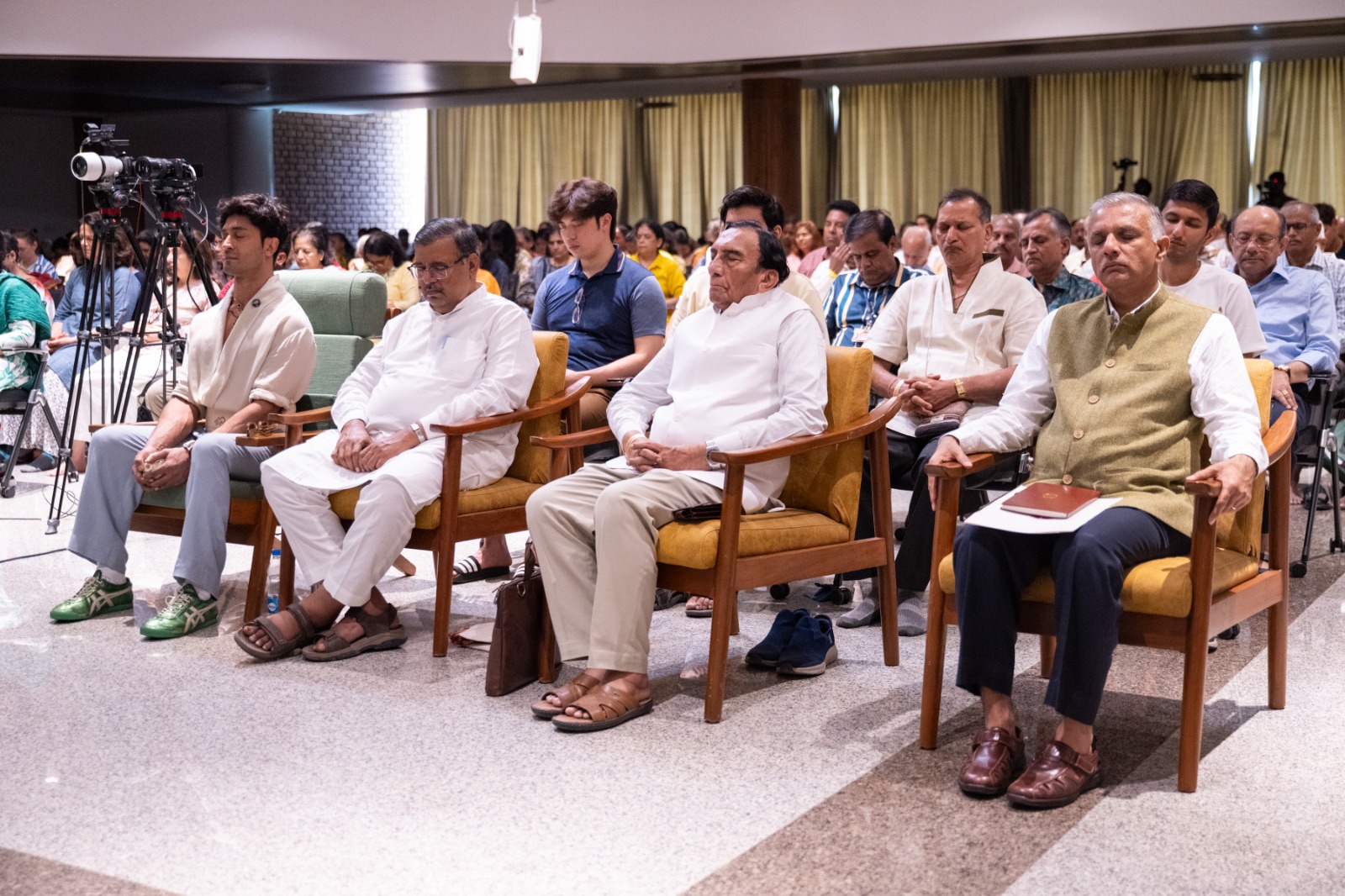
The event began with a guided Heartfulness meditation session led by Revered Daaji. This was followed discussion between noted actor and martial artist Vidyut Jamwal and Revered Daaji – Guide of Heartfulness and President of Shri Ram Chandra Mission wherein Daaji answered questions on today’s youth and their reasoning, the origins and purpose of meditation through Pranahuti, the contribution of the Tirthankaras and self-retrospective pointers.
“When one gains the experience, one doesn’t need belief. The belief dissolves with experience,” Daaji said. He urged young seekers to question, enquire and develop the restlessness required to discover truth directly.
Daaji said India needed more than a philosophical revival. It required a deeper transformation in the way people think, feel and act. He presented Heartfulness meditation, inner cleaning and Pranahuti, or yogic transmission, as practical methods for bringing spiritual values into everyday life.
Speaking about the role of a Guru, he said, “Guru’s role is not identifying or making a disciple. He prepares them. He makes only masters.”
The statement drew a strong response from the gathering for presenting spiritual guidance not as dependence, but as a path towards inner freedom, responsibility and self-mastery.
Daaji also placed Jain teachings within the ecological and social challenges of the present age. “Human beings at the pinnacle of consumerism take the best and give barely anything to nature,” he said, calling for a life lived in harmony with Mother Nature.
While emphasising that non-violence remained fundamental to Jainism, he added that the next step was not merely to avoid causing harm, but to actively create happiness.
Madhya Pradesh Cabinet Minister and World Jain Confederation Chairman Chetanya Kasyap praised Daaji’s declaration on Jainism’s civilizational importance. He said the Jain community had not anticipated such an unequivocal affirmation and observed that it took “a rare soul” to recognise and articulate the depth of another tradition with such conviction.
Prof. Sachin Chaturvedi, Vice Chancellor of Nalanda University, praised the wider scope of Daaji’s vision, particularly its emphasis on sustainability. He said civilisational revival could not remain limited to philosophy or historical memory, and commended Kanha Shanti Vanam for bringing together spirituality, education, ecological restoration and institution-building.
Shri Kumarpal Desai, noted author and Jain scholar and Padma Shri recipient, appreciated the effort to interpret Jain thought in a manner relevant to modern seekers and future generations.
The conclave featured three principal panel discussions on Jain philosophy and knowledge traditions; ahimsa, values education and ethical leadership; and sustainable agriculture, responsible artificial intelligence and conscious technology. The discussions are intended to contribute directly to the academic framework of the proposed Bhagwan Rishabh Dev Chair.
A statue of Bhagwan Rishabh Dev is also proposed for installation in the Heartfulness Yatra Garden at Kanha Shanti Vanam, creating a space for meditation, civilisational remembrance and spiritual reflection.
The conclave was livestreamed across 140 countries, enabling participation by Jain scholars, spiritual practitioners and thought leaders worldwide.
The opening day’s central message was clear: Jainism must move from inherited philosophy to lived transformation—and from non-violence to the active creation of happiness, harmony and responsible civilisation.
