


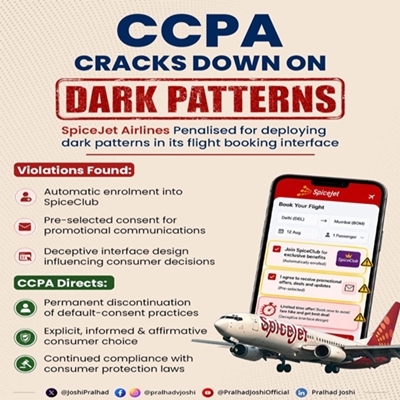
The Central Consumer Protection Authority (CCPA) has imposed a penalty of ₹1 lakh on SpiceJet Limited for employing deceptive design practices, popularly known as dark patterns, on its flight booking platform. The regulator found that the airline was automatically enrolling consumers into its Spice Club Loyalty Programme through pre-ticked checkboxes without obtaining explicit consent, violating core consumer protection norms.
According to the CCPA, passengers were unwittingly signed up for the paid loyalty programme during the booking process. The default pre-selected option made enrolment automatic, leaving little room for users to opt out consciously. Similarly, consumers were deemed to have consented to receive promotional communications via SMS, WhatsApp, and email because the “accept” option was pre-ticked, requiring no affirmative action from the user.
Even after the CCPA issued a notice highlighting these unfair practices, SpiceJet reportedly modified the interface only superficially. The company replaced the earlier method with another pre-ticked checkbox for future promotional messages, effectively continuing the same manipulative tactic in a different form. The Authority observed that such designs impair consumer autonomy, undermine informed decision-making, and contravene the principles of fair and transparent consumer engagement.
“These practices exploit the cognitive biases of users and erode trust in digital platforms,” the CCPA noted in its order. Dark patterns — subtle interface tricks that nudge consumers into decisions they might not have made otherwise — have increasingly come under regulatory scrutiny worldwide. In India, the CCPA has been proactive in checking such manipulative designs in e-commerce, travel, and fintech sectors.
During the proceedings, SpiceJet attributed the issue to a “technical error.” The airline has been directed to submit a formal undertaking confirming that corrective measures have been implemented and will be maintained permanently. This includes ensuring that all consent mechanisms require clear, affirmative action from users and that no pre-ticked boxes are used for enrolment or promotional subscriptions.
Consumer rights activists have welcomed the penalty, though many argue that the ₹1 lakh fine is relatively modest for a major airline. “It sends a signal but needs stronger deterrence,” said a consumer forum representative. The case underscores the growing importance of digital consumer protection as more Indians book travel online.
The ruling reinforces the Consumer Protection Act’s mandate against unfair trade practices. Experts believe it will encourage other airlines and online platforms to review their user interfaces for compliance. For travellers, the message is clear: always review checkboxes and consent options carefully before completing transactions.
SpiceJet has not issued a public statement on the penalty beyond its submission to the CCPA. The development comes at a time when the aviation sector faces heightened scrutiny over service standards and pricing transparency.
