


From Our News Desk
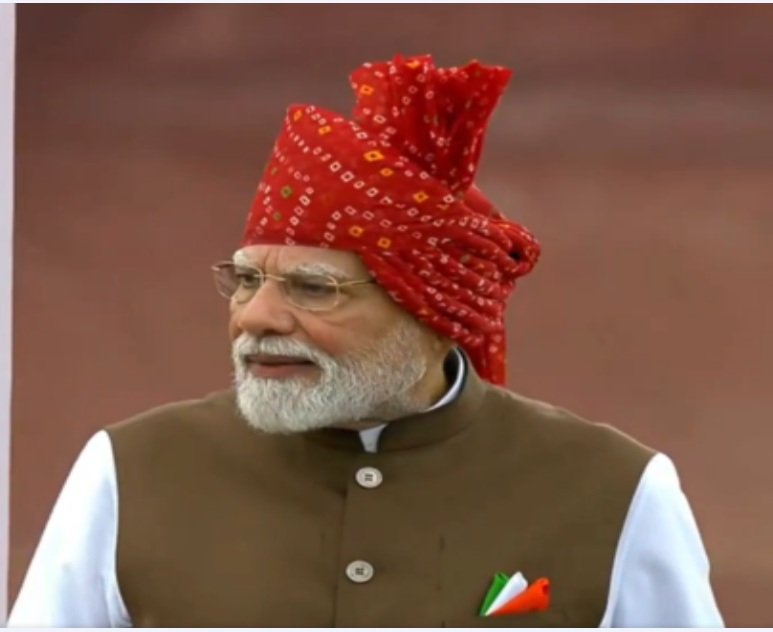
Prime Minister Narendra Modi’s Independence Day address from the Red Fort on Saturday marked a clear departure from the high-energy, assertive style of his earlier speeches. Delivered in roughly 75 minutes—his shortest in four years—the speech showed a more measured tone, reduced oratorical intensity and a deliberate attempt to reach out to India’s youth, particularly Gen Z.
The Prime Minister positioned young Indians at the centre of his Viksit Bharat vision for 2047. He announced a plan to train one crore youth in artificial intelligence skills over the next year and free online coaching for competitive examinations. These were framed within a new seven-stream framework called Saptadhara, covering manufacturing, agriculture and food processing, technology and innovation, logistics, defence, green and blue economy, and soft power. For the first time, Vande Mataram was also rendered from the Red Fort on Independence Day.
The heavy focus on youth came against the backdrop of recent Gen Z-led protests over examination paper leaks and job anxieties that forced the resignation of Education Minister Dharmendra Pradhan in late July. The government had already tried informal outreach through social media videos. Saturday’s speech appeared to be a more formal attempt to reclaim ground with a restless younger generation.
Yet the core of the youth outreach remains open to serious question. While the promise of AI training for one crore young people sounds large, a substantial section of India’s digitally active youth already picks up basic and intermediate AI skills through free social media classes, YouTube tutorials and online communities. What most of them actually need is not another layer of skill lectures but concrete resources—access to capital, computing infrastructure, mentorship, market linkages and, above all, pathways to regular revenue or sustainable livelihoods. The speech contained no specific commitments on funding mechanisms, institutional support or structured opportunities that could convert skills into steady income.
In the absence of such tangible measures, the announcements risk remaining rhetorical. Free coaching may reduce one financial burden for examination aspirants, but it does not address the deeper demand for quality employment and economic security. Gen Z has repeatedly shown that it is not easily placated by speeches alone. This generation expects visible changes on the ground—reliable systems, fair chances and measurable results—rather than fresh promises delivered from elevated platforms.
Observers also noted a visible decline in the Prime Minister’s customary rhetorical fire and physical energy. The expansive gestures and rising vocal intensity of earlier Red Fort addresses were largely missing. After more than twelve years in continuous high office, the possibility of administrative, political and physical fatigue cannot be dismissed, even as the softer tone may also reflect political calculation.
Saturday’s address ultimately revealed a leader adjusting to a more assertive younger demographic. The announcements on AI training and free coaching will now be tested against delivery. Without concrete resources, revenue pathways and on-ground outcomes, the measured words from the Red Fort are likely to be seen by many young Indians as another round of bhashan that fails to meet their real expectations.
