

India first, oil bill next: US House vote puts New Delhi’s energy security and US exports in the tariff line

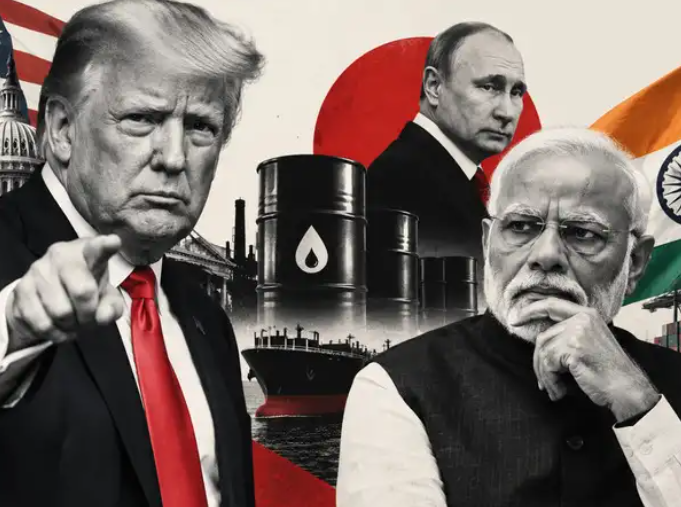
On Wednesday, 16 September 2026 the US House passed the Lindsey O. Graham Sanctioning Russia and Iran Act of 2026 by 262–159. The Senate had already cleared it. The bill now sits with President Donald Trump. It does not name India. It does not automatically levy 100% duties. It authorises the president, within 30 days of enactment, to impose additional tariffs of up to 100% on goods from countries that were among the five largest importers of Russian crude or gas in the previous 12 months and that knowingly make new purchases of Russian-origin oil after a 30-day grace period. India sits in that statistical box. China is first; India is second.
That is the legal fact. The economic fact is larger.
Russia supplied about 30% of India’s crude in FY2026—roughly $40.8 billion of a $134.7 billion import bill. In recent months the share has been far higher: around 45% in August, and near half in some mid-year months as West Asian disruption and tight freight pushed refiners toward the cheapest available barrels. India still imports close to 88–90% of the crude it burns. Discounted Russian oil has been the shock absorber: it capped the import bill, protected refiners’ margins, and kept pump-price and inflation politics from exploding. Remove or price that barrel out of reach and the bill shows up as a current-account hit, a rupee strain, and higher domestic fuel costs just as global crude is already trading near or above $100.
The second channel is exports. The United States is India’s largest merchandise market. A discretionary 100% overlay on Indian goods would not be a rounding error. It would hit labour-intensive shipments—textiles, gems and jewellery, engineering goods, chemicals, pharma intermediates—and freeze investment decisions while firms wait to see whether Trump uses the authority, at what rate, and whether waivers exist. India has already lived a milder version of this cycle: an extra 25% Russia-linked duty in 2025, later withdrawn in February 2026. The new statute recreates that uncertainty with a higher ceiling and a statutory trigger tied to oil volumes.
The third channel is the energy market itself. If India and China are forced to scramble for non-Russian barrels while Hormuz-linked supply remains tight, the bidding war lifts prices for everyone. New Delhi has already told Washington that the bill’s consequences run beyond bilateral trade into the international oil market. The Ministry of External Affairs’ line after the House vote was deliberate: energy security for 1.4 billion people comes first; sourcing will follow diversified markets, not a congressional calendar; implications for ties and global prices have been “very clearly articulated.” That is a warning, not a retreat.
None of this is costless either way. Cutting Russian crude fast means paying more for Saudi, UAE, US, Venezuelan or Brazilian barrels and higher freight. Keeping the Russian slate invites tariff risk on a $80-plus billion export relationship and complicates a trade deal still being negotiated. Inflation, fiscal subsidy arithmetic, and RBI’s inflation-growth trade-off all sit in the middle.
The immediate economic impact is therefore not a 100% wall. It is policy risk premium: higher hedging costs for refiners and exporters, delayed capex, a stickier oil-import bill if substitution is forced, and a political test of how much Washington will use market access as leverage over New Delhi’s energy mix. Until Trump signs—and then chooses a rate, a waiver, or delay—the Indian economy’s main cost is uncertainty priced into crude, the rupee, and every factory that ships to the US.
