


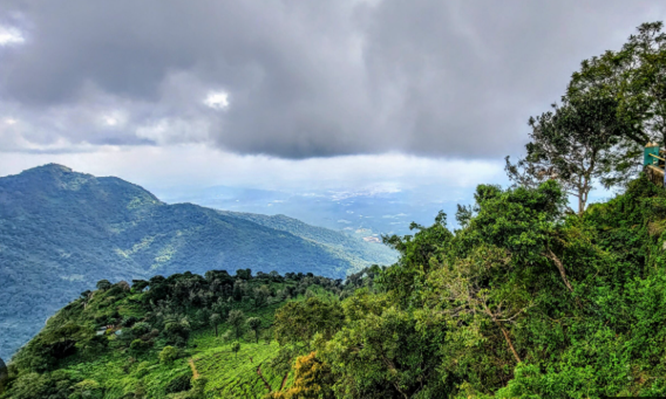
Nilgiri: Horasholions Welfare Trust has appealed to the Government of Tamil Nadu to establish a long-term “Chief Minister’s Nilgiris Restoration Mission – 2035” to bring ecological restoration, water-resource protection, land-use planning, disaster resilience and sustainable development under one coordinated programme.
Why the Nilgiris needs urgent attention
The Nilgiris is not merely a tourism destination. Its shola forests, grasslands, streams, wetlands, watersheds, agricultural lands, wildlife habitats and hill towns form one interconnected mountain system. Disturbance to that system can affect water security, livelihoods, tourism, biodiversity, agriculture and disaster risk far beyond the district.
The representation describes the Nilgiris as an important watershed region of South India and states that approximately one-sixth of the water flowing into the Cauvery originates in the Nilgiris. It also highlights the water-retention role of shola forests and grasslands and the long-term ecological impact of exotic species such as eucalyptus and wattle.
Government data already shows the pressure
Tamil Nadu Government data cited by the Trust shows that the area classified as “Moderate Forest” changed from 657.1 sq. km in 2013 to 600.3 sq. km in 2023 – an 8.64% decline in that specific classification. Over the same period, Bare/Sparse Vegetation increased from 86.2 sq. km to 102.4 sq. km (+18.79%), while Built-up Land increased from 31.3 sq. km to 33.1 sq. km (+5.75%).
Importantly, the Trust stresses that the 8.64% figure is not an 8.64% loss of the Nilgiris’ total forest area. It refers only to the official “Moderate Forest” classification; the same data recorded small increases in Open Forest and Very Dense Forest.
The representation also cites Tamil Nadu Government disaster-management information identifying 284 locations in the Nilgiris as vulnerable to natural disasters, including 68 classified as “most affected” and 89 as “more affected”. Against a backdrop of intense rainfall, flash floods, soil erosion, landslide risk, pressure on water bodies and changing land use, the Trust argues that these challenges can no longer be treated in isolation.
