

40% Rise in Musculoskeletal Problems Among Schoolchildren: Heavy Schoolbags Are Not the Only Culprit: Sedentary Lifestyles and Poor Movement Habits Raise Childhood Back-Pain Concerns – IAP

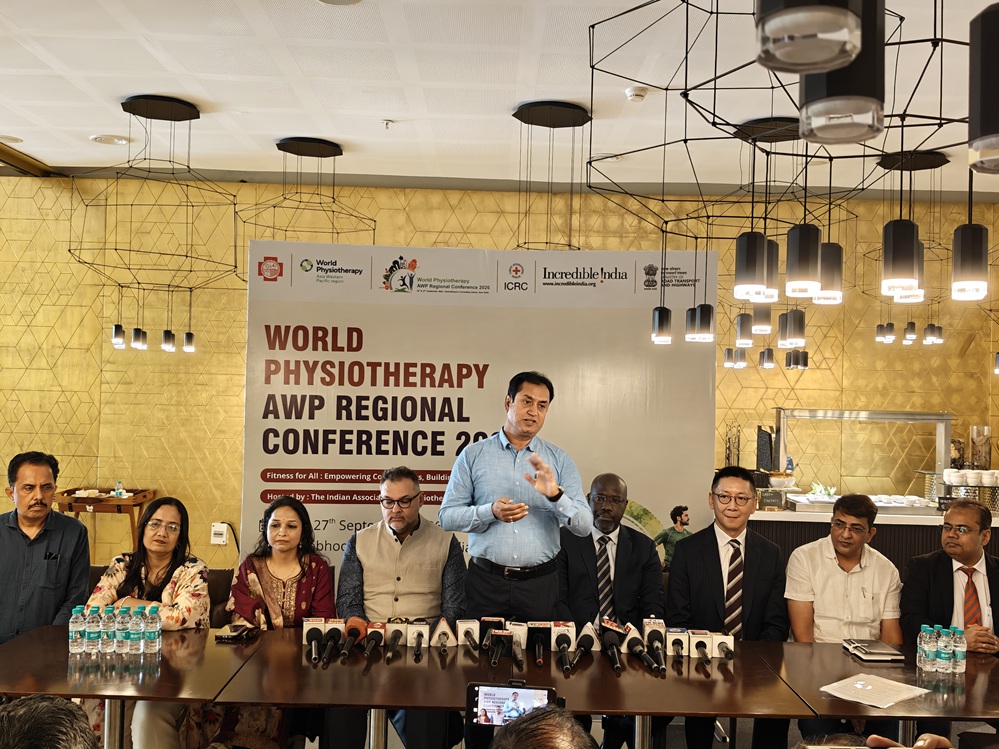
New Delhi: Back pain is no longer an issue that should be associated only with adulthood or old age. Physiotherapy experts are raising concern over the growing burden of musculoskeletal problems among schoolchildren, with the Indian Association of Physiotherapists (IAP) highlighting a 40% rise in musculoskeletal problems among schoolchildren and calling for a stronger focus on prevention, movement education and physical fitness from an early age, ahead of the World Physiotherapy Asia Western Pacific (WPAWP) Regional Conference 2026, being held at Yashobhoomi, New Delhi, on September 26 and 27. The conference is expected to bring together more than 10,000 physiotherapy professionals from India and 32 countries.
Prof. Dr. Sanjiv K. Jha, Organising Chair, World Physiotherapy Asia Western Pacific (WPAWP) Regional Conference 2026. “Back pain does not start in old age. We are seeing a concerning 40% rise in musculoskeletal problems among schoolchildren, and this should make us rethink how we approach preventive healthcare in schools. Children today are spending long hours studying, using screens and remaining physically inactive, while movement, strength, flexibility and fitness are often not given the importance they deserve. We need to shift from treating musculoskeletal problems after they appear to preventing them through early education, fitness and appropriate physiotherapy interventions,”
Indian research indicates that musculoskeletal symptoms are already a significant concern among school-going children. A study of 934 children aged 8–15 years from four schools in Bhopal found that 55.9% reported experiencing pain during the previous 12 months, while 41.6% reported pain during the preceding 10 days and 21.3% had visited a doctor for the problem. The study also found that the average schoolbag weighed 16.5% of the students’ body weight.
Another Indian study conducted among schoolchildren aged 10–16 years in urban and rural areas of Khurda district, Odisha, found an 18.8% prevalence of musculoskeletal pain during the preceding year. The research highlighted a substantial burden of symptoms among schoolchildren and examined factors including backpack weight, age, gender and body measurements.
Experts, however, caution against making schoolbag weight the sole explanation for childhood back pain. Scientific evidence suggests that the causes are multifactorial and can involve physical activity, movement habits, previous injury, psychosocial factors, prolonged sitting and other individual factors.
This evidence highlights the need for a much broader approach to childhood musculoskeletal health rather than focusing exclusively on schoolbags.
Dr. Ruchi Varshney, Organising Secretary, WPAWP 2026. “We should not totally link childhood back pain to a heavy-schoolbag problem. Children need regular movement, physical fitness, strength, flexibility, good movement habits and awareness about how they use their bodies. Physiotherapy can help schools introduce preventive programmes that focus on movement education, early identification of problems and healthy physical activity rather than waiting until pain becomes persistent,”.
The concern is particularly relevant in an era when children are spending increasing amounts of time in sedentary activities. A 2025 systematic review and meta-analysis covering 129 reports found a small association between greater sedentary behaviour and spinal pain in cross-sectional studies.The issue, therefore, is not simply about treating children who already have pain but about building a culture of movement and fitness early in life. Physiotherapists believe schools can become important platforms for movement education, exercise, postural awareness, physical fitness, injury prevention, ergonomics, early screening and health promotion.
The larger message from physiotherapy experts is clear: back pain should not be viewed as an inevitable problem of growing older. Musculoskeletal health begins in childhood, and prevention must begin before pain becomes a persistent problem.
For a healthier future generation, experts believe movement, fitness and musculoskeletal awareness need to become as much a part of childhood health as conventional healthcare.
The message gains significance as India hosts one of the largest gatherings of physiotherapy professionals in the region. The World Physiotherapy Asia Western Pacific (WPAWP) Regional Conference 2026, hosted by the Indian Association of Physiotherapists (IAP), is being held at Yashobhoomi, New Delhi, on September 26–27, 2026.
The landmark conference will bring together more than 10,000 physiotherapy professionals and delegates from India and 32 countries, with 1,845 research papers and more than 250 keynote talks and panel discussions. The conference will also feature a major international exhibition.
With the theme “Fitness for All: Empowering Communities, Building Inclusive Health,” the conference brings together experts across seven major speciality areas. The conference also coincides with the 70-year journey of the Indian Association of Physiotherapists, reflecting the transformation of physiotherapy in India
Prof. Dr. Jha said, “Physiotherapy in India has grown by leaps and bounds. The profession has travelled a remarkable journey—from a relatively small and developing discipline to a major healthcare profession with a vast community of practitioners, educators, researchers and specialists serving society across the country.”
Dr. Ruchi Varshney added, “Our responsibility extends beyond professional development. We have to contribute to healthier communities, promote physical activity and fitness, prevent disability and improve quality of life. Schools are an important starting point for this preventive approach.”
