


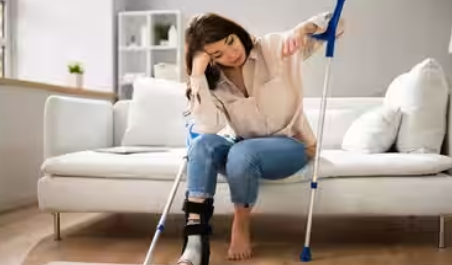
New Delhi — With India’s elderly population projected to nearly double to 230 million by 2036 — accounting for 15% of the country’s population — doctors are sounding the alarm on a silent epidemic accompanying this demographic shift: a sharp rise in bone fractures among senior citizens, many triggered by nothing more than a stumble at home. India is already home to around 149 million senior citizens today, roughly 10.5% of the population, according to the UNFPA India Ageing Report, with older women outnumbering older men in a pattern demographers call the “feminisation of ageing.” What was once dismissed as an inevitable part of growing old is now being recognised as a preventable and often devastating medical crisis.
A retrospective study published in the International Journal of Health Sciences and Research earlier this year, which analysed 200 hip fracture patients over one year in a district hospital in India, found that nearly half occurred in the 60-75 age group, with 89% of patients above 60 sustaining fractures from simple, low-energy falls rather than major trauma. Even more striking, 77% of patients showed osteoporotic bone changes on radiographic grading, underscoring how fragile ageing bones have become. This mirrors data released by a prominent Delhi hospital this year, where orthopaedic specialists have flagged that women past 50 face a higher osteoporosis risk than men, with hormonal changes after menopause accelerating bone loss well before old age typically sets in.
For Prof. (Dr.) Rajesh Bhalla, a joint-preserving surgeon at JMC Hospital, New Delhi, who also specialises in knee and joint replacement, the numbers are not abstract. “These are actual patients who, we see almost daily — a grandmother who bent down to pick up something, or slipped on a wet bathroom floor, and suddenly cannot stand on her own again,” he says. “People assume it takes a bad accident to break a bone. In the elderly, it often just takes gravity.”
Dr. Bhalla, who trained at AIIMS before pursuing advanced fellowships abroad, says his approach has always been to protect the natural joint wherever possible rather than rush to replacement. “My philosophy is conservative first — physiotherapy, strengthening, correcting the underlying bone weakness. Surgery, including joint replacement, is the last resort, not the first conversation,” he explains. “But by the time many elderly patients reach a hospital after a fracture, that window for prevention has already closed. That’s what troubles me most.”
He is particularly concerned about a factor gaining attention in recent research: obesity. Dr. Bhalla said that obesity does not just strain the joints — it actually contributes to fractures. It affects bone quality, and it is closely linked to conditions like diabetes and vitamin D deficiency, which further weaken the bones. “And once a fracture happens, recovery in an obese patient tends to be much slower.”
“We need a mindset shift,” Dr. Bhalla adds. “Bone health check-ups should be as routine after 50 as blood pressure checks. A simple fall should not have to mean the end of someone’s independence.”
Without early screening, better nutrition, and fall-proofing homes, doctors warn that fractures among seniors could become a full-blown public health burden in the coming decade.
****
