


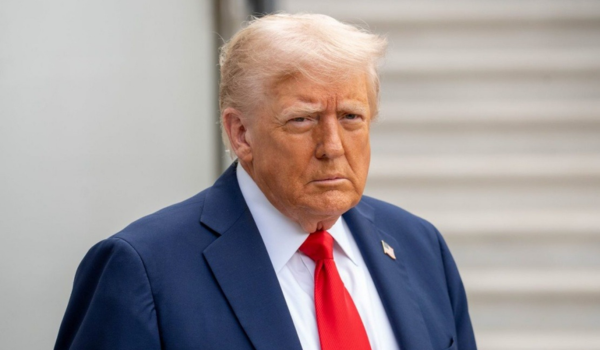
Washington: Two weeks before the November 3 midterms, President Donald Trump’s approval has sunk to record lows for either of his terms, and Democrats hold double-digit or high-single-digit leads on the generic congressional ballot. The numbers are not a media invention or a sudden shift in mood; they reflect sustained voter judgment of his economic and foreign-policy choices, particularly the ongoing U.S.-Israel war on Iran that has driven gasoline prices and inflation higher while delivering no clear strategic gain that the public accepts.
The latest Reuters/Ipsos survey puts Trump’s approval at 31 percent, with 66 percent disapproving and 68 percent rejecting his handling of the economy—including 37 percent of self-identified Republicans. Democrats lead 47–35 among registered voters on the generic ballot, a 12-point edge and the widest of the cycle. The Washington Post-ABC News-Ipsos poll shows 33 percent approval (52 percent strong disapproval) and an eight-point Democratic advantage among likely voters for the House. NBC’s Decision Desk reading is similar: 34 percent approval, 71 percent saying the country is on the wrong track, and a clear preference for Democratic congressional candidates. Aggregates place Trump’s net approval near –20 or worse, with Democratic generic leads in the seven-to-nine-point range across multiple pollsters.
The central driver is the economy, and the war is the proximate cause. Since the late-February launch of the U.S.-Israel campaign against Iran, oil markets have been disrupted, gasoline has spent more days above $4 a gallon in 2026 than in any prior year tracked by AAA, and diesel has climbed even higher. September inflation reached 3.7 percent year-over-year, powered by energy. Moody’s Analytics estimates the conflict has already imposed roughly $2,000 in extra costs on the average American household, with energy accounting for a large share and the tally still rising. Voters have drawn the connection: in the Reuters/Ipsos data they now prefer Democrats as better stewards of the economy, 40 percent to 33 percent—the first time in more than a decade Democrats have held that edge in some major surveys. High gasoline prices are not an abstract statistic; they hit every household and every small business that moves goods. When the president who promised lower costs instead delivers the opposite through a war of choice, the political penalty is direct and measurable.
Trump’s political problem is compounded by the absence of a convincing public case that the costs are justified. The administration has framed the campaign as necessary, yet polling shows broad unhappiness with both the economic fallout and the broader direction of the country. Even among Republicans, economic disapproval has reached levels that erode the base’s intensity. In earlier cycles Trump could rely on strong Republican loyalty and a sense that the alternative was worse; the current numbers show leakage. Strong disapproval is high, and a majority of voters in key surveys say they want a Democratic Congress specifically as a check on him rather than a Republican one that will advance his agenda. That is not abstract partisanship; it is a verdict on results.
Historical patterns make the midterm risk acute. Presidents with approval in the low-to-mid 30s routinely lose seats, often substantial numbers. In 2018 Trump’s party lost the House with a smaller generic-ballot deficit and higher personal approval than he enjoys today. Republicans currently hold only narrow majorities—roughly 218–214 in the House and 53–47 in the Senate. Democrats need a net gain of about four seats in each chamber. Models give them high odds of taking the House and competitive chances in the Senate, with races in Maine, North Carolina, Iowa, and Ohio looking far more contested than the 2024 map suggested. A Democratic House would restore investigative power; Senate control would give Democrats leverage over nominations and the calendar. Either outcome would constrain the final two years of Trump’s term.
Trump’s response has been to tell voters to “pretend” he is on the ballot and to float incentives for a Republican win. That messaging treats the election as a personal loyalty test rather than a referendum on prices, inflation, and the war’s costs. The surveys indicate voters are treating it as the latter. Early voting is already underway, and late movement is possible, but the consistency of the data across pollsters, the depth of economic disapproval, and the direct link to policy choices leave little room for the claim that these are merely temporary or media-driven numbers.
In short, Trump is hitting the headlines and losing ground in the polls because the combination of an expensive foreign conflict and domestic price pain has produced measurable, broad-based dissatisfaction. The midterms will test whether that dissatisfaction is deep enough to cost his party control of one or both chambers of Congress. The evidence so far suggests it is.
