


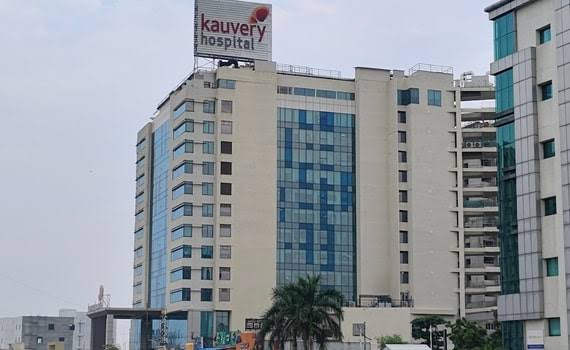
Chennai : A multidisciplinary team led by a rheumatologist and a maternal-fetal medicine specialist at Kauvery Hospital Radial Road, successfully managed a high-risk pregnancy in a 29-year-old woman deliver a healthy baby boy after she lost her first two pregnancies due to complications linked to anti-SSA antibodies, affecting the developing babies’ hearts.
The mother, who had no symptoms of an autoimmune disease, was found to have anti-SSA antibodies, which can cross the placenta and damage the fetal heart. With early preventive treatment and close monitoring by a multidisciplinary team, she delivered a healthy baby boy with normal heart function.
The woman’s first pregnancy ended in fetal loss at 20 weeks, followed by a second mid-trimester pregnancy loss. In both pregnancies, the babies developed a serious condition -hydrops fetalis, in which excessive fluid builds up in different parts of the baby’s body. This can occur when the baby’s heart is unable to function properly, among other causes, and can be life-threatening.
Following the second loss, the mother underwent a detailed evaluation by a clinical geneticist. When no genetic cause was identified, she was referred to a rheumatologist for further investigation. Testing revealed that she had anti-SSA antibodies, which were identified as the likely cause of the complications in her previous pregnancies.
Although the mother was otherwise healthy and had no symptoms, these antibodies had affected the developing babies’ hearts, causing congenital heart block – a condition in which the electrical signals that regulate the heartbeat are disrupted. This can cause the heart to beat too slowly and, in severe instances, lead to heart failure and fluid accumulation in the baby’s body.
With a history of two such pregnancy losses, her next pregnancy required specialised care from the earliest stages. The medical team explained the risks and developed a preventive treatment plan to reduce the chances of the antibodies affecting the baby’s heart.
Treatment with hydroxychloroquine, along with steroids, was initiated as part of the planned protocol. Intravenous immunoglobulin (IVIG), a treatment that uses antibodies to help regulate immune activity, was administered from the 12th to the 27th week of pregnancy. This period was particularly important because the mother’s antibodies can begin crossing the placenta from around the 16th week. The baby’s heart was closely monitored throughout the pregnancy, allowing the team to assess the baby’s condition during this critical period.
The coordinated approach helped the team manage the high-risk pregnancy successfully, and the woman delivered a healthy baby boy with normal heart function. The mother remains well and continues to be monitored by the rheumatology team for any signs of an underlying autoimmune condition.
The multidisciplinary team was led by Prof. Dr. M. M. Kavitha, Consultant, Rheumatology, who guided the evaluation and preventive treatment.
Commenting on the treatment, Prof. Dr. M. M. Kavitha, Consultant, Rheumatology, Kauvery Hospital Radial Road said, “The key to managing this pregnancy was prevention rather than treatment. Since the patient had already lost two pregnancies due to antibody-mediated fetal cardiac complications, we began treatment as soon as her pregnancy was confirmed. She was started on hydroxychloroquine, the standard therapy for mothers with anti-SSA antibodies, along with low-dose prednisolone to modulate the immune response. Given her history of recurrent pregnancy loss and the high risk of recurrence, we also incorporated intravenous immunoglobulin (IVIG) therapy as an additional measure to protect the developing fetal heart. The fetal heart was closely monitored throughout the critical period when maternal antibodies cross the placenta. The mother tolerated the treatment well, and our multidisciplinary approach helped prevent a recurrence of congenital heart block and hydrops fetalis, resulting in the birth of a healthy baby with normal heart function. For any recurrent pregnancy loss it’s better to have a rheumatological evaluation.”
In his comments, Dr. Aravindan Selvaraj, Co-founder and Executive Director, Kauvery Group of Hospitals, said, “This treatment highlights an important but often overlooked cause of recurrent mid-trimester pregnancy loss. A mother with anti-SSA antibodies may have no symptoms whatsoever, yet these antibodies can seriously affect the developing fetus. Whenever a pregnancy is complicated by hydrops fetalis or an unexplained second-trimester fetal loss, clinicians should consider an underlying autoimmune cause and involve a qualified rheumatologist as part of the evaluation. This demonstrates how timely diagnosis, preventive therapy and close multidisciplinary monitoring can transform the outcome of pregnancies that were once considered extremely high risk.”
****
