

Corporate Diplomacy or Protocol Breached? Rubio’s Mumbai Pitstop Signals a Shift in Power Dynamics

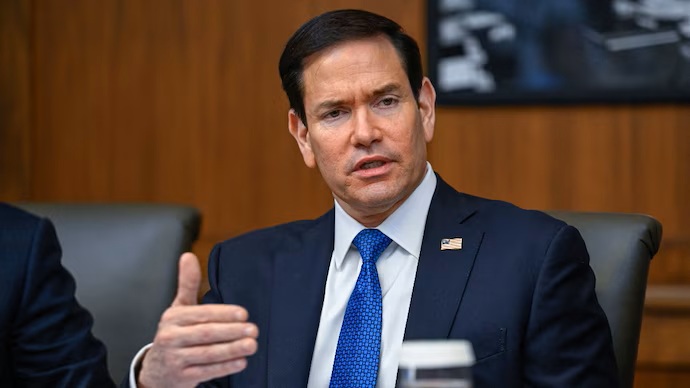
U.S. Secretary of State Marco Rubio’s October 2026 visit to India deliberately avoided New Delhi. He landed in Mumbai on 20 October, held bilateral talks the same day with External Affairs Minister S. Jaishankar, met separately with Adani Group chairman Gautam Adani and Tata Sons chairman N. Chandrasekaran, and flew the next morning to Jamnagar. There he spent several hours at Reliance Industries’ refining complex—the world’s largest single-site facility—where he was received by Mukesh Ambani and much of the Ambani family before departing for the United States on 22 October. The itinerary was not a logistical convenience; it was a statement of priorities.
In established diplomatic practice a visiting Secretary of State of Rubio’s rank arrives in the host capital. The gesture is intentional: it signals institutional equality and keeps the conversation within the formal architecture of the state. Rubio’s second trip to India in six months inverted that script. The national capital was omitted. The Indian foreign minister was required to travel to the financial capital to conduct the official meeting. The public language that accompanied the arrangement removed any remaining ambiguity. At the Bloomberg New Economy Forum, U.S. Ambassador Sergio Gor stated that Washington “expected” Jaishankar and other officials from Delhi to travel to Mumbai to see the Secretary. The verb was not diplomatic courtesy. It was an expectation issued on Indian soil, about an Indian minister’s movements, and it was voiced before the Ministry of External Affairs had confirmed the engagement.
Opposition leaders treated the sequence as a breach rather than a scheduling detail. Rahul Gandhi wrote that Rubio had “summoned his employee to Mumbai” and taunted the government over apparent confusion inside the External Affairs Ministry. Jairam Ramesh asked since when the announcement of an Indian minister’s meetings inside India had been outsourced to a foreign ambassador. Pawan Khera described a foreign government summoning the External Affairs Minister on Indian soil as a new low. These were not abstract objections to venue. They registered that the host government appeared to have adjusted both its calendar and its geography to a foreign itinerary shaped by commercial calculation rather than sovereign form.
The Ministry of External Affairs responded by noting that hosting foreign dignitaries outside Delhi has been practice for roughly a decade and that Jaishankar was already in Mumbai to receive UAE Deputy Prime Minister Sheikh Abdullah bin Zayed. Jaishankar himself later asked whether Indira Gandhi had been “summoned” when she met Zulfikar Ali Bhutto in Shimla. The defences address the narrow question of venue flexibility. They do not answer the sequence of announcements, the public language of expectation, or the fact that Rubio’s trip elevated a private refining complex and a handful of industrial leaders above the national capital. Protocol exists precisely to prevent powerful states from treating a counterpart’s capital as optional when commercial convenience dictates otherwise.
Historical precedents illustrate how such shifts accumulate. In the 1960s the Johnson administration placed PL-480 food-grain shipments on a “ship-to-mouth” basis, using a survival commodity to pressure Indian policy during the Vietnam War. In Central America successive U.S. administrations repeatedly subordinated local sovereignty to the commercial interests of the United Fruit Company, producing the durable category of “banana republics.” During the 1997 Asian financial crisis, IMF conditions imposed on South Korea dictated statutory changes and required local officials to accept non-negotiable terms. In each case economic or corporate stakes determined both the location and the terms of engagement; institutional equality was treated as secondary.
The substance of the 2026 visit confirms the same hierarchy. Washington is managing global energy corridors, seeking to moderate domestic diesel prices before U.S. midterm elections, and encouraging greater processing of Venezuelan heavy crude by Indian refiners that already possess the technical capacity. Reliance’s Jamnagar complex, with a reported capacity of roughly 1.4 million barrels per day, sits at the centre of that calculation. Discussions reportedly covered commercial partnerships across conventional and new energy and potential Indian investment in U.S. refining capacity. Separate meetings with Adani and Chandrasekaran further treated major industrial groups as primary interlocutors. Energy cooperation and a bilateral trade deal described by both sides as close are legitimate subjects. Conducting them principally at a private refining complex, after a public statement that the Indian foreign minister was “expected” to travel, conveys that operational leverage now rests as much with corporate balance sheets as with the sovereign state.
For a country that continues to assert strategic autonomy, the precedent is corrosive. When a foreign power successfully recentres high-stakes diplomacy around private corporate hubs and the host government accommodates the shift, the message is that geopolitical form can be rearranged according to commercial utility. The Ministry of External Affairs can correctly insist that meetings outside the capital are not unprecedented. The larger question is whether repeated prioritisation of corporate itineraries, combined with language that treats an Indian minister’s presence as an expectation rather than a mutual arrangement, gradually normalises a hierarchy in which supply chains and refining capacity eclipse institutional equality. Such hierarchies have proved durable in the past. India’s interest lies in ensuring that energy and commercial cooperation strengthen, rather than quietly redefine, the terms of its sovereignty.
