

Supreme Court Questions Form 6 Mandate for Existing Voters, Stresses Form 8 for Address Shifts in Delhi SIR

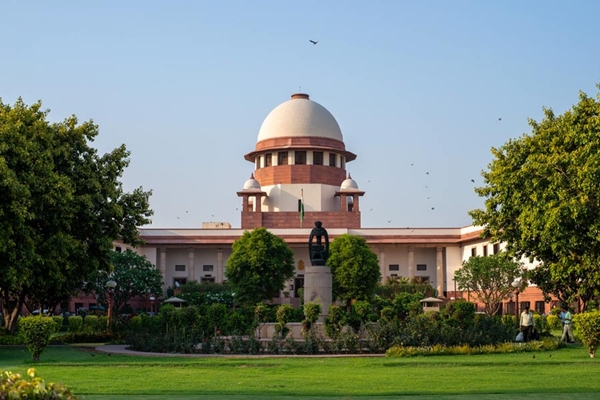
New Delhi: A three-judge Bench of the Supreme Court, headed by Chief Justice of India Surya Kant and comprising Justices Joymalya Bagchi and V. Mohana, on Wednesday questioned why the Election Commission of India (ECI) is compelling voters already on the 2026 electoral rolls but excluded from Delhi’s draft roll during the Special Intensive Revision (SIR) to file Form 6—a statutory form reserved for first-time enrolment—rather than Form 8, which is prescribed for shifting of residence or correction of entries.
Under the Registration of Electors Rules, 1960, Form 6 is the application for inclusion of a name in the electoral roll. It is primarily intended for new electors (those attaining 18 years of age or otherwise applying for the first time) and requires a declaration that the applicant is seeking enrolment for the first time and has not been registered earlier. Form 8, by contrast, is the form for correction of particulars in the existing roll or for shifting of residence—whether within the same constituency or from one constituency to another. An elector who has merely changed address is expected to disclose the previous booth number, electoral roll particulars and voter number, along with the new address, without claiming to be a fresh applicant.
The hearing arose from a writ petition by transparency activists Anjali Bharadwaj and Amrita Johri. Of the approximately 1.45 crore electors in Delhi before the SIR, nearly 47–47.5 lakh names were excluded from the draft roll published on August 31, 2026, under the Absent, Shifted, Dead or Duplicate (ASDD) categories. Around 43 lakh of these were classified as permanently shifted or absent, largely because enumeration forms were not returned—often, the petitioners argued, because forms went to outdated addresses or electors had temporarily left the city.
Advocate Prashant Bhushan submitted that requiring such persons to file Form 6 forces a false declaration that they have never been registered as voters. The Bench agreed there was a structural incongruity. Chief Justice Surya Kant illustrated the point: a person previously enrolled in Vasant Kunj who has shifted to Sarita Vihar can simply disclose the earlier polling particulars and the new address; there is no need to treat the person as a first-time applicant. Justice Bagchi observed that Forms 6, 7 and 8 are “cast in stone” under the law and cannot be altered by the ECI. He further stressed that the right to vote is a “vital right” and that mere non-response to an enumeration form—especially where forms may not have been served—should not result in permanent forfeiture of enrolment. The Court suggested allowing belated submission of enumeration forms until the final roll is prepared, or the use of Form 8 accompanied by a residual declaration explaining non-response, and the creation of a residual category for temporary absences or non-service of forms.
Noting that no election is imminent in Delhi, the Bench urged the ECI not to treat the October 30 deadline for claims and objections as rigid. It asked the Commission to continue accepting Forms 6 and 8 as applicable, publish the list of excluded electors in simple language, and proactively reach out so that the roughly 43-lakh gap can be reduced. Senior Advocate Dama Seshadri Naidu, representing the ECI, assured the Court that the suggestions would be examined and that the deadline would be extended if necessary so that the purpose of the exercise is not defeated. The Commission was directed to file a report within two weeks.
The Court also clarified that it has not finally adjudicated the legality of the “logical discrepancy” category used in SIR exercises in other States; earlier observations in the Bihar and West Bengal matters were interim and did not settle the constitutional question.
The Delhi hearing coincides with a broader challenge to the ECI’s decision-making process. In a joint counter-affidavit filed earlier this week, the Commission, Chief Election Commissioner Gyanesh Kumar, and Election Commissioners Sukhbir Singh Sandhu and Vivek Joshi maintained that the three SIR orders were unanimous decisions and that Form 6 itself had not been amended—only an additional declaration was modified. Petitioners have been granted time to file rejoinders in those proceedings.
With the final Delhi electoral roll currently scheduled for publication in early December and claims still open, the Supreme Court’s observations are expected to shape how the ECI handles residual inclusions of existing electors who were left out of the draft. The matter will be taken up again after two weeks.
