


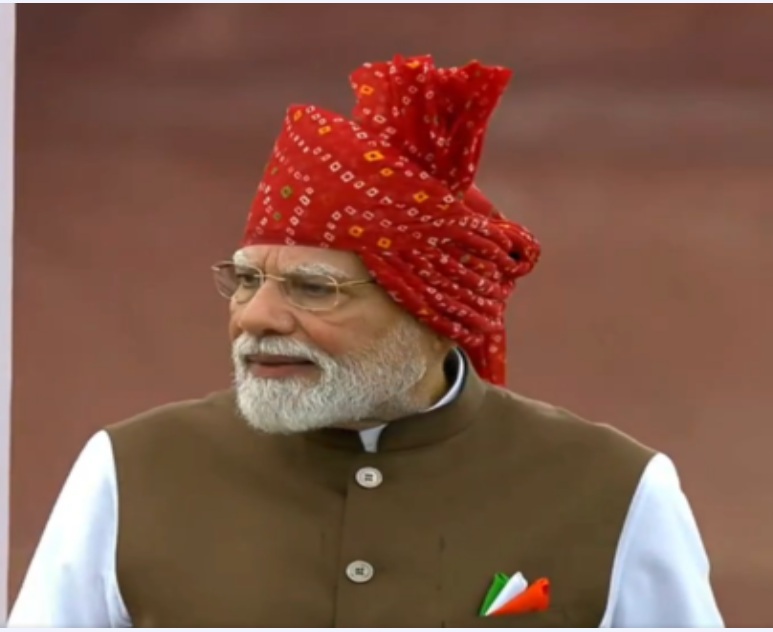
The just-concluded Legislative Council elections have produced a result that the Bharatiya Janata Party’s leadership did not expect and will struggle to explain away. In Nagpur, the headquarters of the Rashtriya Swayamsevak Sangh, and in Varanasi, Narendra Modi’s own Lok Sabha constituency, the BJP has lost seats long treated as impregnable saffron citadels. These are not distant or low-stakes contests. They are defeats in the places where the party’s organisational strength, ideological claim, and the Prime Minister’s personal brand were supposed to be strongest. For critics, the outcomes confirm what has been visible in a series of local and by-election results: the aura of invincibility is thinning, and the downward pressure on Modi and the BJP is becoming harder to dismiss as temporary noise.
In the Nagpur Division Graduates’ constituency, sitting Congress MLC Abhijeet Wanjari defeated BJP candidate Sudhakar Kohale by 3,271 votes. Wanjari secured 67,231 votes against Kohale’s 63,960 after counting that stretched into the early hours. The BJP candidate had led after early rounds; second-preference votes reversed the lead. This is the second consecutive time Congress has held the seat against the BJP. Nagpur is the home city of Maharashtra Chief Minister Devendra Fadnavis and Union Minister Nitin Gadkari, who had represented the graduates’ constituency for 24 years earlier. Both leaders campaigned for the BJP candidate. The RSS headquarters is in the same city. None of these advantages proved decisive. The ruling Mahayuti alliance’s failure to retain its most symbolic Maharashtra seat, even after intensive effort and on a limited-franchise electorate, exposes the gap between projected dominance and actual voter response.
In Uttar Pradesh the setback is equally pointed. The Samajwadi Party secured both the Teachers’ and Graduates’ seats in Varanasi. These constituencies are restricted to graduates and teachers, yet their location makes the result politically loaded. Varanasi is the parliamentary constituency Modi has represented since 2014, repeatedly presented as the personal and civilisational core of his leadership. Losing both Council seats there, while the SP improved its overall tally in the Uttar Pradesh polls, undercuts the claim that the Prime Minister’s presence automatically converts into local control. Critics argue that even in the Hindi heartland core, governance grievances and organised opposition are registering with sections of the electorate that the BJP has long regarded as reliable.
The manner in which the results arrived has sharpened the critique. On 28 October, while counting was still incomplete in several places, Modi posted a sarcastic message on X noting that MLC elections for 28 seats across four states had been held on ballot papers and inviting readers to “guess how many seats Congress won,” accompanied by a monocle emoji. The post was a deliberate dig at the opposition’s demand for paper ballots and at Congress’s limited overall haul. Devendra Fadnavis amplified a similar claim that the Congress had scored a “big fat zero,” then deleted the post once the Nagpur result became clear. Screenshots of the deleted material circulated at once. The sequence — premature crowing followed by quiet erasure — sits poorly with the image of unassailable confidence the leadership has projected for years.
Congress general secretary Jairam Ramesh replied the next day by pointing to the BJP’s losses in both seats in Modi’s own parliamentary constituency and to Congress’s victory in the RSS stronghold of Nagpur. He then delivered the line that has since defined the exchange: “Mr. Modi, stop the trolling. Crores of families are reeling from back-breaking inflation, the youth are unemployed, and private investment has ground to a halt. Drop the arrogance and reflect on these issues.” Ramesh framed the outcomes from Varanasi and Nagpur to Lucknow, Prayagraj and Patna as a de facto no-confidence motion against the government’s policies. The retort is effective because it ties the symbolic defeats to the economic pressures that remain unresolved and that continue to surface in local contests.
The aggregate numbers do not show a total collapse. The NDA won a majority of the 28 seats contested, and Congress itself managed only one. That fact allows the BJP to argue that these are limited-franchise polls shaped by second-preference arithmetic, local factors and candidate-specific issues. Such arguments are technically correct and politically incomplete. When a party that has spent a decade projecting invincibility loses the RSS headquarters seat and both Council seats in the Prime Minister’s own constituency — and does so on ballot papers while its leader is mid-troll — the symbolism outweighs the aggregate arithmetic for many observers. The deleted tweet and the subsequent Congress reply have already turned the episode into a ready-made narrative of overreach.
For critics, the pattern is clear. The same leadership that lectures the opposition on electoral irrelevance has just watched its own citadels fall. The same political style that treats every contest as a personal referendum on Modi has just recorded defeats in the places where that referendum should have been safest. Inflation, unemployment and stalled private investment are not abstract opposition talking points; they are the issues Ramesh cited and the issues that continue to appear in by-elections and local results. Whether these Council outcomes mark the start of a sustained decline or remain isolated warning signs will be tested in the 2027 Uttar Pradesh Assembly elections and beyond. What they have already demonstrated is that the saffron fortresses are no longer impregnable, and that the combination of organisational strength, high-profile campaigning and personal brand is no longer sufficient to hold them. The trolling has been answered by the ballot. The arrogance has been measured against the citadels that fell.
